Argentina and the United States are further expanding bilateral security cooperation through the launch of the Regional Center for Information and Analysis on Organized Crime (CRIACO), a new initiative aimed at strengthening regional coordination against transnational criminal networks operating across the Southern Cone. Inaugurated in Buenos Aires on April 24, the center is designed to improve intelligence-sharing, operational coordination, and international cooperation against threats including drug trafficking, money laundering, human trafficking, and other cross-border illicit activities.
The event brought together Argentine Minister of Security Alejandra Monteoliva; U.S. Under Secretary of State for International Security and Arms Control Thomas G. DiNanno; U.S. Ambassador Peter Lamelas; and Argentine Secretary for the Fight Against Drug Trafficking and Organized Crime Martín Verrier.
The initiative comes amid growing concern over the expansion of organized crime networks across the hemisphere. While the global cocaine market continues to grow, synthetic drugs are gaining ground in regional markets, and criminal organizations such as Brazil’s First Capital Command (PCC), Red Command (CV), and Venezuela-born Tren de Aragua continue expanding their operations beyond national borders.
According to Argentine international relations and security analysts Luis Somoza, the initiative reflects the increasingly transnational nature of modern criminal networks.
“This type of initiative is fundamental in the fight against widespread crime in the Southern Cone, considering that organized crime knows no borders and interacts with drug trafficking gangs, human trafficking, arms trafficking, and money laundering,” Somoza told Diálogo.
CRIACO is part of Argentina’s broader push to strengthen intelligence, interdiction, and regional coordination capabilities against transnational criminal networks. During the inauguration, Monteoliva stated that Argentina currently has the lowest homicide rate in Latin America.
Operational results reinforce partnership
Officials presented the initiative not as a symbolic step, but as part of an expanding operational partnership between Buenos Aires and Washington.
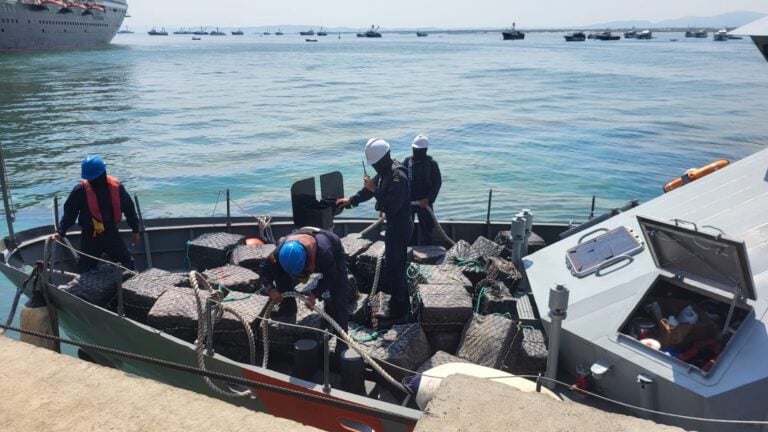
According to Argentina’s Ministry of Security, joint operations between Argentina and the United States between 2024 and 2025, led to the seizure of nearly 6 metric tons of cocaine and the arrest of more than 344 drug traffickers.
For Monteoliva, those results underscore the need for deeper coordination and sustained cooperation. “These results present new challenges, which require greater coordination, more collaboration, and the ongoing strengthening of our federal forces,” she said during the inauguration ceremony.
DiNanno also emphasized the political alignment behind the initiative, stating that both the administration of Argentine President Javier Milei and that of U.S. President Donald Trump share a commitment to strengthening bilateral security cooperation. According to Argentine media reports, the expanded cooperation framework will include additional training, technical assistance, and closer coordination with U.S. agencies such as the FBI and the DEA. Argentine newspaper Clarín also reported that the initiative could expand intelligence and law enforcement support programs between both countries.
“Combating drug trafficking is not a problem for one country; it is a global challenge that requires strong collaboration to save lives,” Ambassador Peter Lamelas said during the event.
For Somoza, the expanding partnership could improve Argentina’s operational capabilities in areas ranging from intelligence collection to prevention and complex criminal investigations. “Argentina is emerging as a key partner in the strategy to elevate regional security to a new level,” he said. “The increase in resources and training will improve the operational capacity of Argentine security forces and enable progress in intelligence, prevention, and the fight against complex crime.”
A regional coordination platform
Argentina’s role in regional security extends beyond bilateral cooperation with Washington. The country is part of the Tripartite Command alongside Brazil and Paraguay, a long-standing coordination mechanism focused on the Triple Frontier, one of the Southern Cone’s most strategically sensitive areas for illicit trafficking and organized crime activity.
Argentina also participates in regional mechanisms such as the Financial Action Task Force of Latin America (GAFILAT) and the Organization of American States’ Inter-American Committee against Terrorism (CICTE), reinforcing its role in multilateral security cooperation.
Within this framework, CRIACO will operate under Argentina’s Secretariat for the Fight against Drug Trafficking and Organized Crime and will focus on three primary areas: criminal intelligence production and exchange; institutional capacity building; and international judicial and police cooperation.
Domestically, the center will coordinate with federal forces, prosecutors, judicial authorities, and oversight agencies. Internationally, it will receive support from the U.S. Department of State’s Bureau of International Narcotics and Law Enforcement Affairs (INL) and UNODC.
Monteoliva described CRIACO as “the culmination of a moment of opportunity and relevance to respond to the dynamics of transnational crime.”
Counterterrorism and cybersecurity
The growing security partnership between Buenos Aires and Washington extends beyond counternarcotics efforts.
On April 16, Argentina’s Intelligence Secretariat and the FBI inaugurate the National Counterterrorism Center, designed to improve intelligence sharing between Argentine agencies and international partners involved in defense, security, justice, migration, customs, and financial oversight.
The move marked the second high-profile security initiative launched jointly by Argentina and the United States within weeks, highlighting the growing breadth of bilateral cooperation.
At the same time, Argentina is negotiating a cybersecurity cooperation agreement with Washington aimed at strengthening prevention, protection, and response capabilities against cyber threats.
For Somoza, these initiatives reflect a broader strategic trend in bilateral relations. “All these agreements reflect the strengthening of ties between the two countries,” he said. “Security is becoming one of the central pillars of the bilateral relationship. In the geopolitical landscape, Argentina’s role is substantial. Today, Argentina is one of the United States’ most reliable allies in the Latin American region.”
The launch of CRIACO, the inauguration of the National Counterterrorism Center, and ongoing cybersecurity negotiations reflect the rapid expansion of security cooperation between Buenos Aires and Washington in 2026. Together, the initiatives signal Argentina’s growing role in regional efforts to confront transnational organized crime, terrorism, and emerging security threats across the Southern Cone.