As transnational criminal organizations continue adapting their trafficking methods across the Atlantic, authorities from Latin America and Europe are seeking to strengthen not only interdiction efforts, but also the investigations that follow major drug seizures.
Against this backdrop, the United Nations Office on Drugs and Crime (UNODC), together with Belgian partners and countries from Latin America and the Caribbean, launched the Legal Fast project in March 2026. The initiative seeks to strengthen investigative capabilities, improve international judicial cooperation, and promote more sustainable law enforcement practices against organized crime.
The project reflects growing international concern over the role European ports — particularly Belgium’s Port of Antwerp-Bruges — continue to play as major entry points for cocaine shipments originating in Latin America.
According to Belgian authorities, customs officials seized approximately 55 tons of cocaine at the Port of Antwerp in 2025, an increase from 44 tons in 2024.
For UNODC and participating governments, the challenge extends far beyond intercepting shipments. Legal Fast seeks to strengthen “post-seizure investigations,” legal cooperation mechanisms, information sharing, and prosecution capabilities among participating countries to dismantle the criminal networks behind the trafficking routes connecting Latin America and Europe.
Kaitlin Meredith, UNODC representative for Central America and the Caribbean, emphasized: “The transnational nature of these organizations demands unprecedented levels of cooperation among national, regional, and global actors.”
Impact on Latin America
Drug trafficking continues to have significant consequences across Latin America, affecting security, governance, trade infrastructure, and institutional stability in countries that serve as transit or logistics hubs for criminal organizations.
For countries such as Brazil, Ecuador, major transit and export hubs for cocaine shipments bound for Europe, as well as Panama and Paraguay, which play important logistics and transshipment roles in regional trafficking networks, initiatives like Legal Fast could help strengthen investigative coordination, intelligence exchange, and judicial cooperation tied to transnational cases.
One of the project’s principal objectives is improving authorities’ ability to follow criminal investigations beyond the initial seizure itself, targeting the financial structures, logistical facilitators, corruption networks, and international connections that enable large-scale trafficking operations.
Panama has increasingly positioned itself as a key regional partner in these efforts.
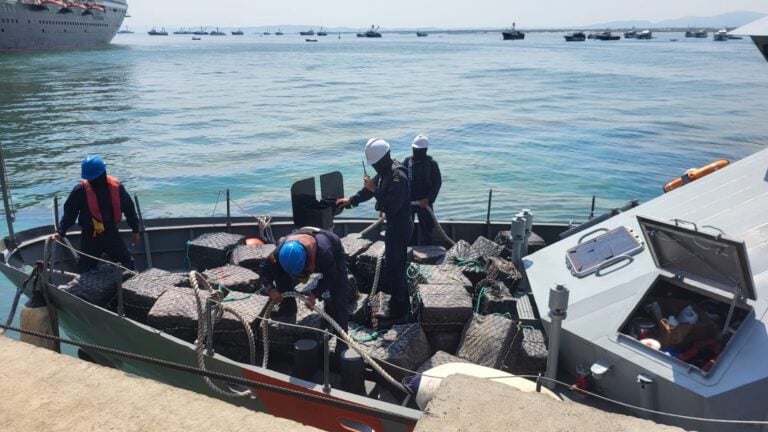
According to Panamanian authorities, security forces seized more than 3,000 packages of illicit substances at ports and maritime facilities during the first months of 2026. The country has also continued strengthening maritime interdiction capabilities in cooperation with the United States through the delivery of interceptor and patrol vessels to the National Air and Naval Service (SENAN).
In the words of Panama’s Minister of Public Security Frank Ábrego: “Every investment in operational capabilities directly impacts regional stability and the defense of Panama’s interests.”
Port security and criminal infiltration
One of the major concerns surrounding international cocaine trafficking remains the vulnerability of major commercial ports to infiltration by organized crime.
Ecuadorian security expert Jean Paul Pinto highlighted to Diálogo the growing “permeability” of ports used by criminal organizations to contaminate legitimate cargo shipments.
At the Port of Antwerp-Bruges, Belgian authorities have intensified security measures in recent years amid growing concerns about corruption and organized crime infiltration tied to cocaine trafficking networks.
According to Belgian media reports, security screenings conducted on more than 16,000 port workers in 2025 resulted in 320 negative security assessments linked to organized crime concerns and drug-related vulnerabilities.
Pinto emphasized the need to strengthen traceability systems while combining advanced technologies with public-private coordination to reduce opportunities for criminal infiltration throughout maritime logistics chains. He also warned that trafficking networks increasingly operate far beyond the ports themselves, extending into shipping logistics, maritime operations, and international financial structures.
Meanwhile, tighter controls at Antwerp and other major European ports have pushed criminal organizations to diversify routes and increasingly use smaller ports and more sophisticated concealment methods.
For participating countries, Legal Fast represents an effort to confront that evolving threat through closer international coordination and stronger post-seizure investigations capable of targeting criminal networks across borders rather than focusing solely on individual drug shipments.
In a security environment where organized crime increasingly operates through transnational logistical and financial systems, authorities from both Latin America and Europe view cooperation, intelligence sharing, and judicial coordination as essential components of long-term regional security efforts.