

The accelerated implementation of China-linked infrastructure projects across Latin America is increasingly challenging institutional oversight mechanisms during execution. This model, which prioritizes rapid delivery, often compresses evaluation and monitoring processes, affecting transparency and long-term sustainability.
In countries facing institutional and oversight challenges, analysts warn that accelerated implementation can reduce opportunities for technical review, public scrutiny, and comprehensive oversight. While accelerated timelines may generate immediate political and economic benefits, critics argue that they can also increase long-term risks related to transparency, strategic dependency, and infrastructure governance.
“The emphasis on speed in China-linked projects across Latin America creates tensions regarding states’ ability to maintain adequate oversight. In many cases, implementation timelines outpace institutional cycles of technical evaluation, public consultation, and legislative oversight, which can lead countries to adjust to the pace of external financing,” Pamela Aróstica, director of the China and Latin America Network: Multidisciplinary Approaches (REDCAEM), told Diálogo.
This approach gives China a significant advantage in negotiations. Coordination among state-owned enterprises, development banks, and the diplomatic apparatus allows agreements to move forward quickly, creating what Aróstica described as an “asymmetry in decision-making timelines,” particularly in strategic sectors such as energy, transportation, and telecommunications. According to Aróstica, these dynamics complicate governments’ ability to maintain thorough review and oversight processes and can increase regulatory and governance risks.
Strategic projects: Financing, control, and competition
Projects and loans linked to China typically operate with limited transparency and few environmental or governance safeguards. Many are implemented under “turnkey” schemes, in which both personnel and supplies are primarily sourced from China, reducing local participation in strategic sectors, according to an Expediente Público report.
The report also notes that these investments tend to concentrate in key infrastructure sectors, where assets may fall under the control or long-term operations of Chinese state entities. The accelerated pace of implementation narrows the window for technical review and increase China’s influence over economic and technological decision-making in host countries, raising concerns about institutional autonomy and strategic dependency. Furthermore, analysts warn that China’s approach to debt restructuring is less flexible, amplifying economic pressures on heavily indebted nations.
Notable cases: Risks and regulatory tensions
“In Latin America, the rapid pace of China-linked projects has affected both the viability of the projects and the states’ oversight capacity,” noted Aróstica. Cases in countries such as Ecuador, Peru, and Chile illustrate these tensions.
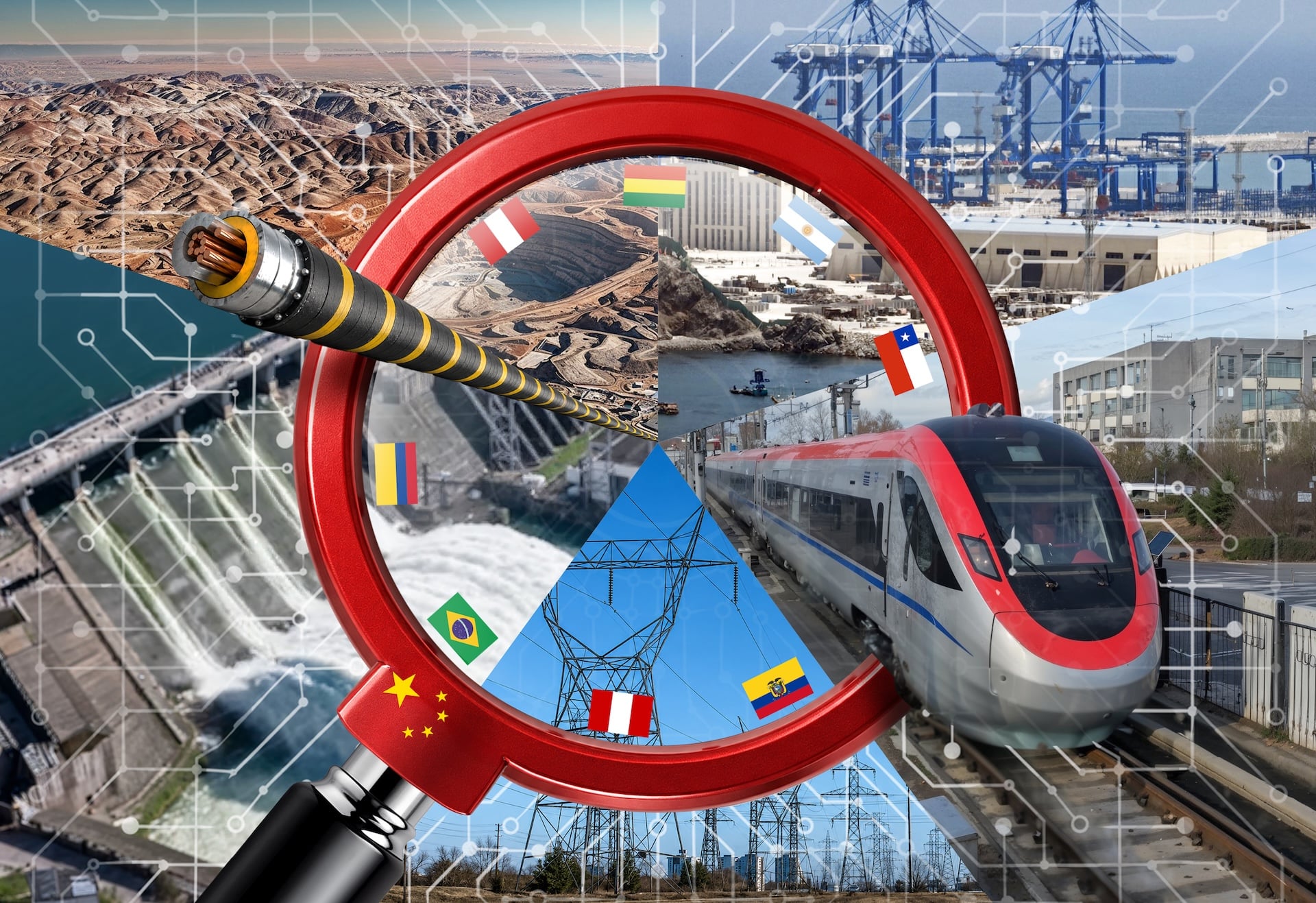
In Ecuador, the accelerated construction of the Coca Codo Sinclair hydroelectric plant reduced the time available for technical oversight and long-term evaluation processes, while structural failures detected afterward generated significant controversy over the project’s quality and sustainability.
Meanwhile, in Peru, development of the Chancay megaport, led by the Chinese state-owned company COSCO Shipping, highlighted tensions between rapid implementation and state oversight mechanisms. A court ruling limited the national regulator’s ability to oversee the project, raising concerns about governance and control of strategic infrastructure. The project has also faced criticism related to environmental impacts and conflicts with local communities, reflecting broader concerns about whether accelerated implementation leaves sufficient room for comprehensive long-term assessments.
“The speed of implementation […] raised concerns about a lack of transparency, national security, and data governance,” Aróstica said. “This forced a review of the initiative to mitigate its risks.”
In Chile, debates surrounding the Chile-China Express submarine cable project exposed growing concerns related to cybersecurity, transparency, national security, and data governance tied to the rapid expansion of critical digital infrastructure.
Operational dependency and strategic pressure
The presence of companies linked to China extends across multiple strategic sectors in Latin America. Chinese firms play a major role in the extraction of resources such as copper in Peru and lithium in Argentina and Chile, while Beijing also seeks to expand its presence in Bolivia’s lithium sector. Likewise, Chinese state-owned enterprises control segments of the power distribution networks in Peru, Chile, and Brazil, while companies such as Huawei and ZTE remain involved in the construction and expansion of digital infrastructure, including fiber-optic networks in strategic areas.
“This China-linked implementation model creates dependency structures that go beyond financing, as it involves technology, operations, and management under long-term contracts with limited transfer of local capabilities,” Aróstica said. Critical infrastructure such as ports, energy networks, transportation, and telecommunications is not neutral, she warned.
Its control and operation can carry direct geopolitical implications, affecting national security by influencing the continuity of essential services and the state’s response capacity. “These projects should not be analyzed solely from a development perspective, but also from the standpoint of state resilience and strategic security,” Aróstica added.
Debt and autonomy in decision-making
The spread of this China-driven model in Latin America continues to affect state management and strategic decision-making. According to the Paraguayan outlet Foco, the rapid pace of negotiation and execution surrounding Chinese agreements often involves opaque financial terms and long-term commitments that increase economic dependence among recipient countries.
Venezuela, Ecuador, and Argentina remain among the countries with the highest levels of financial exposure to China, in many cases under terms that are not fully public, according to Foco’s analysis. In economies facing persistent fiscal pressures, this dynamic can deepen asymmetries in bilateral relations. Paraguay, meanwhile, which maintains diplomatic relations with Taiwan, has largely avoided participating in these financing schemes.
“The impact is not limited to financing but extends to the entire project cycle: design, construction, operation, and maintenance. When these components are concentrated in a single external actor, the state’s ability to diversify suppliers or adjust terms is reduced, which affects regulatory autonomy, technological independence, and the resilience of critical infrastructure,” warned Aróstica.
Faced with these challenges, Latin American states continue to face growing pressure to strengthen their capacity to negotiate, evaluate, and oversee projects linked to China. Analysts argue this will require more rigorous technical controls, greater diversification of suppliers, stronger institutional transparency, and closer interagency coordination to reduce strategic vulnerabilities and avoid long-term dependency.
“Strengthening interagency coordination is key to avoiding dependencies and minimizing negative impacts on long-term decision-making,” Aróstica concluded.