
The Mara Salvatrucha (MS-13) and Barrio 18 are expanding their involvement in drug trafficking in Guatemala. Authorities have linked them to the purchase, distribution, and theft of cocaine and marijuana shipments. This shift is broadening the scope of investigations targeting the gangs.
Commissioner David Custodio Boteo, director of Guatemala’s National Civil Police (PNC), told EFE that both groups “rip off” drug shipments, purchase drugs, and sell them in the departments where they have the strongest presence. Their activities are no longer limited to street-level drug dealing; they now extend into drug trafficking.
Commissioner Boteo described a rigid chain of command. “Nothing happens on the street without a direct order from gang leaders or clique leaders,” he said.
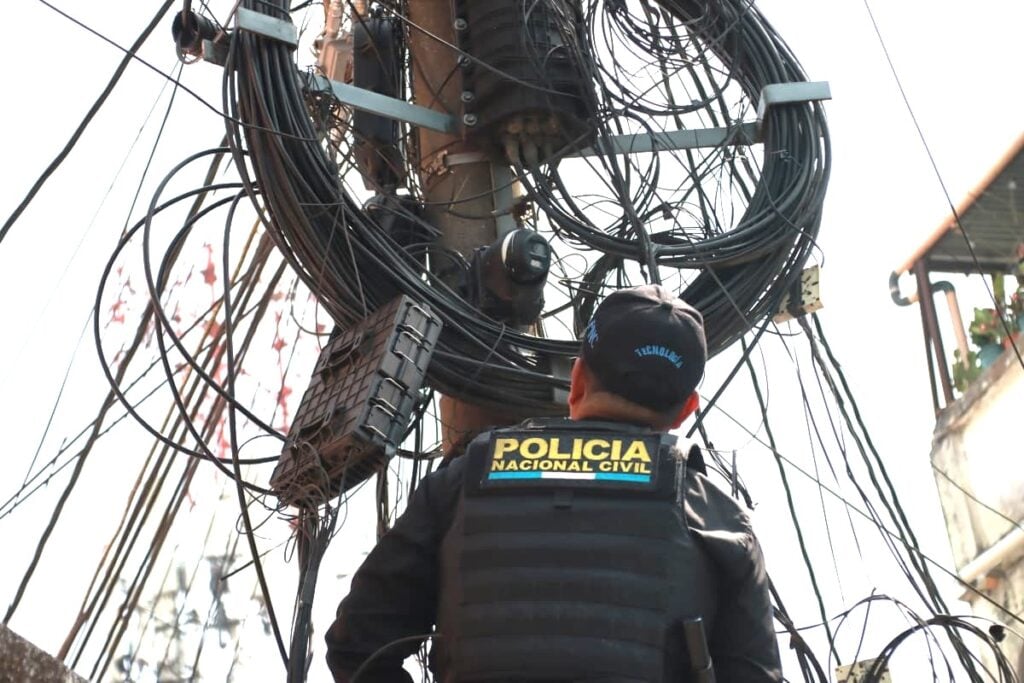
Extortion and street-level drug dealing provide the gangs with funds to acquire equipment, motorcycles, firearms, and cellphones. Surveillance is also part of their capabilities. According to the Ministry of the Interior, between January and August 2026, the PNC and the Guatemalan Army removed 324 illegal cameras in the departments of Guatemala and Chimaltenango, including 162 belonging to Barrio 18 and 86 to MS-13. The systems were used to monitor the movements of security forces and the population.
As of August 14, the PNC had dismantled 31 structures linked to both gangs and arrested 735 suspected members.
Hierarchical structures operating as transnational enterprises
The Public Prosecutor’s Office identifies both gangs as “more complex criminal structures,” La Hora reported. Authorities have linked them to extortion, contract killings, street-level drug dealing, arms trafficking, illicit association, and extortion-related obstruction of transit. The Public Prosecutor’s Office also warned that they display characteristics of structures with a transnational presence.
Their diversification extends into the legal economy. “In addition to extortion, they have neighborhood stores, control taxi services, and have purchased real estate and boarding houses,” Mario Mérida, former vice minister of the Interior, told Diálogo. In his view, the gangs “operate like a business organization.”
That evolution rests on established command structures. The 2025 Global Organized Crime Index had already described this structure: MS-13 operates through decentralized cells, while Barrio 18 maintains a prison-based command structure known as the Rueda. The report places the gangs in the drug, extortion, and arms-trafficking markets.
InSight Crime has documented that cliques are the basic unit of both organizations. Within MS-13, multiple cliques may be grouped into larger structures known as “programs,” through which higher-ranking leaders coordinate communications, criminal activities, and strategic directives. Most members of the gang’s leadership councils are incarcerated.
Although the gangs still do not match the firepower of Mexican or South American cartels, Mérida warns of an escalation. “As recently as a month ago [August 2026], it was discovered that they were trying to acquire bulletproof vests and higher-caliber weapons. The police response could shift from prevention, deterrence, and containment to intervention, which could lead to confrontations.”
Seizures by authorities confirm that gang members already have access to some of that equipment. In several operations during 2026, the PNC seized assault rifles, a submachine gun, a grenade launcher, ammunition, and bulletproof vests from suspected Barrio 18 members.
A qualitative shift with clear limits
The PNC recognizes the change. “We can now say that the gangs are drug traffickers; they weren’t before,” Commissioner Boteo told Congress in July. Police intelligence assessments indicate that drug sales generate greater profits, meaning extortion could become less prominent, La Hora reported.
Mérida sees a limit to their expansion. “They are not going to displace cartel representatives in Latin America and Europe,” he said. Although they have gained ground in street-level drug dealing, “they have not managed to rise to the level of a drug cartel or criminal organizations that operate globally.”
That does not prevent them from performing roles within broader trafficking chains. “In Guatemala, they can be used for the transit or protection of drugs,” he explained. “They still do not have the capacity to displace the structure that moves cocaine from South America through Central America and Mexico to the United States.”
Intelligence sharing at the center of the regional response
The transnational nature of the threat is taking investigations beyond Guatemala’s borders. To locate gang members who escaped from Fraijanes II prison in October 2025, Guatemalan authorities expanded the search internationally, issuing alerts and coordinating with Honduras, El Salvador, Mexico, and the United States.
Vice Minister of Security Estuardo Solórzano said authorities hold regular meetings with the FBI that include training in criminal investigation and intelligence.
In June, the Ministry of the Interior coordinated efforts with the Bureau of International Narcotics and Law Enforcement Affairs (INL), Homeland Security Investigations (HSI), the U.S. Embassy, and the Office of Overseas Prosecutorial Development, Assistance and Training (OPDAT). The agreements cover information sharing, training, and operational coordination.
Guatemala is also expanding that cooperation at the hemispheric level. The country is part of the Americas Counter Cartel Coalition (ACCC), which brings together countries across the region to strengthen coordination against drug trafficking and other forms of transnational organized crime.
In June, Guatemalan authorities and U.S. Marine Corps General Francis L. Donovan, commander of U.S. Southern Command (SOUTHCOM), discussed expanding bilateral cooperation under the coalition during a visit to Guatemala. In August, Guatemalan Minister of the Interior Marco Antonio Villeda and Minister of National Defense Henry Sáenz participated in the coalition’s forum in Panama. According to the Ministry of the Interior, these engagements seek to strengthen information sharing and coordinate actions against the operational, financial, and logistical structures of drug trafficking organizations.
The evolution of the gangs is broadening the challenge for security forces. Their participation in drug markets, combined with their financial networks, command structures, and ability to operate across jurisdictions, opens new lines of investigation into finances, logistics, and potential links to broader criminal networks.
Connecting gang intelligence with financial investigations, border security, and operations against drug trafficking networks allows authorities to target different components of the same criminal chain. Guatemala’s participation in mechanisms such as the ACCC also extends that capability beyond its borders by connecting its institutions with partners confronting the same criminal networks and illicit routes.
“Guatemala has demonstrated that it is not willing to surrender its borders, its institutions, and its future to organized crime,” President Bernardo Arévalo said during Gen. Donovan’s visit in June. “We appreciate the willingness of the government of the United States of America to collaborate with our efforts in this area.”
The gangs’ efforts to acquire ballistic vests and higher-caliber weapons point to the need for continued tactical and equipment adaptations by security forces. As criminal organizations diversify beyond extortion, investigations must also follow the money into laundering schemes and investments in legitimate businesses. And as these networks operate increasingly across borders, sustained intelligence sharing and coordination among regional security forces will be critical to disrupting their operations.