
Transnational criminal organizations have expanded their activities beyond drug trafficking, diversifying their sources of revenue and adopting new technologies to challenge security forces. To confront these threats, Colombia is pursuing a strategy that combines territorial control, stronger military and police capabilities, efforts to disrupt illicit financial networks, and greater international cooperation.
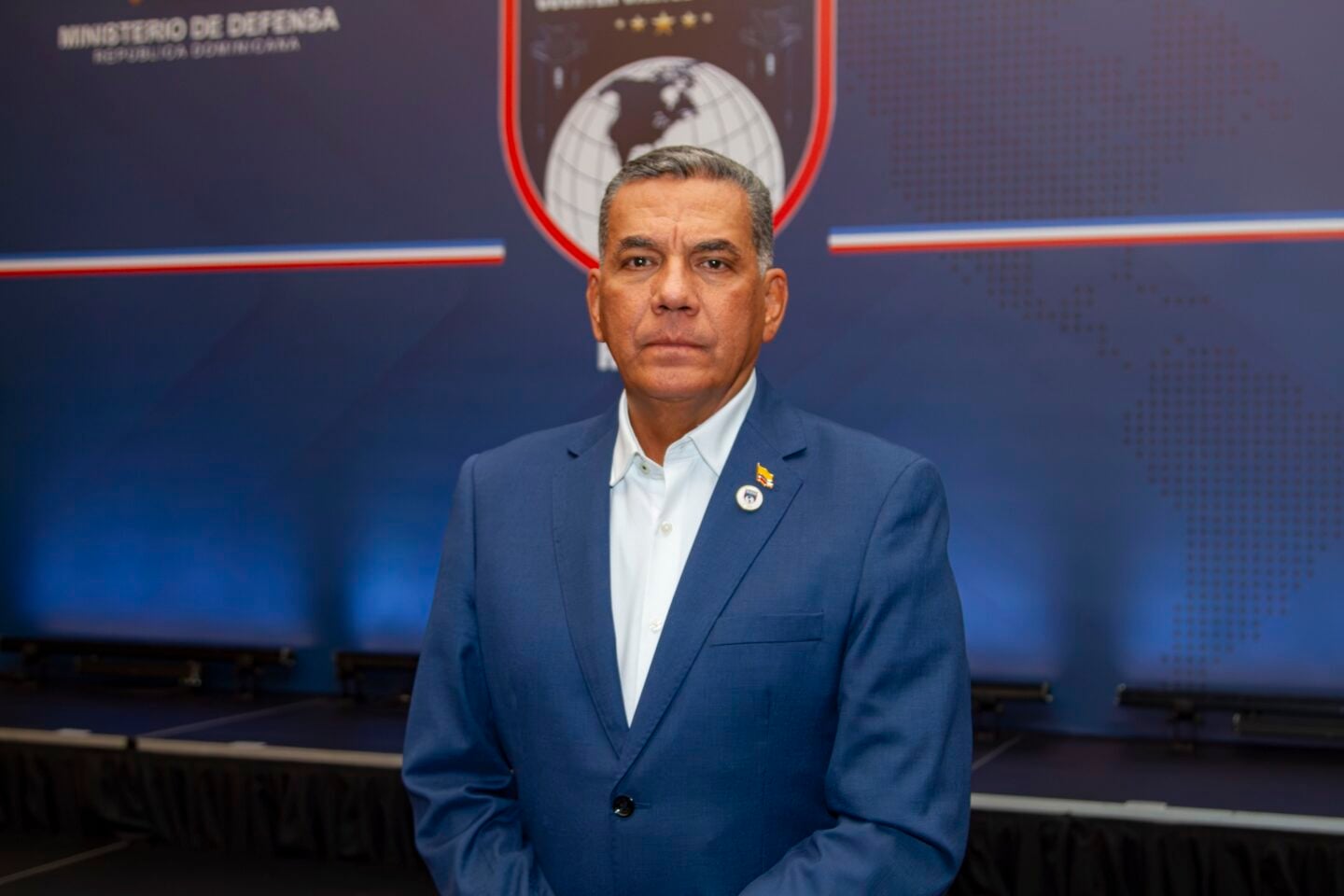
During the third Americas Counter-Cartel Coalition conference, held October 27 in Santo Domingo, Dominican Republic, Colombian Defense Minister retired Major General Jorge Eduardo Mora López discussed with Diálogo his country’s security priorities, the evolution of criminal organizations, and the role of regional cooperation in combating them. The minister also highlighted the capabilities and experience Colombia brings to the Coalition, the importance of its strategic partnership with the United States, and efforts to counter emerging threats, including the use of drones by armed groups.
Diálogo: Minister, Colombia faces a complex security environment marked by the expansion and adaptation of armed groups and transnational criminal organizations. What are the Ministry of Defense’s main priorities for strengthening the Military Forces’ capabilities and responding to these threats?
Retired Major General Jorge Eduardo Mora López, Colombia’s Minister of Defense: We have three priorities. The first is to restore and consolidate state authority throughout the country. The second is to sever the transnational connections that sustain these organizations. The third is to strengthen the capabilities of our Military Forces and Police to accomplish the first two.
We begin with a clear understanding of the threat. Eight organized armed groups and more than 100 criminal networks operate in Colombia, forming alliances of convenience to divide the profits from drug trafficking, illegal mining, extortion, and kidnapping. It is a system that learns and adapts. And that system does not stop at our borders: Cocaine is shipped to markets on other continents; weapons and explosives enter through our borders; illegally mined gold and illicit proceeds are laundered in other jurisdictions; and migrant smuggling networks span multiple countries.
That is why we operate on two levels. Domestically, we conduct military and police campaigns in the hardest-hit regions, including southwestern Colombia and the Pacific region, Catatumbo, northeastern Antioquia and southern Bolívar, and Putumayo, to protect communities, contain criminal expansion, and target these organizations and their illicit economies. Internationally, we work with the United States, the Americas Counter-Cartel Coalition, and our neighbors to shut down trafficking routes, disrupt financial networks, and deny criminals safe havens.
To sustain these efforts, we are strengthening integrated intelligence, counter-drone defenses, electronic warfare and cyber defense, mobility, and the ability to bring criminal cases to justice. All of this is guided by a nonnegotiable principle: the rule of law and respect for human rights.
Security is not something you announce; it is something you establish and sustain. Our priority is to ensure that no community is subjected to extortion, forced recruitment, displacement, or control by criminal economies. Restoring territorial control means protecting people, maintaining an institutional presence, and simultaneously targeting the leadership, logistics, and finances of those who threaten them.
Diálogo: As the founder and commander of the Transnational Threat Deployment Force (FUDAT), you confronted transnational threats through a specialized military unit. How have these threats evolved, and what lessons from that experience apply to Colombia’s current security challenges?
Minister Mora: These threats have evolved in three ways. They have shifted from hierarchical organizations with identifiable leaders to flexible networks that form alliances of convenience. They have moved from a single criminal enterprise to several operating simultaneously: drug trafficking, illegal mining, extortion, arms trafficking, and migrant smuggling. And they have become more transnational and technologically sophisticated, using drones, encrypted communications, and facilitators in other countries. When one node comes under pressure, the network adapts and finds another route.
I took three lessons from FUDAT that we apply today. First, intelligence and operations must be integrated from the outset, with the ability to deploy rapidly wherever the threat moves. Second, operational action must be accompanied by criminal prosecution and efforts to disrupt financial networks; otherwise, the organization regenerates. Third, no country can defeat a transnational threat on its own. Cooperation with the United States and our neighbors was decisive.
These lessons underpin our national strategy: understanding the adversary as an adaptive system, targeting its critical capabilities rather than isolated objectives, involving military personnel, police, and prosecutors from the planning stage, and continuously assessing and adjusting our approach.
The most important lesson is that simply pushing criminals from one territory into another is not enough. We must prevent them from rebuilding their command, financing, and corruption networks. The security forces act decisively, while the Attorney General’s Office independently conducts investigations that turn operational successes into lasting judicial results.
Diálogo: Criminal organizations are increasingly combining drug trafficking with illegal mining, extortion, arms trafficking, and other illicit activities. How much priority does Colombia place on targeting their financial networks, and how is this effort integrated with military and intelligence operations to dismantle these organizations more effectively?
Minister Mora: It is a top priority. Money enables these organizations to recruit, arm themselves, corrupt officials, and rebuild. If we target only their members and not their finances, the organization grows again.
Integration takes place in three stages. First, planning: for each campaign, the Military Forces, Police, and Attorney General’s Office plan together with the Financial Information and Analysis Unit, the Special Assets Administration Agency, the National Tax and Customs Directorate (DIAN), and Colombia’s immigration authority [Migración Colombia]. Second, execution: military and police intelligence identify routes, logistics hubs, illegal gold operations, and extortion networks. Operations target those nodes and gather evidence, while prosecutors pursue criminal cases and illicit assets. Third, international cooperation: because money crosses borders, we work with our partners through joint teams to combat money laundering, trade fraud, and illicit activity involving cryptoassets, while also exchanging evidence and cooperating on extraditions.
We are already seeing results. The Urano Campaign against hydrocarbon theft, which brings together security forces and judicial authorities, reduced that crime by 44 percent in September and October. We are also developing specific strategies against illegal mining, extortion, and drug trafficking. We measure success by cases that produce judicial outcomes and assets effectively targeted, not simply by seizures.
Our goal is not to accumulate seizures; it is to deprive these organizations of their ability to finance violence. That requires identifying beneficiaries, tracing financial flows and corruption networks, and providing relevant information to the authorities responsible for criminal investigations and asset forfeiture. Each institution operates within its legal authority. What we want is a lasting impact.
Diálogo: This evolution also has a technological dimension. Criminal organizations are adopting drones, encrypted communications, and other technologies to expand their operational capabilities. Which capabilities are most urgently needed to maintain operational superiority against these threats?
Minister Mora: The most urgent is counter-drone defense. Between April 2024 and October 2026, armed groups carried out 551 drone attacks against our security forces and civilians across 105 municipalities in 17 departments, leaving 492 people wounded and 48 dead. The highest number of attacks occurred in 2026, with 272 recorded. We are deploying counter-drone systems in the hardest-hit areas and working with the ministries responsible for Information and Communications Technologies (ICT), Science, Interior, and Justice to protect our airspace, communities, and critical infrastructure. We will not allow narcoterrorists to gain the upper hand.
The second priority is electronic warfare, cyber defense, and integrated intelligence to counter encrypted communications and anticipate criminal movements within the legal framework. The third is mobility, allowing us to reach difficult-to-access areas quickly.
We also want these capabilities to be developed domestically. Our defense industry is already responding to the Military Forces’ requirements. The High Technology Corporation for Defense (CODALTEC), [a state entity under the Ministry of National Defense], has supplied counter-drone protection to the Navy, and we are modernizing the Military Industry (INDUMIL), [a state-owned company under the Ministry of National Defense]. Every program, whether developed domestically or through international cooperation, must leave Colombia with lasting capabilities.
We will not allow criminal technology to dictate the conditions under which our soldiers, police officers, and communities operate. Our response is anticipation, protection, and domestic capability: detecting threats early, protecting facilities, and neutralizing threats within the applicable legal framework. Every investment in technology must translate into lives protected and better-prepared security forces.
Diálogo: Colombia joined the Americas Counter-Cartel Coalition with extensive experience combating drug trafficking, illicit economies, and armed groups. How can the Coalition support Colombia’s security priorities while also drawing on the capabilities and experience of its participating countries?
Minister Mora: The Coalition supports our priorities in a very concrete way: It ensures that the pressure we apply in Colombia does not lose its impact once criminal organizations cross the border. Our strategy restores state authority and dismantles criminal organizations within the country; the Coalition helps prevent those organizations from finding escape routes, safe havens, or places to hide their money abroad. That is why we see it as a catalyst for our strategy. Its objectives align with ours: denying criminal networks freedom of movement, disrupting their operations, and preventing them from rebuilding.
At the same time, it allows us to draw on each partner’s strengths: surveillance and intelligence capabilities covering maritime and air routes, control of corridors in Central America and the Caribbean, the work of financial intelligence units, and other countries’ experience confronting threats that also affect Colombia.
Colombia, in turn, brings decades of experience in counternarcotics operations, intelligence, maritime and riverine interdiction, criminal prosecution, and training. We are prepared to share that experience, within the law and on a case-by-case basis, including by training personnel from partner nations. All of this rests on a principle we support: Each nation retains command of its forces and acts under its own constitution and laws.
Colombia cooperates from a position of capability and sovereignty, not subordination. We will share our experience and coordinate efforts to close trafficking routes and pursue criminal finances, but decisions concerning our operations, the deployment of our security forces, and the information we share will remain in the hands of Colombian authorities. Cooperation, yes; surrendering authority, no.
Diálogo: Criminal networks exploit borders, ports, and other strategic corridors to move drugs, weapons, and illicit resources between countries. How can Colombia strengthen intelligence sharing and operational coordination with its partners to detect and dismantle networks operating across multiple jurisdictions?
Minister Mora: Colombia has coastlines on two oceans and shares borders with five countries. That geography makes cooperation with our partners essential to security. We are working on three fronts.
To detect threats, we need faster and more comprehensive information sharing: a shared picture of routes, vessels, containers, and financial flows so that intelligence reaches those who need to act in time. We are building on mechanisms that already work, including binational border commissions, the maritime interdiction agreement with the United States, and the multinational naval campaign led by the Colombian Navy.
To dismantle criminal networks, interdiction must lead to prosecution. Law 2592 of 2026, enacted by Congress at the government’s initiative, establishes a special maritime interdiction procedure for the Navy that allows criminal proceedings to begin at sea, with consolidated virtual hearings. The law is scheduled to take effect in January 2027. On weapons, we are moving forward with the National Ballistic Identification Registry, which will make it possible to trace legally registered firearms that end up in criminal hands.
And for cooperation to work, information sharing must follow clear rules: each country decides what to share, information is used only for authorized purposes, and actions along each country’s borders are decided by that country or coordinated bilaterally. This is how we build the trust needed for operations involving multiple jurisdictions.
Borders cannot become safe havens for crime or an excuse to disregard sovereignty. We need timely intelligence and effective judicial cooperation, with clear rules governing purpose, confidentiality, traceability, and authorized use. Coordination between countries multiplies results; operations on Colombian territory remain subject to Colombian decisions and authorization.
Diálogo: Colombia and the United States have been strategic allies for decades, building a close defense and security relationship. The United States recently announced its intention to allocate $1 billion in a new security assistance package for Colombia. Which capabilities and areas of cooperation do you consider priorities for strengthening the joint response to transnational criminal organizations?
Minister Mora: We thank the U.S. government and Congress for this vote of confidence. It represents a renewed partnership that has saved lives in both countries.
We have five priorities. Intelligence, surveillance, and reconnaissance along the routes and corridors used by transnational criminal organizations. Air mobility and fleet sustainment to reach remote areas. Naval and riverine capabilities suited to our position as a country with coastlines on two oceans. Counter-drone defenses and electronic warfare, with trained Colombian operators. And judicial and financial cooperation to target these organizations’ money wherever it is located. We want this cooperation to focus on the regions prioritized under our national strategy, where it can have the greatest impact.
We have one requirement for every program: It must leave Colombia with permanent capabilities. The model that worked for decades remains valid: The United States provides intelligence, technology, training, advice, and funding, while Colombian security forces make and carry out operational decisions. Colombia welcomes deeper cooperation, with one condition: decisions about the use of force on our territory remain Colombia’s alone.
We value every cooperation initiative that makes a measurable contribution to protecting Colombians. Our priority is not the amount announced, but the results: mobility, surveillance, counter-drone defenses, training, and sustainable capabilities under Colombian control. The partnership must produce operational autonomy, not dependence.
Diálogo: In September, Colombia joined the Shield of the Americas joint statement calling for coordinated measures against 24 transnational criminal organizations, including the Clan del Golfo, the National Liberation Army (ELN), and dissident factions of the Revolutionary Armed Forces of Colombia (FARC). How can countries focusing their efforts on the same organizations reduce the opportunities these networks exploit to move members, resources, and operations across different jurisdictions?
Minister Mora: These organizations exploit differences between countries: a leader who crosses a border, an account opened in another jurisdiction, an associate who launders money far from where the crime was committed. When several countries work against the same organizations, those opportunities narrow.
This limits their options in three ways. In moving resources, because their assets can be frozen in more than one country. In moving members, because travel and visa restrictions can be imposed on members and facilitators, while extradition is expedited. And in relocating operations, because information is shared and the pressure Colombia applies against the Clan del Golfo, the ELN, or dissident groups does not disappear when they try to seek refuge or financing abroad.
Each country acts under its own laws. In Colombia, these organizations are among the organized armed groups targeted by our national strategy, under the applicable legal framework, and decisions concerning their legal treatment belong to the Colombian state. International coordination amplifies the impact of what we do at home.
International coordination can close trafficking routes, restrict access to assets, and deny criminal organizations safe havens, but it does not replace Colombia’s legal decisions. No foreign designation, by itself, determines whether an organization qualifies as an organized armed group, which rules govern the use of force, or what legal treatment applies. We will act firmly and according to clear rules: combating crime requires both effectiveness and respect for the law.
Diálogo: As criminal organizations become more dispersed and interconnected, how is the Ministry strengthening the integration of intelligence and operations among the Military Forces, Police, and other government institutions?
Minister Mora: That integration is at the heart of our strategy, and it begins with a simple idea: no single institution can defeat a criminal network that operates as a system. For a long time, each institution followed its own approach: the security forces regained control of territory, the Police tried to maintain their presence, and the judicial response was fragmented. The result was predictable: criminal organizations returned to fill the vacuum. That is why we have changed how we plan. In each priority region, the Military Forces, Police, and judicial authorities develop a common plan from the outset, with a shared purpose and clearly defined responsibilities.
Each institution retains its mission and authority, but all understand the common objective. This ensures that intelligence collected by one unit reaches those who need to act on it in time, and that every operation is designed to lead to criminal prosecution, which is what makes the results sustainable. Finally, a strategy that is not measured cannot be improved. That is why we track progress through clear indicators and periodically review results to determine what is working, what needs adjustment, and where the state has yet to establish an adequate presence. Our goal is not merely to strike criminal organizations but to consolidate control, so that communities experience the state’s presence and the gains achieved are not lost.
This is not about bringing institutions under a single command, but enabling each to fulfill its mission more effectively. The security forces protect communities and conduct lawful operations; the Attorney General’s Office independently directs criminal investigations; and civilian agencies act within their respective mandates. Coordination works when it delivers real protection for communities and results that withstand judicial scrutiny.
Diálogo: Looking ahead, what do you see as the hemisphere’s main security challenges, and what capabilities will the region need to develop to stay ahead of them?
Minister Mora: I see three challenges. The convergence of illicit economies, as drug trafficking becomes intertwined with illegal mining, migrant smuggling, extortion, and money laundering. The speed at which criminals adopt technology: drones, encryption, cryptoassets, and cybercrime. And their ability to corrupt institutions and move from one country to another.
To stay ahead, the region needs interoperability among its forces, shared maritime and air domain awareness, interconnected financial intelligence, legal frameworks that facilitate judicial cooperation, and a regional defense industry. Above all, it needs trust among nations that respect one another’s sovereignty and recognize that they face a common threat.
The challenge is not simply to arrest members of criminal organizations, but to prevent their networks from rebuilding, relocating to another country, or adopting new technologies. Regional success must be measured by safer communities, disrupted illicit routes, weakened criminal financial networks, and stronger national capabilities. No country can do it alone, and no country should have to surrender its sovereignty to cooperate.
The challenge is to prevent criminal organizations from regenerating. To do so, we need sustained territorial control, timely intelligence gathered within the law, financial investigations, critical infrastructure protection, and judicial cooperation. Security must translate into freedom for communities and lasting institutions.