

Transnational criminal organizations (TCOs) have emerged as the principal non-state threat to the stability and sovereignty of nations across the Western Hemisphere. Fueled by multi-billion-dollar illicit enterprises, TCOs erode good governance, drive mass migration and violence, and create conditions that threaten the security of every society in the region. Their brutal, terror-like tactics have led multiple governments worldwide to designate several TCOs as terrorist organizations.
In this high-stakes environment, the Colombian Military Forces are utilizing a comprehensive, multi-domain strategy featuring three core campaigns — Paya, Zeus, and Orion — to dismantle these dangerous networks. Executing this strategy amid evolving political landscapes and fluctuating international confidence, this effort is not merely a national mission but is a case study in essential international cooperation against a threat that respects no borders.
The complexity and reach of TCOs are fueled by diversified illicit revenue streams. While United Nations figures confirm that coca cultivation and cocaine production in Colombia have reached record highs, fueling the drug trade, these organizations have aggressively branched into a wide array of crimes including illegal gold mining, arms and human trafficking, and wildlife smuggling, generating massive illicit revenues.
According to the Colombian Military Forces’ General Command (CGFFMM), this unified strategy has resulted in the seizure of more than 2,300 tons of narcotics (including cocaine, marijuana, coca paste, and heroin), the interdiction of over 1,800 tons of coca leaves, and the destruction of more than 8,900 coca processing laboratories, among other achievements, between August 2022 and September 2025.
The three pillars: Land, air, and sea dominance
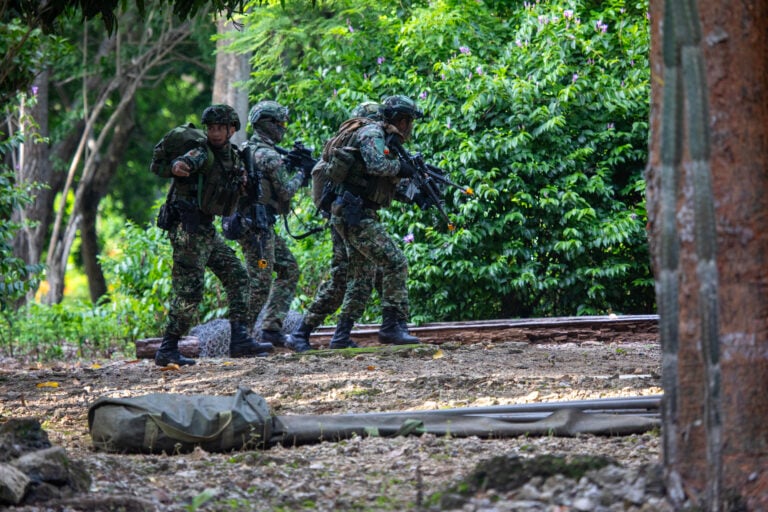
The Paya Campaign, led by the National Army, focuses on territorial dominance and direct confrontation with TCOs in hotspots of illicit activity. Its central objective is to disrupt illicit economies and weaken transnational organized crime groups by targeting infrastructure and strategic corridors.
Paya is a multi-domain campaign that leverages advanced intelligence capabilities. It utilizes high-precision offensive actions, interdiction, and destruction of illegal infrastructure, such as laboratories and staging areas. Recent operations under Paya have focused heavily on regions where TCOs co-opt local civilian populations to violently obstruct military antinarcotics missions, demonstrating the criminal groups’ ability to challenge state authority directly on the ground.
“Paya acts comprehensively across all domains of the national territory: land, sea, air, and cyber,” the CGFFMM told Diálogo. “While it primarily involves national forces, the campaign receives critical indirect support from the United States, which enhances Colombia’s operational capacity and contributes directly to the effectiveness of ground actions against TCOs within the national territory.” This partnership is formalized through binding agreements and protocols that ensure consistency and continuous technical assistance, regardless of political shifts.
The ZEUS multinational strategy, spearheaded by the Colombian Aerospace Force (FAC), focuses on aggressively shutting down illicit air routes used for the transport of drugs. Its operational success relies on seamless, real-time intelligence fusion across dozens of nations.
The latest operation, carried out in mid-2025, engaged 21 partner nations and nine specialized agencies. The mission conducted more than 50 aerial surveillance missions resulting in the seizure of 3.2 tons of cocaine hydrocholoride among other illicit drugs, as well as the interdiction of narco aircraft bound for Central America and vessels in Caribbean waters. The FAC confirms the strategy has led to a dramatic decrease in illegal flights in key corridors, demonstrating that combined aerial surveillance is an effective deterrent against TCO air logistics.
The campaign’s success is dependent on seamless interoperability with allied forces, including Belize, Costa Rica, the United States, Guatemala, Honduras, Jamaica, Mexico, Panama, and the Dominican Republic, strengthening a multinational air defense architecture essential for regional security.
Such cooperation is achieved through regional coordination mechanisms, secure communication platforms, joint training programs, and bilateral or multilateral agreements that allow for the harmonization of procedures, the CGFFMM said. “Logistical support, technical assistance, and judicial collaboration are also essential to ensuring the effectiveness of operations and the prosecution of those responsible. In short, joint action and integrated work among allied countries are essential to addressing challenges that transcend borders and require coordinated, adaptive, and sustainable responses over time.”
“The United States remains a key strategic partner in ZEUS, contributing vital technical capabilities, intelligence, and bilateral cooperation mechanisms like the Air Bridge Denial system, which strengthens air interdiction and information sharing,” the CGFFMM added.
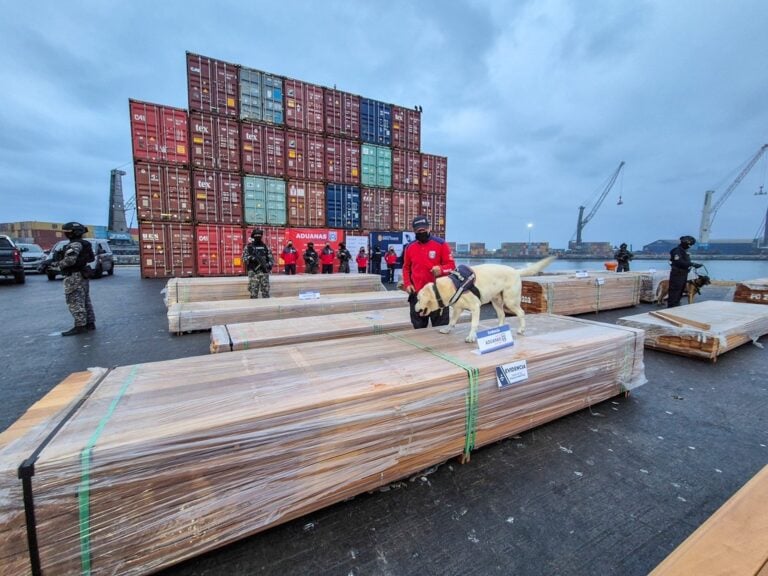
The Orion multinational strategy is the most widely known international effort, led by the Colombian Navy. Orion is an expansive global campaign to combat drug trafficking and associated crimes, which in its last iteration integrated 62 countries and 126 institutions across the Americas, Africa, Asia, and Oceania.
Orion is far more than a naval patrol; it is a holistic mechanism for international prosecution. It coordinates multilateral organizations, international agencies, and judicial networks to combat not only drug trafficking but also smuggling, illegal migration, money laundering, illegal fishing, and illicit mining.
Through this network, Colombia’s military continues to execute effective multi-domain operations, often achieving measurable success, despite prevailing high-level concerns regarding the executive’s shifting policy focus and commitment.
Partner nation support: A security imperative
International cooperation is essential for achieving regional stability and protecting national sovereignty. The Colombia Military Force’s continued institutional commitment to these multi-domain operations contributes not only to the security of the population of the region but also to the direct disruption of criminal organizations operating across global supply chains, safeguarding the entire hemisphere from the corrosive effects of illicit finance and organized violence.
“Thanks to the development of our military intelligence and the execution of these campaigns, Colombia has become a security exporter, executing joint operations that have led to significant seizures internationally,” the CGFFMM concluded. “This commitment contributes not only to the security of the Colombian population, but also to the total disruption of criminal organizations and the protection of global public health.”