Maritime Security: The Hemisphere’s New Front Line Against Transnational Crime

Maritime Security: The Hemisphere’s New Front Line Against Transnational Crime

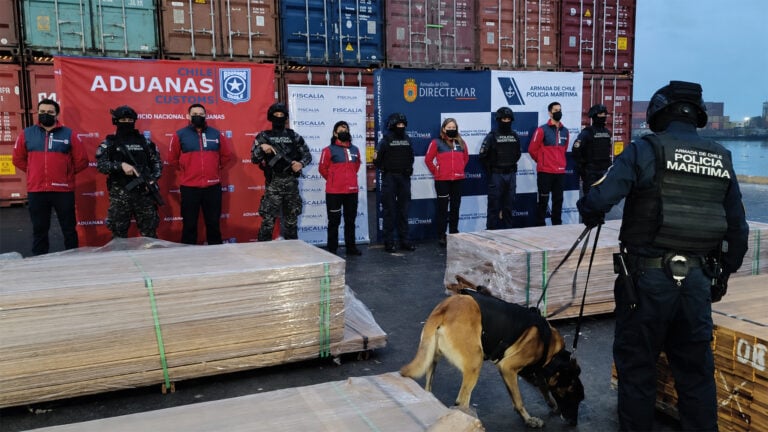
Maritime corridors in the Caribbean and Eastern Pacific have become one of the Western Hemisphere’s principal security frontiers. In addition to sustaining global trade and regional fishing industries, these routes now operate as logistical arteries for transnational organized crime involved in drug trafficking, arms smuggling, chemical precursor trafficking, and other illicit activities. According to the United Nations Office on Drugs…

Honduras, US Expand Cooperation Against Organized Crime

Honduras, US Expand Cooperation Against Organized Crime

Cooperation between Honduras and the United States against transnational criminal organizations is increasingly focused on operational coordination, intelligence sharing, and maritime security as authorities confront evolving drug trafficking networks in Central America. Recent meetings and joint initiatives reflect a broader regional effort to strengthen the fight against organized crime, particularly as trafficking routes, criminal structures, and illicit economies continue to…

Partnership and Cooperation: Jamaica’s Force Multiplier Against Transnational Organized Crime

Partnership and Cooperation: Jamaica’s Force Multiplier Against Transnational Organized Crime

It is no secret that the increasingly borderless nature of transnational organized crime has sent law enforcement bodies worldwide scrambling to keep pace with criminal syndicates. Attackers, money routes, communications channels, and beneficiaries are often spread across multiple jurisdictions, reinforcing the operational reality that cybercrime investigations span several countries simultaneously. In Jamaica, a major shift is taking place as the…

Organized Crime as a Strategic Threat to Democratic Governance in the Hemisphere

Organized Crime as a Strategic Threat to Democratic Governance in the Hemisphere

Organized crime has evolved from a public security challenge into a strategic threat to democratic governance in Latin America and the Caribbean. Driven by increasingly lucrative illicit markets, criminal organizations have expanded their influence over territories, economies, and institutions, eroding state authority and weakening democracies’ ability to respond. Such is the warning issued by Laura Chinchilla, former president of Costa…

‘Legal Fast’: A New Strategy Against Organized Crime Between Europe and Latin America

‘Legal Fast’: A New Strategy Against Organized Crime Between Europe and Latin America

As transnational criminal organizations continue adapting their trafficking methods across the Atlantic, authorities from Latin America and Europe are seeking to strengthen not only interdiction efforts, but also the investigations that follow major drug seizures. Against this backdrop, the United Nations Office on Drugs and Crime (UNODC), together with Belgian partners and countries from Latin America and the Caribbean, launched…

Argentina Positions CRIACO as Southern Cone Hub Against Transnational Crime

Argentina Positions CRIACO as Southern Cone Hub Against Transnational Crime

Argentina and the United States are further expanding bilateral security cooperation through the launch of the Regional Center for Information and Analysis on Organized Crime (CRIACO), a new initiative aimed at strengthening regional coordination against transnational criminal networks operating across the Southern Cone. Inaugurated in Buenos Aires on April 24, the center is designed to improve intelligence-sharing, operational coordination, and…

A Multinational Dragnet in the Caribbean: How the Zeus Strategy Operates

A Multinational Dragnet in the Caribbean: How the Zeus Strategy Operates

The multinational Zeus strategy, led by the Colombian Aerospace Force (FAC), has, since its 2019 launch, become one of the region’s most extensive cooperative efforts against transnational organized crime, bringing together dozens of countries and agencies across the Americas and the Caribbean. Zeus Caribbean I, one of its most recent operations in the Caribbean basin, integrated air, maritime, and intelligence…

Investing in Citizen Security: Common Solutions for Common Problems

Investing in Citizen Security: Common Solutions for Common Problems

In a context where organized crime affects numerous communities across Latin America, citizen security has become one of the population’s primary concerns. For Cristian Zamora, mayor of Cuenca, Ecuador, and president of the Latin American Federation of Cities, Municipalities, and Associations of Local Governments (FLACMA), strengthening citizen participation and community cohesion is a fundamental part of the solution. During the…

How Regional ISR Integration Strengthens Countercrime Operations in Central America

How Regional ISR Integration Strengthens Countercrime Operations in Central America

Intelligence, surveillance, and reconnaissance (ISR) capabilities, strengthened through regional cooperation and support from strategic partners, are increasingly shaping how Central American countries detect, track, and respond to transnational criminal activity. Across the region, the integration of advanced monitoring technologies, information-sharing systems, and multinational coordination is improving authorities’ ability to monitor illicit activity across air, maritime, and border corridors frequently exploited…

The Reconfiguration of Organized Crime Under Security Pressure in Latin America

The Reconfiguration of Organized Crime Under Security Pressure in Latin America

In recent years, organized crime in Latin America has undergone significant transformations driven in part by sustained pressure from security forces. Criminal organizations across the region have adapted by fragmenting their structures, incorporating advanced technologies, diversifying illicit operations, and strengthening transnational connections. These evolving dynamics are reshaping the regional security environment and complicating efforts to combat organized crime. Evolution of…

Persistent Vigilance: Maritime Enforcement Adapts to Evolving Threats at Sea

Persistent Vigilance: Maritime Enforcement Adapts to Evolving Threats at Sea

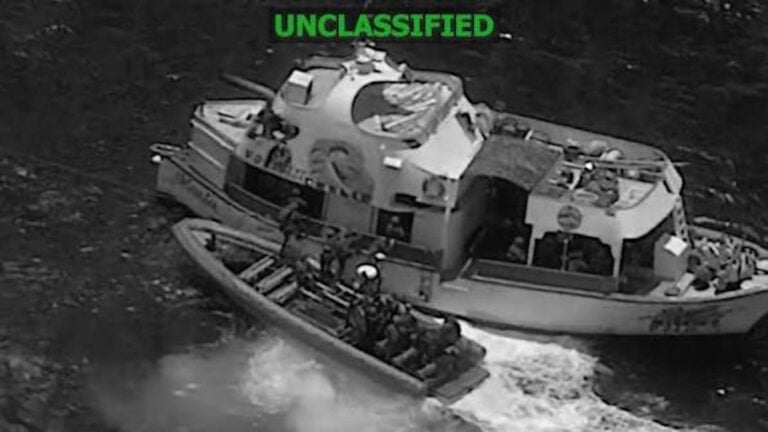
Maritime security forces across the Western Hemisphere are operating in an increasingly complex environment where illicit actors continuously adapt their methods to evade detection at sea. From narcotrafficking operations using decentralized logistics to deceptive maritime practices associated with sanctions-evasion vessels, authorities across the region are confronting maritime threats that are more dispersed, flexible, and difficult to identify than in previous…

Mexican Cartels’ Regional Networks Challenge Security Across Latin America

Mexican Cartels’ Regional Networks Challenge Security Across Latin America

The expansion of Mexican cartels across Latin America is no longer defined solely by the movement of drugs. Increasingly, organizations such as the Sinaloa Cartel and Jalisco New Generation Cartel (CJNG) are embedding themselves into regional criminal ecosystems through alliances, logistics networks, corruption, and control of strategic infrastructure, creating security challenges that extend far beyond narcotics trafficking. As such, the…