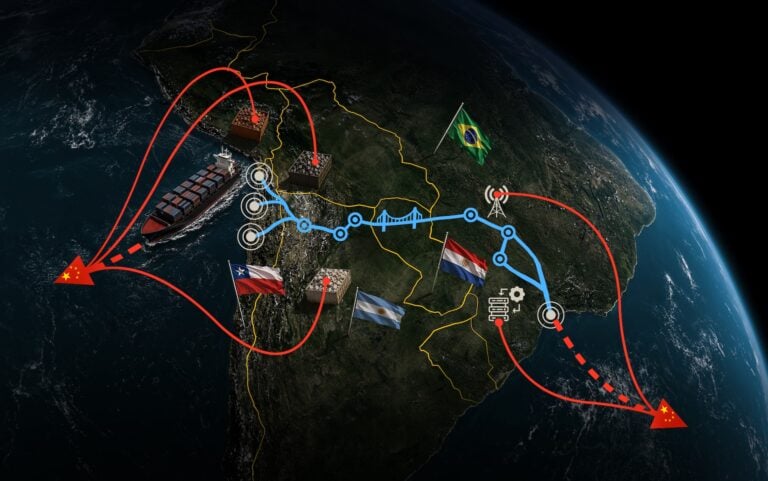

China’s global expansion of port infrastructure is widely regarded as part of a broader strategy to expand geopolitical influence, secure access to strategic supply chains, and strengthen its long-term positioning. According to the report, Anchoring Global Ambitions, published by AidData in partnership with the Center for Strategic and International Studies (CSIS), Beijing has spent the last two decades building an…
Browsing: South America
A Strategic Megaproject: Chinese Infrastructure Expands in Peru
China’s growing role in Peru’s strategic infrastructure is raising new questions about economic dependence, control of critical logistics networks, and Beijing’s expanding influence in South America. In early 2026, the Peruvian government awarded Power Construction Corporation of China (POWERCHINA) a $420 million engineering, procurement, and construction contract to develop a 120-kilometer railway line, connecting the Port of Chancay, on Peru’s…
American Air Chiefs Reaffirm Commitment to Regional Security, Address Shared Challenges at CONJEFAMER 2026
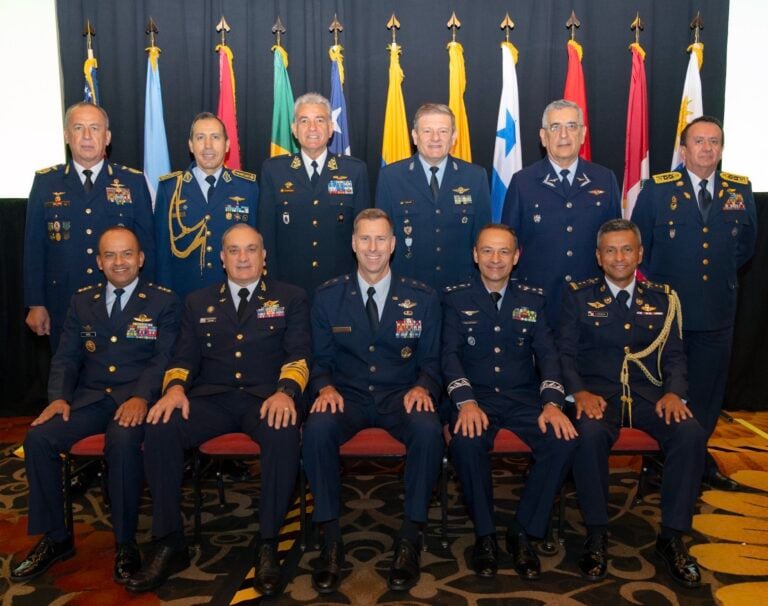
Air chiefs and senior military leaders representing air forces from 19 nations across the Western Hemisphere gathered in the Dominican Republic June 15-19 for the 66th annual Conference of the American Air Chiefs (CONJEFAMER), reinforcing a shared commitment to regional security, cooperation, and interoperability through the System of Cooperation Among the American Air Forces (SICOFAA). The annual conference serves as…
Confucius Institutes: Beijing’s Academic Influence Network
Across Latin America, Confucius Institutes present themselves as centers for Chinese language instruction and cultural exchange, offering Mandarin courses and traditional arts programs that have attracted students and universities throughout the region. Yet analysts argue these institutes serve a broader strategic purpose: helping Beijing cultivate long-term influence over academic institutions, future decision-makers, and research ecosystems that increasingly intersect with national…
Amistad 2026 Builds Medical Readiness Through Partnership in Paraguay
U.S. Air Forces Southern/12th Air Force (AFSOUTH) launched Amistad 2026 in Paraguay June 15, beginning a series of health security cooperation engagements designed to strengthen partnerships and bolster regional health security across the Western Hemisphere. Now in its third consecutive year in Paraguay, Amistad 2026 builds on enduring relationships established through previous missions. Teams will work side by side in…
China’s Strategic Penetration of Latin America Through Academia and Cultural Networks
China’s penetration through universities, Confucius Institutes, collaborations with the academic world, scholarships, and international forums is growing in Latin America. The purposes are manifold, ranging from consensus building to industrial and military espionage, but the impact on the region is significant. In addition to compromising countries’ national and economic security, China undermines democracy in the region through propaganda and disinformation.…
Argentina Positions CRIACO as Southern Cone Hub Against Transnational Crime
Argentina and the United States are further expanding bilateral security cooperation through the launch of the Regional Center for Information and Analysis on Organized Crime (CRIACO), a new initiative aimed at strengthening regional coordination against transnational criminal networks operating across the Southern Cone. Inaugurated in Buenos Aires on April 24, the center is designed to improve intelligence-sharing, operational coordination, and…
Investing in Citizen Security: Common Solutions for Common Problems
In a context where organized crime affects numerous communities across Latin America, citizen security has become one of the population’s primary concerns. For Cristian Zamora, mayor of Cuenca, Ecuador, and president of the Latin American Federation of Cities, Municipalities, and Associations of Local Governments (FLACMA), strengthening citizen participation and community cohesion is a fundamental part of the solution. During the…
The Reconfiguration of Organized Crime Under Security Pressure in Latin America
In recent years, organized crime in Latin America has undergone significant transformations driven in part by sustained pressure from security forces. Criminal organizations across the region have adapted by fragmenting their structures, incorporating advanced technologies, diversifying illicit operations, and strengthening transnational connections. These evolving dynamics are reshaping the regional security environment and complicating efforts to combat organized crime. Evolution of…
Ecuador and Kentucky National Guard Mark 30 Years of Partnership During Exercise EL GATO
Ecuadorian Army, Navy, and Air Force personnel trained alongside members of the Kentucky Army National Guard during Exercise EL GATO in Salinas, Ecuador, May 10–19, marking the 30th anniversary of the partnership between Ecuador and Kentucky under the State Partnership Program (SPP). The exercise brought together military police and security personnel from both partners to strengthen interoperability, exchange operational experiences,…
Chinese Projects’ Rapid Pace Raises Oversight and Security Concerns in Latin America
The accelerated implementation of China-linked infrastructure projects across Latin America is increasingly challenging institutional oversight mechanisms during execution. This model, which prioritizes rapid delivery, often compresses evaluation and monitoring processes, affecting transparency and long-term sustainability. In countries facing institutional and oversight challenges, analysts warn that accelerated implementation can reduce opportunities for technical review, public scrutiny, and comprehensive oversight. While accelerated…
Persistent Vigilance: Maritime Enforcement Adapts to Evolving Threats at Sea
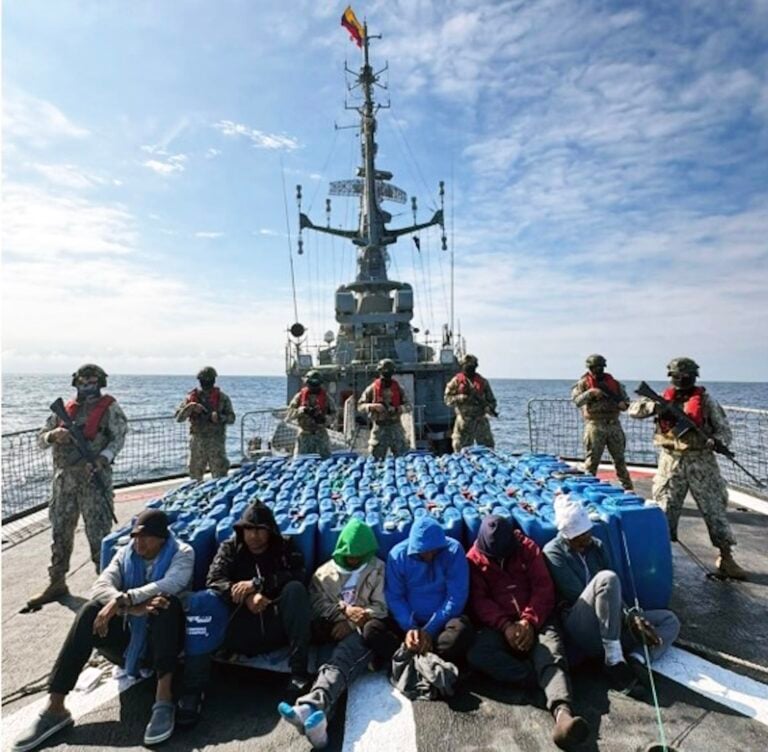
Maritime security forces across the Western Hemisphere are operating in an increasingly complex environment where illicit actors continuously adapt their methods to evade detection at sea. From narcotrafficking operations using decentralized logistics to deceptive maritime practices associated with sanctions-evasion vessels, authorities across the region are confronting maritime threats that are more dispersed, flexible, and difficult to identify than in previous…