
The Colombian department of Guaviare has become one of the principal battlegrounds in the conflict between rival dissident factions of the Revolutionary Armed Forces of Colombia (FARC). Rather than fighting over coca cultivation alone, the armed groups are competing for control of strategic trafficking corridors, criminal economies, and key logistics routes.
Following the 2016 peace agreement, the FARC fighters who rejected demobilization fragmented into small regional fronts. Today, many of these structures are aligned with one of two rival organizations. The Estado Mayor Central (EMC), led by Iván Mordisco, has abandoned negotiations with the Colombian government and continues armed operations against state forces. The Estado Mayor de Bloques y Frente (EMBF), led by Alexander Díaz Mendoza, alias Calarcá Córdoba, split from the EMC in 2024 and has continued to pursue negotiations while competing with its former allies for territorial control.
The rivalry has transformed Guaviare into one of Colombia’s most strategically important security challenges. Located between the Eastern Plains and the Amazon rainforest, the department serves as a crossroads for river, jungle, and overland routes used to move cocaine, weapons, supplies, and personnel across southeastern Colombia.
A battle for territory and criminal economies
Guaviare is a key battleground because it offers far more than access to trafficking routes. Rival factions are also fighting for control of local economies, particularly cattle ranching, land, and extortion, which provide a steady source of financing while helping integrate illicit profits into legitimate economic activity.
The current cycle of violence began in January 2025, when the EMBF-aligned Jorge Suárez Briceño Bloc attacked an EMC Amazonas Bloc camp, killing 20 people, including 6 minors, according to Colombian authorities.
Violence escalated further in May 2026, when fighters from the EMC’s Amazonas Bloc attacked a camp belonging to the EMBF-aligned Isaías Carvajal Front near Barranco Colorado, in the municipality of San José del Guaviare. Colombian authorities reported that 48 people were killed, including 11 minors, making it one of the deadliest clashes between dissident factions in recent years. The confrontation followed another deadly incident in January where 26 people were killed in the nearby town of El Retorno.
Much of the fighting has centered on Barranco Colorado, El Retorno, San José del Guaviare, and nearby Calamar because these areas sit astride the transportation corridors connecting Guaviare with Meta, Caquetá, and the broader Amazon region. According to Fundación Paz y Reconciliación (Pares) and Corporación Nuevo Arco Iris, Calarcá’s forces have sought to expand their presence toward Calamar to gain greater control over cattle routes and criminal logistics.
The conflict also illustrates the growing operational flexibility of Colombia’s dissident organizations. Rather than functioning as isolated regional groups, they are capable of shifting experienced fighters across departments to reinforce threatened fronts.
One example was alias Gerson Ramírez, a commander from the Carlos Patiño Front in Cauca who, according to Colombian collaborative journalism alliance La Liga Contra Silencio, was killed during the fighting in El Retorno after being deployed hundreds of kilometers from his normal area of operations. Such movements demonstrate the ability of dissident organizations to reinforce local conflicts with personnel drawn from other regions, challenging military efforts to contain violence within a single department.
Military pressure
Colombia has responded by increasing military pressure across Guaviare and neighboring departments.
In March 2026, the Colombian government activated the 10th Rapid Deployment Force, assigning it responsibility for intensifying operations against the EMC and dismantling its leadership and operational structures across Colombia. According to the Colombian Military Forces, subsequent operations across Guaviare, Amazonas, and neighboring departments resulted in the neutralization of more than 120 EMC fighters, although Mordisco remains at large.
Earlier, in November 2025, Operation Orión targeted the municipality of Calamar, one of the strategic centers of the criminal corridor contested by both factions. During the operation, Colombian forces neutralized 25 dissident fighters and seized more than 59,000 rounds of ammunition plus rifles, mortars, grenades, and other military equipment.
Although these operations have disrupted dissident structures, fighting has continued in central Guaviare, underscoring both factions’ ability to regenerate forces and contest strategically important terrain.
Financing the conflict
Unlike many criminal organizations whose income depends primarily on illicit commodities, the rival dissident factions in Guaviare have developed diversified sources of revenue that combine illegal and legal activities.
Although coca cultivation remains an important part of the local illicit economy, Guaviare’s principal criminal revenues increasingly come from land grabbing, extortion, cattle ranching, and control over transportation corridors.
According to Juanita Vélez, cofounder of Fundación Conflict Responses (CORE), the EMBF maintains its own informal land registry and “charge extortion fees [vacunas] per hectare of land bought or sold in their territory,” while also acting as an informal authority to resolve disputes among ranchers.
The legal nature of cattle ranching also makes it an effective mechanism for laundering criminal proceeds.
In Vélez’s words, the cattle industry “serves them to launder drug-trafficking money, but also for them to own cattle themselves, launder money, and they also invest in agricultural projects […] in an area called El Yarí, where they have a rice-threshing operation and some soy crops. They’ve built up a whole empire in which they combine illicit economies with legitimate economies.”
Beyond generating income, these activities help armed groups strengthen their territorial influence by embedding themselves in the local economy, making them more resilient to military pressure.
A strategic logistics hub
Guaviare is strategically important not only because of its local economies but also because of its position within the broader logistics network that sustain transnational organized crime across southeastern Colombia.
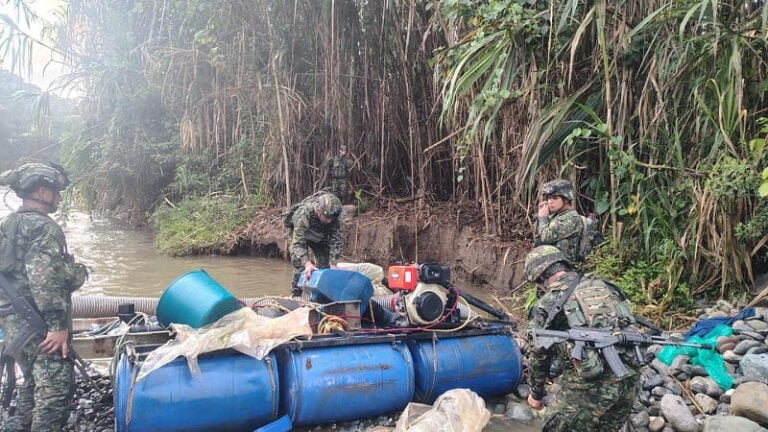
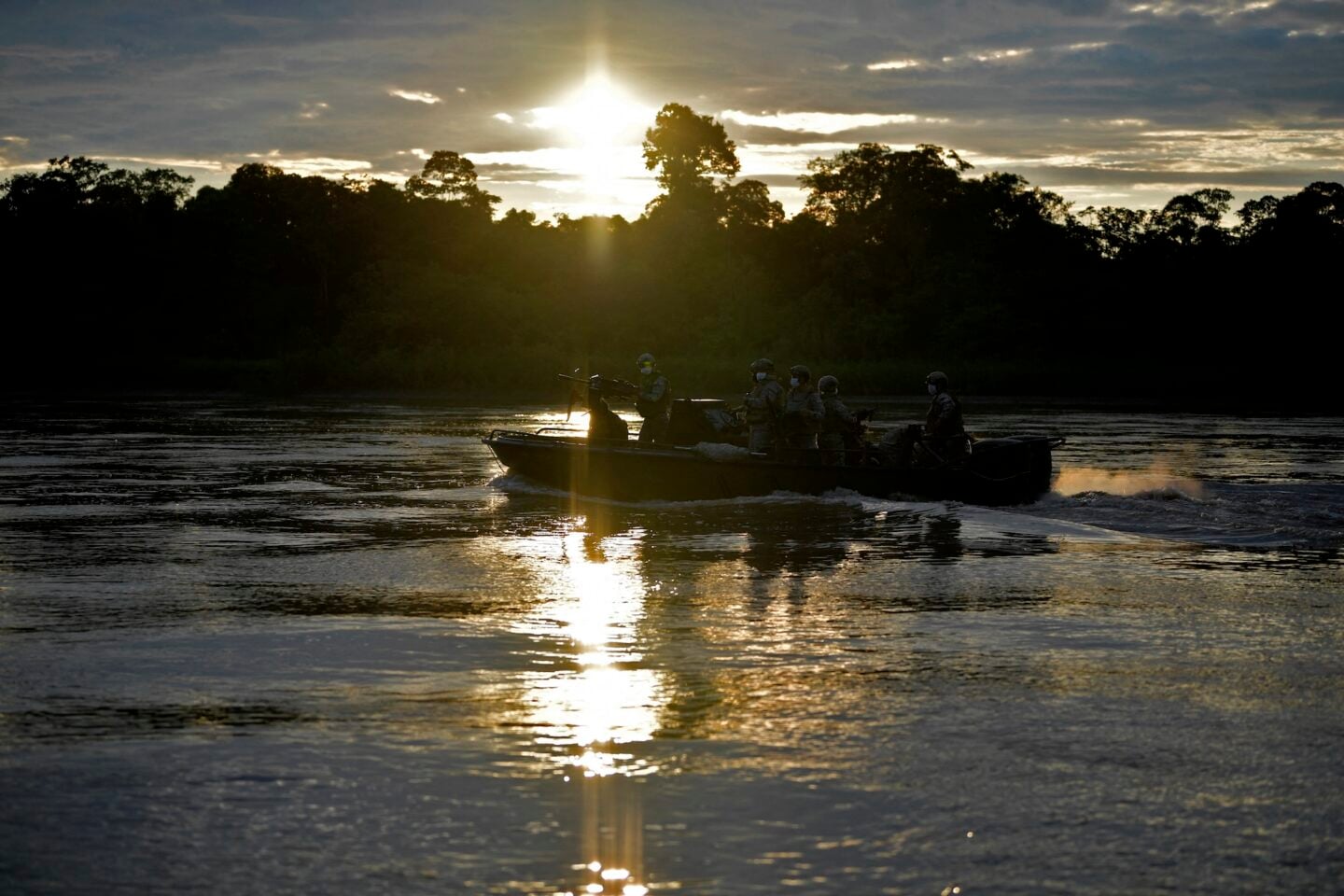
According to Pares, a network of rivers, jungle trails, and overland routes connects the Serranía de La Macarena mountain range, the Eastern Plains, the Amazon rainforest with corridors extending toward Venezuela and Brazil. These routes connect criminal economies in Meta, Caquetá, Vaupés, and Guainía, allowing armed groups to move cocaine, weapons, supplies, and personnel across a vast and difficult-to-control region.
For this reason, Guaviare was a one of the FARC’s historic strongholds before the 2016 peace agreement. Following the demobilization, the EMC initially emerged as the dominant successor organization in the department. That balance changed after the split between Iván Mordisco and Calarcá, which transformed former allies into rivals competing for many of the same strategic corridors.
The division stemmed from disagreements over negotiations with the Colombian government and the future direction of the organization. While Calarcá and the fronts aligned with him sought to continue dialogue, Mordisco rejected further negotiations and intensified armed operations against state forces. The split divided the EMC into two competing structures.
The rivalry extends well beyond Guaviare. Elsewhere in Colombia, the EMC and EMBF are also competing for control of river corridors and trafficking routes in Caquetá, Putumayo, and Amazonas. Together, these departments form part of the Amazon basin, where extensive river networks provide critical transportation corridors connecting Colombia with Ecuador, Peru, and Brazil.
The humanitarian consequences have been significant. According to Colombian authorities and humanitarian organizations, fighting and coercive measures imposed by armed groups have confined thousands of residents to their communities, disrupted transportation, and restricted access to essential services as dissident factions seek to control movement along rivers and rural roads.
Regional implications
The conflict in Guaviare highlights how Colombia’s FARC dissident organizations have evolved since the 2016 peace agreement. While they retain guerrilla structures, they also operate as interconnected criminal networks capable of shifting personnel, resources, and logistics across departmental boundaries to protect strategic trafficking corridors and other illicit economies.
Guaviare demonstrates that control of strategic corridors increasingly depends not only on armed strength but also on the ability to dominate transportation networks, infiltrate legal economies, finance operations through diversified criminal activities, and maintain freedom of movement across remote regions.
As rival dissident factions continue to compete for these corridors, Guaviare is likely to remain one of Colombia’s most strategically important security challenges. The conflict illustrates how disputes over criminal logistics can quickly expand beyond a single department as armed groups reinforce one another across Colombia’s southeast, underscoring the complexity of disrupting the interconnected networks that sustain transnational organized crime.