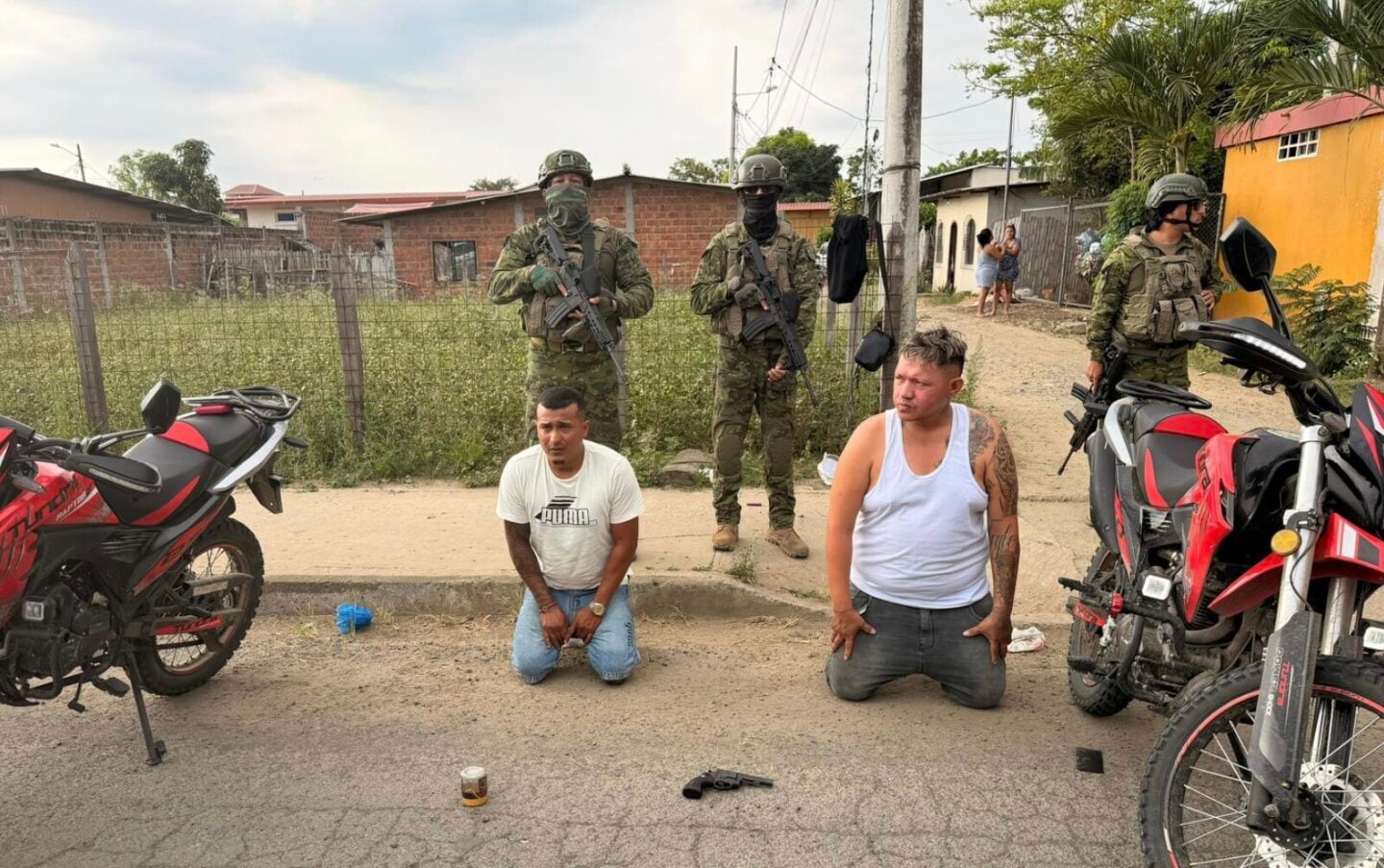

Ecuadorian security forces captured Francisco Manuel Bermúdez Cagua, alias Churrón, one of the top leaders of Los Choneros, in Guayaquil on July 2. Bermúdez Cagua was wanted by U.S. authorities on drug trafficking and weapons charges. The U.S. government had offered a reward of up to $5 million for information leading to his arrest or conviction.
The arrest further reduced the known leadership ranks of an organization that has destabilized Ecuador in recent years, but it also highlighted a challenge that extends beyond capturing its leaders: preventing the financial, transportation, supply, and distribution networks that sustain Los Choneros from continuing to operate and enabling new leaders to emerge.
Subsequent Ecuadorian operations, carried out with international cooperation, show pressure increasingly extending to those components. Police investigations, financial sanctions, and actions against land and maritime networks have targeted transporters, vessels, fuel, money, and other resources that allow the organization to maintain its ties to transnational drug trafficking.
From provincial gang to transnational criminal network
Los Choneros emerged in the 1990s as a local gang in the coastal province of Manabí. Following the arrest of its main leaders in 2011, the group reorganized, expanded its alliances, and evolved into a nationwide criminal federation, InSight Crime reported.
Over the years, Los Choneros expanded from contract killings, extortion, and robbery to become one of Ecuador’s largest drug trafficking organizations. It capitalized on the country’s location between Colombia and Peru, two of the world’s leading cocaine-producing countries, and developed networks to store, transport, and ship drug loads to international markets.
The organization maintains ties with Mexico’s Sinaloa Cartel and has developed extensive logistical capabilities to support cocaine trafficking. According to InSight Crime, Los Choneros leaders have long been involved in organizing maritime routes and refueling points in the Pacific, infrastructure designed to allow drug-laden vessels to travel greater distances.
The original structure also suffered significant fractures. After years of internal disputes and the separation of groups that previously operated under its umbrella, Los Choneros continued to operate through its own networks and transnational connections.
Pressure on its leadership intensified with the June 2025 recapture of José Adolfo Macías Villamar, alias Fito, who was extradited to the United States the following month and faces drug trafficking and weapons charges. Churrón’s subsequent capture further reduced the number of known leaders capable of coordinating the organization’s activities.
Pressure extends beyond top leaders
In September 2025, the U.S. Department of State designated Los Choneros a Foreign Terrorist Organization (FTO), expanding the tools available to target the organization and those who support it.
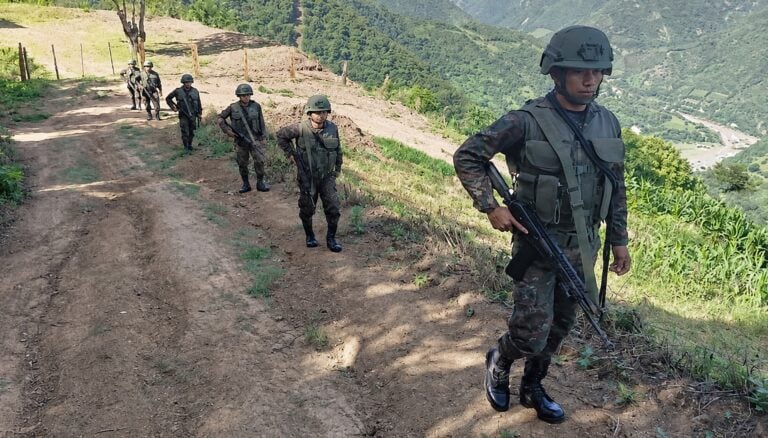
In March 2026, Ecuadorian and U.S. military forces launched operations against criminal organizations designated as FTOs in Ecuador. U.S. Southern Command (SOUTHCOM) highlighted the cooperation between U.S. and Ecuadorian forces in confronting these criminal networks.
“We commend the men and women of the Ecuadorian armed forces for their unwavering commitment to this fight,” said U.S. Marine Corps General Francis L. Donovan, SOUTHCOM commander. “They demonstrate courage and resolve through sustained action against narco-terrorists in their country.”
Pressure continued in August with the Ecuadorian National Police’s Operation Jericó, which specifically targeted Los Choneros. Following more than a year of investigation, authorities conducted simultaneous raids as part of a broader operation that also included actions against Los Lobos. Jericó led to the arrests of suspected members of a network that moved drugs from Ecuador’s northern border to Guayaquil for distribution.
The investigations were carried out with cooperation from SOUTHCOM and the DEA, whose support strengthened efforts against transnational drug trafficking, according to the Ecuadorian National Police.
The operation demonstrated how investigations into a criminal organization can continue after the capture of its top leaders, reaching further into the ranks of those responsible for moving drugs, coordinating routes, and sustaining the organization’s activities.
Finances, vessels, and supply networks
That pressure also extended to financial and maritime networks. On August 20, the U.S. Department of the Treasury’s Office of Foreign Assets Control (OFAC) sanctioned 15 Ecuador-based targets and identified 10 vessels as blocked property within a cocaine trafficking network.
According to the Treasury Department, members of the network maintained ties to Los Choneros and Los Lobos and used companies and fishing vessels near Manta to facilitate cocaine trafficking across the Eastern Pacific. Some operators coordinated the refueling of vessels transporting drugs toward Central America and Mexico.
The financial action was followed by a series of operations targeting that maritime infrastructure. Between late August and early September, Joint Task Force Western Hemisphere (JTF-WHEM), under SOUTHCOM’s direction and in coordination with the Ecuadorian government, carried out several interdictions against vessels that, according to U.S. intelligence, operated as floating refueling stations supporting Los Choneros in the Eastern Pacific.
U.S. forces boarded and searched the vessels and removed those aboard before sinking them. SOUTHCOM said the crew members were safely transferred to Ecuadorian authorities.
The operations targeted a function less visible than the direct transportation of cocaine: the infrastructure that enables other vessels to remain at sea and travel greater distances. Fuel, food, communications, and support points can extend the reach of trafficking routes and reduce the need for drug-trafficking vessels to return to port.
“We are taking decisive action to dismantle and destroy sophisticated logistics networks used by narco-terrorists to traffic drugs and spread violence throughout the Western Hemisphere,” Gen. Donovan said following the September 2 operation. The SOUTHCOM commander said the task force seeks to apply “total systemic friction” to those networks.
SOUTHCOM also linked the actions to the objectives of the Americas Counter Cartel Coalition (ACCC), an initiative comprising countries across the region aimed at strengthening cooperation against transnational criminal organizations.
Preventing the organization from reconstituting
Weakening Los Choneros and other criminal organizations requires sustained pressure, and cooperation with strategic partners will be critical to maintaining results.
“Cooperation should focus on agreements that include training, education, intelligence sharing, equipment, and technology transfer,” Ecuadorian international affairs analyst Jean Paul Pinto told Diálogo. “As occurred in Mexico, the United States can be a relevant partner for Ecuador in intelligence, vessels, helicopters, and personnel supporting operations.”
Shared intelligence becomes particularly important as pressure moves beyond top leaders to identify those who control money, coordinate transportation, supply weapons and fuel, or maintain the connections necessary for an organization to continue operating despite the loss of its leaders.
The captures of Fito and Churrón, Operation Jericó, sanctions against operators and vessels, and subsequent actions against floating refueling stations represent different levels of that strategy. Together, they seek to reduce not only Los Choneros’ command capacity but also the resources that allow the organization to replace leaders, rebuild routes, and maintain connections with drug trafficking networks outside Ecuador.
The capture of leaders alone rarely eliminates an entire criminal structure. It can also trigger fragmentation and disputes over routes or territory as other members attempt to fill the spaces left by detained leaders. Ecuador’s challenge is to anticipate that reorganization and maintain pressure on the illicit economies and logistics networks that allow these groups to survive.
The sequence of operations in 2026 points to a strategy increasingly focused on that objective: turning the removal of top leaders into more lasting disruption of the structure that sustains them.