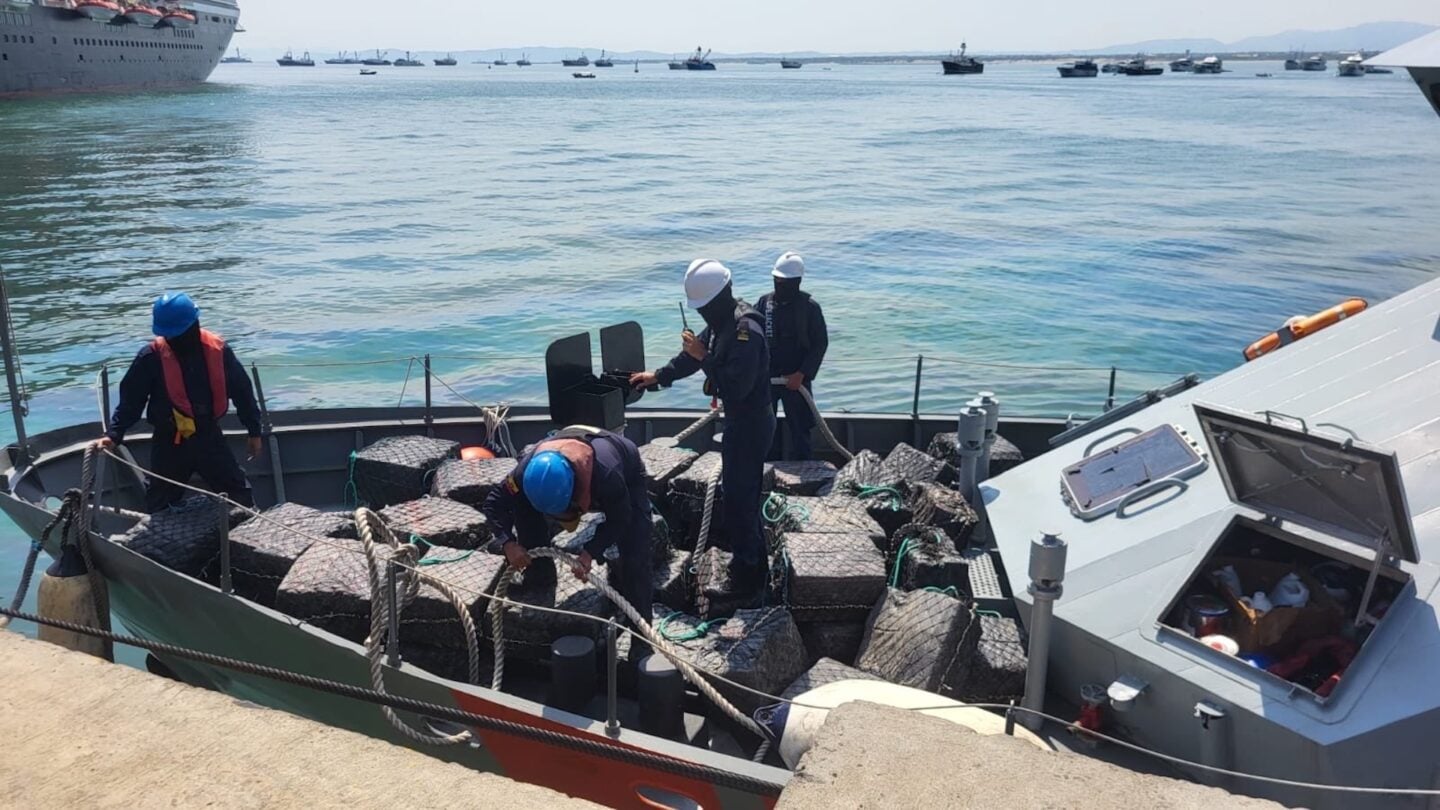

The convergence between Mexican cartels and Ecuadorian criminal organizations has evolved from a system of territorial alliances into a more flexible and decentralized transnational logistics network. While Mexican cartels once relied on local groups to move cocaine from the Colombian border to Ecuadorian ports, cooperation increasingly extends along the Eastern Pacific (EPAC) maritime corridor: Ecuadorian groups provide infrastructure, vessels, and crews, while Mexican cartels receive the shipments and arrange their onward transport.
“This route makes it possible to move large volumes over long distances without depending on a single segment or operator,” Nicolás Zevallos Trigoso, director of Public Affairs at the Institute of Criminology in Peru, told Diálogo. This flexibility is facilitated by the infiltration of Ecuador’s fishing sector, which, according to Zevallos, provides criminal groups with logistical cover and allows them to spread risk, “preventing the fall of one operator from compromising the entire chain.”
Sanctions announced August 20 by the U.S. Department of the Treasury’s Office of Foreign Assets Control (OFAC) illustrate this dynamic. According to Treasury, eight Ecuadorian nationals, 10 vessels, and seven Ecuadorian companies, primarily in the fishing sector, were involved in a network that clandestinely transported thousands of kilograms of cocaine each month from South America to Mexico through the EPAC corridor.
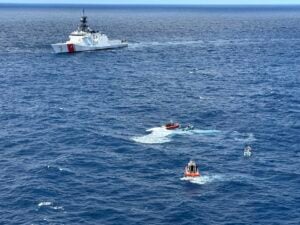
At the center of the network are operators linked to Los Choneros and Los Lobos, two of Ecuador’s most violent criminal organizations, which the United States designated as Foreign Terrorist Organizations (FTOs) and Specially Designated Global Terrorists (SDGTs) in September 2025 and which have ties to the Sinaloa Cartel and the Jalisco New Generation Cartel (CJNG). According to Treasury, the network used fishing fleets off Ecuador’s coast to provide fuel, food, and at-sea assistance to go-fast vessels (GFVs) bound for Mexico. Some of the vessels also detected and monitored law enforcement vessels, while at least one was used to transport cocaine.
OFAC’s action adds a financial dimension to the operational pressure on these networks. The approach goes beyond targeting their leaders, seeking to simultaneously disrupt the nodes that enable them to function — operators, companies, vessels, and other facilitators — while complementing maritime interdiction operations and intelligence sharing.
The operation is part of a coordinated interagency counternarcotics effort involving Homeland Security Task Force-Tampa, Joint Interagency Task Force South (JIATF-S), the U.S. Drug Enforcement Administration (DEA), the Florida National Guard, U.S. Southern Command (SOUTHCOM), the Office of Naval Intelligence, and the U.S. Coast Guard. These efforts were reinforced in August 2025 with the launch of Operation Pacific Viper, which deployed cutters, aircraft, and tactical teams in the Eastern Pacific and had seized more than 112 metric tons of cocaine by June 2026. In December 2025, a coordinated operation between Ecuador and the United States also seized 4.6 metric tons of drugs at sea.
Fishing as drug trafficking Infrastructure
The network identified by OFAC illustrates an increasingly established dynamic: the integration of criminal activities into the legal economy to turn its infrastructure, resources, and capabilities into logistical assets for drug trafficking. In this model, fishing, according to Zevallos, “is not simply a cover, but an operational infrastructure” that allows criminal networks to reduce costs, risks, and exposure. “A legal fleet provides what maritime drug trafficking cannot create without raising suspicion — sailing permits, registrations, authorized routes, docks, cold-chain infrastructure.”
The structure is compartmentalized into several levels, with distinct but interconnected functions. At the operational level are the coordinators who connect criminal organizations with transportation networks and manage large-scale movements. According to Treasury, Julio Javier Mero Franco operated on behalf of Los Choneros and coordinated “the movement of approximately 30-40 tons of cocaine per month from Ecuador to Central America and Mexico,” while Milton Edixon Martínez Mendoza was linked to Los Lobos and Los Choneros and coordinated the transportation of thousands of kilograms of cocaine aboard GFVs.
The second level consists of the logistical infrastructure that makes drug transportation possible. According to Treasury, fishing companies such as Arcasdenoe S.A., owned by Alfonso Mero Mero and his sons Roberth Alfonso Mero Arcentales and Edwar Alexis Mero Arcentales, provided that infrastructure. OFAC said the company’s fleet was involved in trafficking thousands of kilograms of cocaine from South America to Mexico and, with access to “government-subsidized fuel,” provided GFVs with “refueling, food, and medical services,” while also detecting and monitoring law enforcement vessels. Treasury also said Edwar Mero Arcentales was directly involved in drug trafficking in coordination with Los Choneros.
The third level involves the network’s ability to diversify its activities. Jimmy Leonidas Alarcón Holguín, one of the sanctioned individuals, owned or controlled five fishing companies and another company involved in the sale of construction materials. According to Zevallos, a presence across multiple sectors can increase criminal organizations’ ability to conceal and launder illicit proceeds.
By simultaneously targeting these different components, the sanctions seek to disrupt not only the movement of financial resources but also criminal organizations’ access to the companies, vessels, and services that sustain their operations.
Cloned vessels
Criminal exploitation of the fishing sector extends beyond the network identified by OFAC. Ecuadorian authorities and investigations have also documented the use of fraudulently registered or cloned vessels, locally known as “ghost vessels,” which can facilitate illicit activities and improper access to resources intended to support the fishing industry, such as subsidized fuel.
One of the most sophisticated forms of this manipulation is vessel cloning. “Cloning tells us that organized crime no longer needs to build parallel infrastructure: It only needs to falsify the administrative identity of legitimate infrastructure that already exists,” Zevallos said. “The advantage is twofold: It operates under the documentation of a real vessel, and when it is caught, criminal responsibility becomes blurred between two registered identities.”
One of the most notable cases involved Rosa Isabel, which was seized in October 2025 along with Siempre Nelly near the Galápagos Islands following intelligence sharing between Ecuadorian and U.S. authorities after eight packages containing weapons were discovered at sea. Inspections revealed a series of irregularities. Rosa Isabel’s sailing authorization had expired, its captain was not registered, and seven crew members were aboard without authorization. The auxiliary vessel El Rebelde was also found to have been cloned. Siempre Nelly, meanwhile, was carrying nearly 9,000 liters of undeclared fuel.
Journalistic investigations have highlighted how subsidized fuel represents a strategic asset for the criminal supply chain: A public resource intended for the fishing industry can be diverted to illicit networks to sustain their maritime operations. Cloning can facilitate this scheme by allowing a vessel to use the identity and documentation of a legitimate fishing boat to operate under the appearance of legality and gain access to resources intended for the sector.
Criminal governance
The infiltration of the fishing sector goes beyond exploiting its resources and infrastructure. It also allows criminal organizations to expand their control over those who work in the industry and the coastal communities that depend on it. This territorial control gives them not only resources and manpower but also access to information and a support network essential to maritime drug trafficking operations.
So-called vacunas, or protection payments periodically extorted from fishermen, are one of the main tools used to exert this control. According to Primicias, fishermen in San Lorenzo, Manabí, said they paid approximately $140 per vessel each month, amounting to an estimated $168,000 annually. The Ecuadorian Federation of Fishermen’s Organizations also estimates that nearly all of Manabí’s approximately 60,000 artisanal fishermen are exposed in some way to criminal activity. Extortion thus becomes a tool for controlling economic activity and movement, determining who can work, where they can navigate, and which routes they can use.
Criminal pressure on fishing communities also facilitates the recruitment of people with skills essential to maritime drug trafficking. Fishermen and crew members know the routes, sea conditions, and how to operate vessels — capabilities criminal organizations can exploit to move shipments and sustain their logistics networks.
The dynamic has already spread beyond Ecuador’s borders. “Ecuadorian criminal groups extort artisanal fishermen in northern Peru in coordination with local gangs, while supplies and equipment seized from those vessels ultimately feed the logistics of maritime drug trafficking,” Zevallos said.
The risk, therefore, is the progressive expansion beyond Ecuador’s borders of a model of criminal governance based on infiltrating local economies and controlling communities. The case exposed by OFAC shows that confronting these networks requires going beyond seizing drug shipments to identifying and dismantling the companies, vessels, financial flows, and logistical structures that sustain drug trafficking, while strengthening cooperation and intelligence sharing among the countries affected by these routes.