Jamaica’s MOCA: Leading the Fight Against Cyber-Enabled Transnational Organized Crime

Jamaica’s MOCA: Leading the Fight Against Cyber-Enabled Transnational Organized Crime

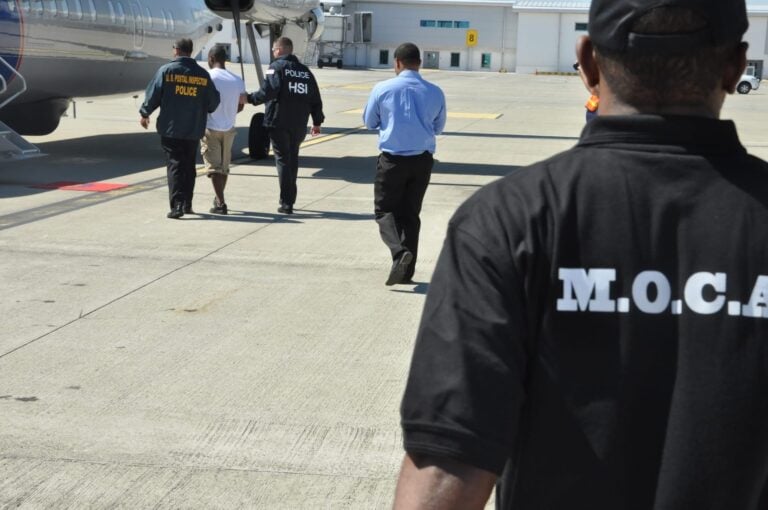
For years, the public image of Jamaica’s fraud problem has been dominated by one phrase: lottery scamming. But according to the Director General of Jamaica’s Major Organised Crime and Anti-Corruption Agency (MOCA), Colonel (R.) Desmond Edwards, that characterization no longer reflects the scale, sophistication, or operational realities of the threat facing Jamaica and the wider Caribbean. “What we are confronting…

Gen. Reynoso: ‘Space is the New Frontier for our Armed Forces’

Gen. Reynoso: ‘Space is the New Frontier for our Armed Forces’

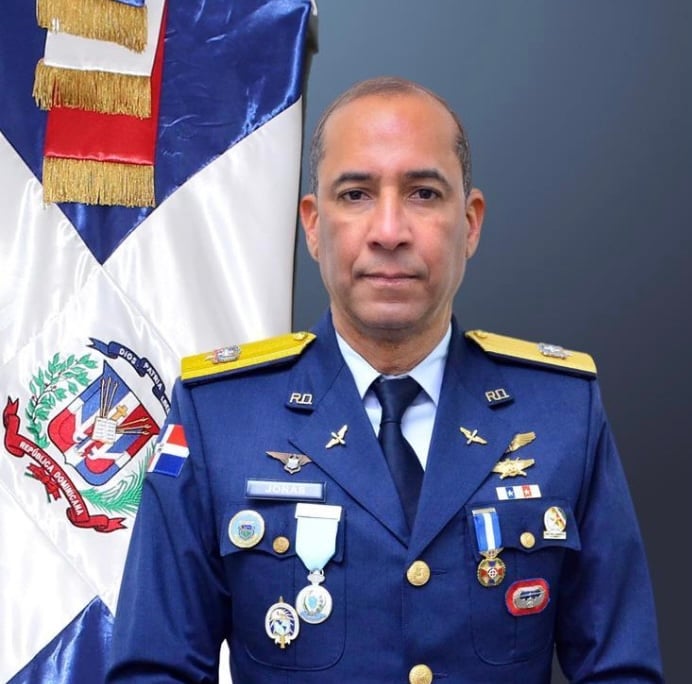
With nearly three decades of service in the Dominican Air Force and extensive experience in joint operations, intelligence, and international cooperation, Brigadier General Jonás Reynoso Barrera, executive director of the National Antiterrorism Directorate (DNA), has played a key role in strengthening the country’s defense and security capabilities. His career includes serving as liaison officer to Joint Interagency Task Force South…

American Air Chiefs Reaffirm Commitment to Regional Security, Address Shared Challenges at CONJEFAMER 2026

American Air Chiefs Reaffirm Commitment to Regional Security, Address Shared Challenges at CONJEFAMER 2026

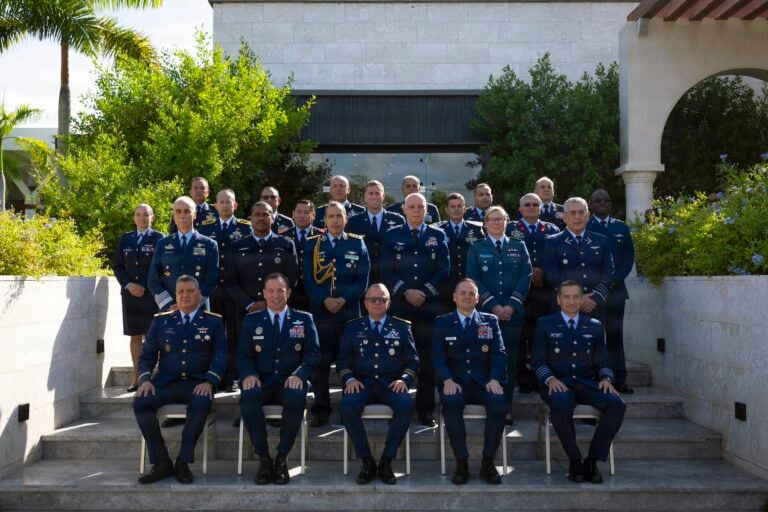
Air chiefs and senior military leaders representing air forces from 19 nations across the Western Hemisphere gathered in the Dominican Republic June 15-19 for the 66th annual Conference of the American Air Chiefs (CONJEFAMER), reinforcing a shared commitment to regional security, cooperation, and interoperability through the System of Cooperation Among the American Air Forces (SICOFAA). The annual conference serves as…

Partnership and Cooperation: Jamaica’s Force Multiplier Against Transnational Organized Crime

Partnership and Cooperation: Jamaica’s Force Multiplier Against Transnational Organized Crime

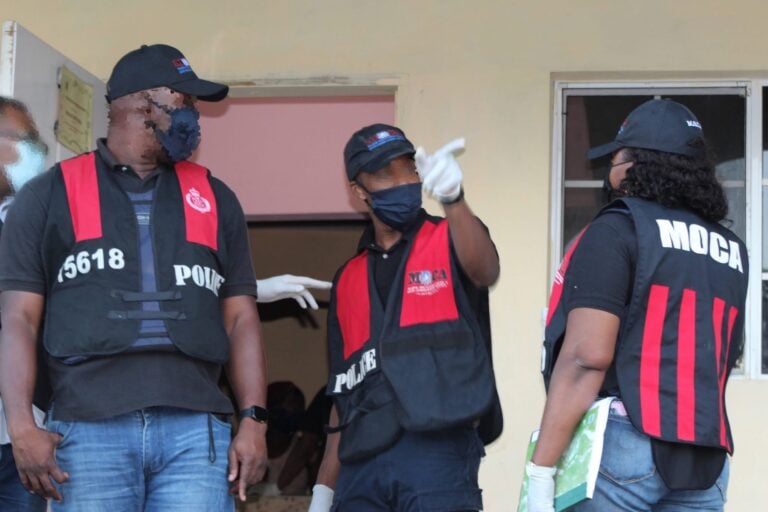
It is no secret that the increasingly borderless nature of transnational organized crime has sent law enforcement bodies worldwide scrambling to keep pace with criminal syndicates. Attackers, money routes, communications channels, and beneficiaries are often spread across multiple jurisdictions, reinforcing the operational reality that cybercrime investigations span several countries simultaneously. In Jamaica, a major shift is taking place as the…

Organized Crime as a Strategic Threat to Democratic Governance in the Hemisphere

Organized Crime as a Strategic Threat to Democratic Governance in the Hemisphere

Organized crime has evolved from a public security challenge into a strategic threat to democratic governance in Latin America and the Caribbean. Driven by increasingly lucrative illicit markets, criminal organizations have expanded their influence over territories, economies, and institutions, eroding state authority and weakening democracies’ ability to respond. Such is the warning issued by Laura Chinchilla, former president of Costa…

A Multinational Dragnet in the Caribbean: How the Zeus Strategy Operates

A Multinational Dragnet in the Caribbean: How the Zeus Strategy Operates

The multinational Zeus strategy, led by the Colombian Aerospace Force (FAC), has, since its 2019 launch, become one of the region’s most extensive cooperative efforts against transnational organized crime, bringing together dozens of countries and agencies across the Americas and the Caribbean. Zeus Caribbean I, one of its most recent operations in the Caribbean basin, integrated air, maritime, and intelligence…

Persistent Vigilance: Maritime Enforcement Adapts to Evolving Threats at Sea

Persistent Vigilance: Maritime Enforcement Adapts to Evolving Threats at Sea

Maritime security forces across the Western Hemisphere are operating in an increasingly complex environment where illicit actors continuously adapt their methods to evade detection at sea. From narcotrafficking operations using decentralized logistics to deceptive maritime practices associated with sanctions-evasion vessels, authorities across the region are confronting maritime threats that are more dispersed, flexible, and difficult to identify than in previous…

Haiti Enhances Operational Response with Gang Suppression Force

Haiti Enhances Operational Response with Gang Suppression Force

The deployment of the Gang Suppression Force (GSF) marks a shift in how security operations are conducted in Haiti, introducing a more robust, coordinated approach to confronting heavily armed gangs that control large areas of the country. Backed by international partners, the force is designed to operate with greater scale, mobility, and tactical capability than previous efforts. The GSF “represents…

Antigua and Barbuda Strengthens Maritime Security in the Eastern Caribbean

Antigua and Barbuda Strengthens Maritime Security in the Eastern Caribbean

Security cooperation between Antigua and Barbuda and the United States is strengthening maritime interdiction and surveillance capabilities in the Eastern Caribbean, a region frequently used by drug trafficking networks. Supported by multinational exercises, technical assistance, and intelligence sharing, these efforts are enhancing the country’s operational readiness and deepening its integration into the regional security framework. Antigua and Barbuda, located along…

Cooperation and Integration Strengthen Jamaica’s Maritime Security

Cooperation and Integration Strengthen Jamaica’s Maritime Security

Jamaica’s approach to maritime security has become a key example of how interagency coordination, integrated capabilities, and cooperation with regional partners can strengthen responses to transnational organized crime in the Caribbean. This strategy combines intelligence sharing, maritime domain awareness, surveillance, and joint operational action to improve the detection and interdiction of illicit maritime activity. Maritime interdiction: A blow to drug…

Caribbean Trafficking Routes to Europe Drive New Security Challenges

Caribbean Trafficking Routes to Europe Drive New Security Challenges

The Caribbean has ceased to be merely a secondary route for drug trafficking to Europe and has become a strategic hub for transnational criminal networks, which increasingly exploit institutional weaknesses, security gaps, and the region’s geographic advantages to move cocaine across the Atlantic. As interdiction pressure intensifies, criminal organizations are adapting their operations through more flexible routes that connect South…

Nothing Happens Until Something Moves: Designing a Multinational Movement and Transportation Manual to Enable Military Humanitarian Assistance and Disaster Relief

Nothing Happens Until Something Moves: Designing a Multinational Movement and Transportation Manual to Enable Military Humanitarian Assistance and Disaster Relief

Hurricanes devastate Caribbean islands, earthquakes destroy infrastructure across multiple countries, and volcanoes spew lava, isolating mountain towns from the rest of the country. These disasters often exceed a nation’s capacity to rescue and care for its affected citizens. When that happens, nations typically turn to national and international civilian organizations, such as the United Nations. However, when those organizations cannot…