
In recent years, China has paired its economic expansion with growing media and digital influence efforts, using strategic communications to strengthen its presence in key sectors such as ports, telecommunications, energy, and logistics. Through state media, embassies, social media platforms, and local partners, Beijing promotes narratives that portray China as a reliable partner and a driver of development.
These campaigns are not solely intended to improve China’s image. They also seek to shape the political and social environment in which projects involving strategic infrastructure are debated. The goal is to build support for Chinese investments while reducing public scrutiny of potential risks related to economic dependencies, control of critical infrastructure, and security concerns.
“Beijing has progressively shaped public debate and policy orientations in ways that discourage critical examination of strategic dependencies, governance risks, and security concerns associated with major Chinese investments,” Martin Vladimirov, program director at the Europe-based Center for the Study of Democracy, told Diálogo.
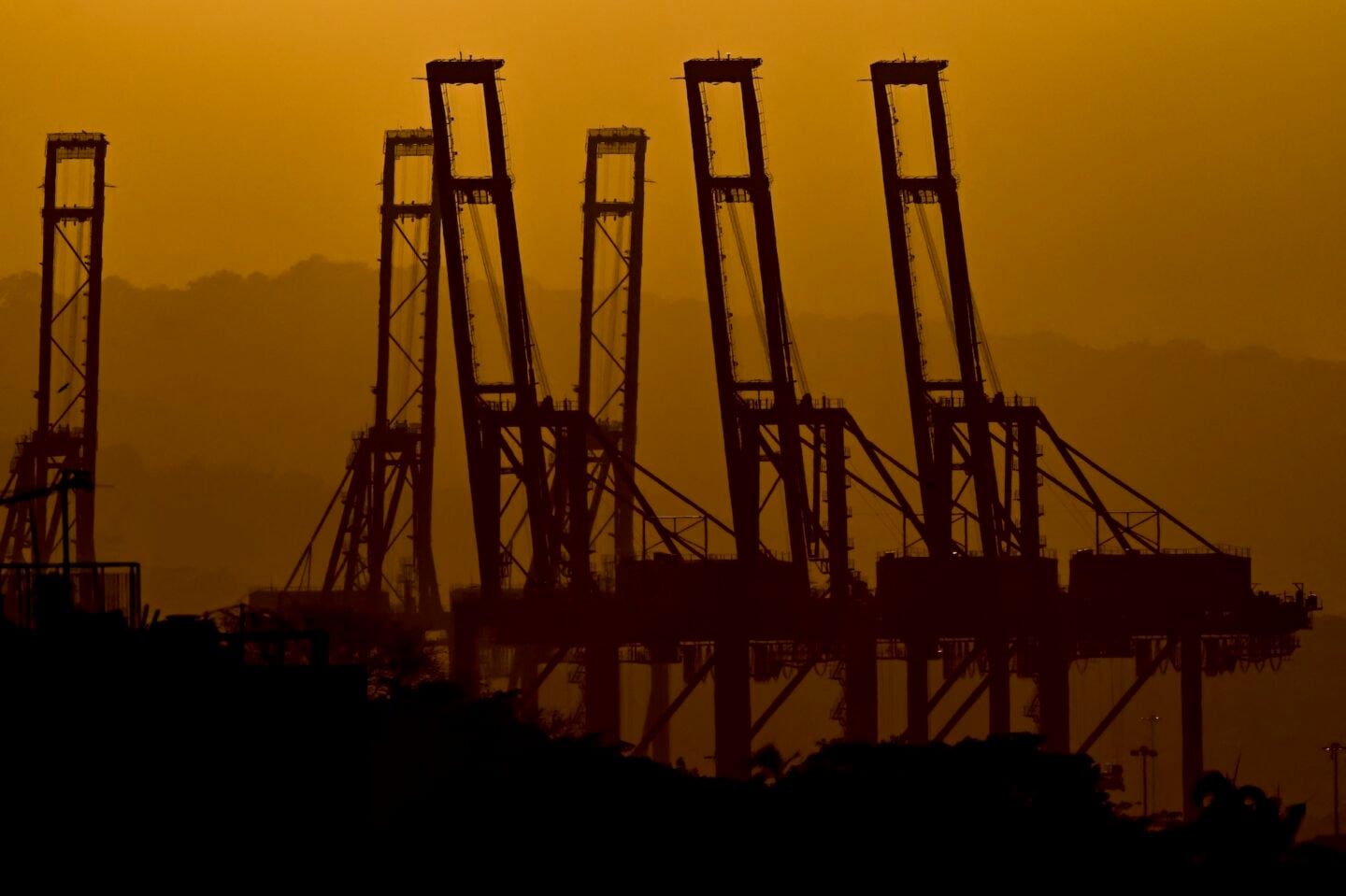
Panama offers a particularly revealing example of how this strategy has evolved. For years, China’s presence at the ports of Balboa and Cristóbal was accompanied by narratives emphasizing cooperation, modernization, and economic growth. But after Panama withdrew from the Belt and Road Initiative (BRI) and the Supreme Court declared the Panama Ports Company concessions unconstitutional, Chinese messaging became noticeably more confrontational, raising questions about how Beijing may respond when its strategic interests are challenged in the region.
The battle over the ports narrative

The dispute surrounding the ports of Balboa and Cristóbal marked a turning point in China’s communications strategy in Panama. Following the country’s withdrawal from the BRI, the strengthening of ties with Washington, and the January 2026 ruling against Panama Ports Company, controlled by Hong Kong-based CK Hutchison, messages from Chinese state media and diplomatic channels adopted a much more confrontational tone.
According to Beijing’s narrative, Panama’s decisions were not the result of an independent national choice but rather the product of pressure exerted by the United States. At the same time, CK Hutchison was portrayed as the victim of an injustice and a violation of the rule of law, while Chinese authorities emphasized the need to protect the company’s “legitimate rights and interests.”
As Vladimirov noted, “In Panama, Beijing has portrayed criticism of Chinese involvement in strategic infrastructure as politically motivated or driven by geopolitical competition.”
This approach represents an evolution of the model identified in a 2025 report by Expediente Abierto. The study identified three pillars of Chinese messaging in Panama: China as a historic partner through the presence of the Chinese-Panamanian community for more than 170 years; China as a driver of economic and infrastructure development; and China as an alternative to U.S. influence.
Through a network that includes Xinhua, CGTN Español, the Chinese Embassy, and a range of local amplifiers, port and logistics investments were presented as tools for growth and modernization. While the port concessions dispute has not altered the fundamental objectives of China’s communications strategy, it has changed the tone. Themes of national sovereignty and historic U.S. interference, already present in earlier messaging, have become central to the debate.
Vladimirov believes this phase may be temporary. “Over time, I expect China to rely instead on economic incentives, trade partnerships, and diplomatic engagement to preserve its position,” he said. Panama remains too important as a logistics and commercial hub for China.
The Panama case is particularly significant because it combines critical logistics infrastructure, global maritime connectivity, and a geographic position of strategic importance to international trade. In this context, debates over ports, concessions, and investments extend beyond economics and become closely linked to sovereignty, institutional resilience, and the protection of strategic infrastructure.
A strategy that extends beyond Panama
Panama’s experience is not unique. Across Central America and the Caribbean, China’s economic expansion has been accompanied by communications efforts designed to strengthen its political and social legitimacy.
In El Salvador, for example, construction of the new National Stadium and the La Libertad tourist pier has been presented as tangible evidence of China’s contribution to the country’s development. Chinese official messaging has also highlighted cooperation with the Salvadoran government in the areas of security, technology, and education.
In Costa Rica, meanwhile, the strategy has focused on cultural diplomacy, academic exchanges, and telecommunications. The controversy surrounding Huawei and other Chinese providers’ exclusion from the country’s 5G network has often been portrayed by media outlets and voices aligned with Beijing as an example of geopolitical pressure. Costa Rican authorities, however, have argued that the restrictions stem from cybersecurity regulations requiring suppliers of critical telecommunications infrastructure to originate from countries that are parties to the Budapest Convention on Cybercrime, a criterion that China does not meet.
Cuba offers another important example. On the island, China’s presence extends to telecommunications through companies such as Huawei and ZTE, as well as to port and airport infrastructure and the energy sector, where Beijing has invested in power grid modernization and new solar energy projects. This has been accompanied by close media cooperation between Cuban and Chinese state media organizations, including content-sharing agreements, co-productions, and converging narratives.
Infrastructure and information
According to analysts, one of the most significant aspects of China’s strategy is its ability to integrate economic and informational influence. Investments and narratives advance in parallel.
Alongside its commercial expansion, Beijing has built a network that includes embassies, state media outlets, cultural institutes, universities, research centers, and local interlocutors. Together, these actors help disseminate favorable messaging about Chinese investments and reinforce the image of the People’s Republic of China as a reliable and indispensable development partner.
According to Vladimirov, Chinese influence is typically exercised through a mutually reinforcing network of actors. “State media and embassies partner with local political figures and commercial stakeholders to amplify narratives that promote Chinese investments and portray China as a reliable development partner,” he said.
Experts warn that the primary concern is that these narratives may normalize strategic dependencies and limit public debate about the geopolitical, economic, and security costs associated with control of critical infrastructure. As Vladimirov noted, “These dependencies can eventually become economic and political levers that are difficult to remove.”
To counter propaganda and influence campaigns, Vladimirov argues that it is essential to strengthen independent media and promote fact-checking mechanisms capable of identifying coordinated or misleading narratives. Increasing transparency regarding who funds and disseminates certain content, as well as developing institutional capabilities to monitor foreign influence operations, is equally important.