
The Americas Counter-Cartel Coalition (ACCC) is entering a new phase of operational coordination to combat drug trafficking and transnational organized crime. Guatemala is actively participating in this regional effort while strengthening its military capabilities and expanding cooperation with its partners across the hemisphere.
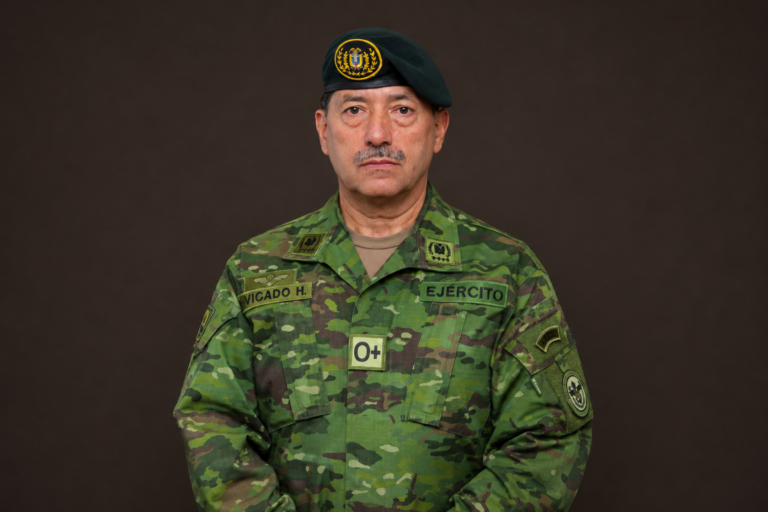
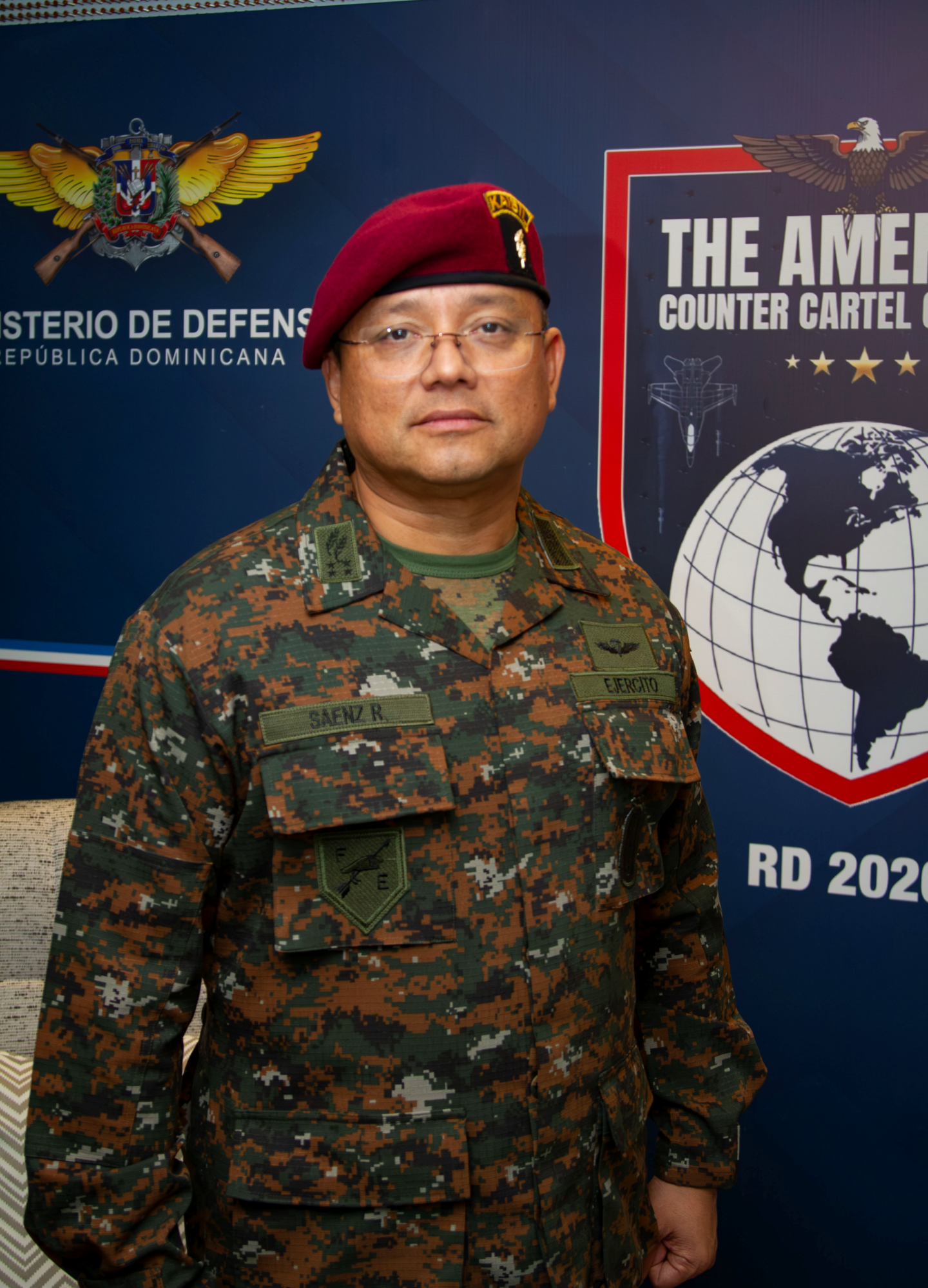
During the third ACCC conference, held October 26–27, 2026, in Santo Domingo, Dominican Republic, Diálogo spoke with Guatemalan Minister of National Defense Major General Henry David Sáenz Ramos about the coalition’s progress, the modernization of Guatemala’s Armed Forces, and the importance of a coordinated response to transnational criminal organizations.
Diálogo: Minister, what are your impressions of this third meeting of the Americas Counter-Cartel Coalition here in Santo Domingo?
Guatemalan Minister of National Defense Major General Henry David Sáenz Ramos: Thank you very much for the invitation. It is always a privilege to speak with such a respected publication that reaches a broad audience.
My impression is very positive. This is the third meeting of the ACCC, and while we were previously in the conceptual phase, this meeting gives us great hope because we are moving from planning to implementation. We now have documents, protocols, and plans, along with a timeline that allows us to begin taking action. That is why this third meeting gives us so much hope.
Diálogo: Minister, since our last conversation, Guatemala has continued to strengthen its role in this initiative. What progress do you believe the coalition has made, and what are its main priorities now?
Minister Sáenz: When this hemispheric strategy was introduced, many of our countries had to align their efforts with this very concrete objective. I would say the greatest achievement has been bringing the hemisphere together to confront a common threat: drug trafficking.
Throughout this process, many of our countries have taken important steps. In Guatemala’s case, Congress passed a law designating the maras, or criminal gangs, as terrorist groups. These democratic milestones represent real progress under this strategy because we are all working toward the same objective from different areas of responsibility: politics, defense, and public security. Each of us, in our respective roles, is contributing to a common effort. Those are the ACCC’s real achievements.
Diálogo: Guatemala and the United States have expanded their cooperation in training, capacity building, information sharing, and maritime security. What concrete results has this partnership produced, and which areas do you consider priorities for further cooperation?
Minister Sáenz: First, Guatemala had to do its part to be recognized as a genuine, serious, and credible partner. We established the Human Rights School and certified 100 percent of Army personnel in basic human rights principles. Why? Because we are a professional force that defends a democratic society.
This was one of the factors that allowed our strategic partner to lift a 47-year embargo, and the progress has been tangible. The culmination of the relationship you mentioned is our acquisition of the first 2,904 M4 rifles, which will replace the weapons dating back to 1977 that the Guatemalan Army has been using. Next year, we plan to acquire another 5,600 rifles, in addition to aircraft, helicopters, and vessels.
There is no greater demonstration of trust than having our strategic partner provide us with modern military equipment to defend not only Guatemala’s interests, but those of the region as well.
Diálogo: Minister, you recently met with U.S. Marine Corps Major General Kevin Jarrard, commander of Joint Task Force Western Hemisphere (JTF-WHEM), in the context of the ACCC. How can this joint task force support Guatemala’s priorities and complement its capabilities?
Minister Sáenz: In your first question, we identified something very important: the threat. I want to build on that answer because this threat must be addressed at different levels.
The most strategic capability that all countries in the hemisphere need is intelligence. Our countries face significant limitations in their ability to turn collected information into actionable intelligence. I would not want to exaggerate by saying that 90 percent of results depend on this work, but certainly the vast majority do. That strategic capability represents a major contribution to the hemisphere.
There are also operational and tactical levels, which are the responsibility of our armed forces and units on the ground. As we strengthen our relationship with this joint task force, we will be able to bring these capabilities together: the strategic intelligence it provides and the operational and tactical capabilities we develop in the field.
Diálogo: General, transnational criminal organizations have diversified their activities, combining drug trafficking, arms trafficking, human trafficking, smuggling, and other illicit economies. What lessons can Guatemala share about confronting these interconnected threats through a coordinated regional response?
Minister Sáenz: At this third meeting, Guatemala presented a proposal to establish a coordination forum bringing together the Army, the National Civil Police, the Penitentiary System, the Public Prosecutor’s Office, and all the country’s investigative agencies so that we can speak with one voice.
We also want our strategic partner to have a seat at that table. Why? Because this would create a level of cooperation that has not existed before, allowing for the exchange of information and concrete operational results in virtually real time.
This would also benefit the United States, which has numerous agencies and stakeholders that need greater coordination and communication. What Guatemala is proposing is direct, face-to-face engagement, where we can share information and concrete results in real time and, when necessary, receive timely and relevant intelligence for our area of responsibility.
The proposal was well received, and I believe we will move forward in that direction.
Diálogo: Minister, you recently mentioned the acquisition of machine guns and grenade launchers. What specific capabilities will this equipment strengthen, and how will it contribute to interoperability with the United States and other partners?
Minister Sáenz: Our most vulnerable area is in the north of the country, in the jungles of Petén, within the Maya Biosphere Reserve. Our priority is to restore our military capabilities in that terrain.
What are we trying to accomplish? Prevent the cartels from using the jungle as a trafficking corridor. We want to replicate what was done in the Darién, where these organizations were denied access. We also want to deny them the use of the Maya Biosphere Reserve. And we cannot accomplish that without technology. That is its immediate value.
But given Guatemala’s geographic location, we cannot ignore the fact that we are a natural bridge between South and North America. We must approach defense from a multidimensional perspective.
What do I mean by that? We are already investing in the Army’s capabilities, but we also need to strengthen our Air Force and cyberdefense capabilities. Those are the areas where we are directing our investments and efforts.
Diálogo: Minister, looking ahead, how do you expect the threat posed by transnational organized crime to evolve across the hemisphere, and how must the Americas Counter-Cartel Coalition evolve to respond more effectively?
Minister Sáenz: Criminal organizations are seeking political power because they know that gaining access to it will allow them to protect themselves, grow stronger, and endure over time. They are making increasingly determined efforts to penetrate local government and political institutions, and they are getting closer to achieving that goal.
The coalition’s greatest challenge is to dismantle these organizations at every level, not only militarily, but also by targeting their legal, logistical, and financial structures. By doing so, we will deny them the space and opportunity to expand their influence into the political sphere, which is precisely what they are seeking.