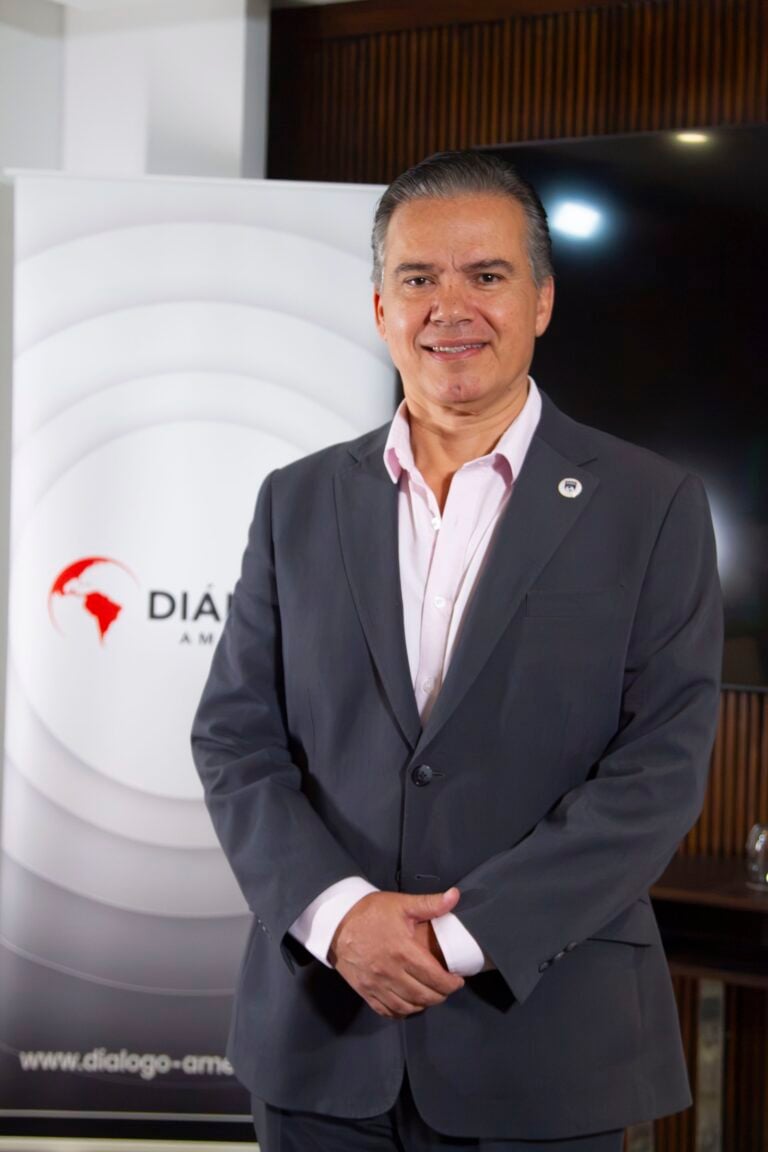
Costa Rica’s Vice Minister of Special Investigation Units of the Ministry of Public Security Manuel Jiménez Steller brings a strong background in criminal law and extensive prosecutorial experience to his crucial role. Having led complex organized crime investigations and received specialized training in areas such as money laundering, maritime anti-drug operations, and cybersecurity, his expertise directly informs the nation’s strategic response to evolving security threats.
In this interview with Diálogo, Vice Minister Jiménez details the comprehensive initiatives he is spearheading, from securing critical ports and enhancing international cooperation to managing unprecedented migratory flows and bolstering cybersecurity defenses.
Diálogo: Costa Rica is experiencing a wave of violence linked to the growth of organized crime. What strategies has the Ministry of Public Security implemented to combat this scourge?
Costa Rica’s Vice Minister of Special Investigation Units of the Ministry Public Security Manuel Jiménez Steller: Over the past 10 to 15 years, Costa Rica has seen an increase in the presence of international criminal groups. This has led to the country being used as a storage point for drugs in transit to the United States and Europe. Initially, these organizations paid for logistics with cash, but they later shifted to paying with drugs. This change forced criminal groups to distribute drugs in the local market, leading to a surge in violence, homicides, and contract killings as factions fought for control over distribution points and profits.
Consequently, we had to rethink our approach to these criminal phenomena. The first step, directed by the Presidency, was to launch Operation Sovereignty. This operation involves taking control of our ports, as they previously relied on private security. For the first time, police entered the Moín container terminal, a port leased to a European company, taking control on June 13, 2023. We implemented 100 percent scanning of all exports, meaning every container leaving the country is now scanned.
We also had to change our investigative strategies. Our drug control police, responsible for psychotropic investigations, shifted from fixed posts, altering their operations and objectives to target higher-level criminal networks. This required us to expand our international collaboration, establishing contact with allied countries for information exchange and joint operations. We also created an important center, where we concentrate intelligence and operations. This center has brought together all police units, as well as administrative institutions like customs, agriculture, and health, which ultimately impact security.
Diálogo: According to the International Organization for Migration (IOM), Costa Rica has been experiencing an unprecedented increase in the number of people in transit arriving in the country. How has immigration affected Costa Rica’s security, and what measures have authorities taken internally and with support from partner countries to mitigate this migratory crisis?
Vice Minister Jiménez: We experienced a very high peak of migratory groups traveling from south to north. Countries in our region lack the economic capacity or infrastructure to support and sustain such large groups of migrants. Therefore, we established a strategy, primarily with Panama, to manage a controlled flow of migrants. We coordinate operations to allow for a controlled and safe passage for these individuals, preventing their exposure to criminal organizations involved in human trafficking and smuggling. This ensures their safety as they transit through our countries.
This required coordination with immigration, health, and social security institutions from both countries. We also identified security concerns, as this migratory flow included individuals who could compromise the security of both nations. We received significant international cooperation to conduct biometric controls on these individuals, allowing us to identify potential threats and risks.
Diálogo: In early February 2025, Costa Rica announced it would serve as a “bridge country,” collaborating with the United States in repatriating undocumented migrants from distant countries. What is the importance of this cooperation with the United States for regional security, and what measures were taken to house and care for the deportees?
Vice Minister Jiménez: Costa Rica opened its doors to receive these repatriated individuals. We have a migrant reception center in the southern part of the country. These individuals are received and transferred to this center; they are not deprived of their liberty and are there voluntarily. Our role is to ensure they have shelter, food, and access to healthcare. We also collaborate in facilitating their repatriation process to their countries of origin or to third countries willing to receive them. We have received a total of 200 people [until early April], and at least 90 of them have already been repatriated. We ensure they understand their rights and obligations while staying in the country and at the center. This entire process is conducted hand-in-hand with our international allies and the United Nations.
Diálogo: In December 2024, Costa Rica and U.S. Southern Command (SOUTHCOM) discovered and thwarted a threat from malicious actors based in China who had infiltrated the country’s networks. How has collaboration with SOUTHCOM been regarding cybersecurity?
Vice Minister Jiménez: This cooperation has been vital and fundamental, especially because Costa Rica lacked a national cybersecurity control platform. We must remember that in 2022, the country suffered a major cyberattack that crippled key institutions for several weeks. We received extensive support then from the governments of the United States, Israel, and Spain.
Following that incident, SOUTHCOM integrated into cooperation efforts with Costa Rica to prevent similar situations. Currently, thanks to SOUTHCOM’s donation, we are developing two centers dedicated to protecting Costa Rican institutions and cyberspace. The first will be integrated into the Ministry of Industry, Telecommunications, and Commerce, and the second within the Ministry of Public Security. This initiative will at least enable us to fortify our main institutions against such attacks.
Diálogo: SOUTHCOM’s Continuing Promise mission recently docked on Costa Rica’s Caribbean coast to provide humanitarian assistance and civic support to local communities. What is the importance of this mission for the government of Costa Rica and its population?
Vice Minister Jiménez: Costa Rica and the United States share a long history of cooperation, friendship, and brotherhood. Initiatives like Continuing Promise reinforce these ties. They bring essential assistance to the most vulnerable communities and serve as a crucial reference in the region, demonstrating the support of SOUTHCOM and the United States to these populations.