
Ecuador has bolstered its maritime control operations in the eastern Pacific through the integration of international cooperation, the incorporation of new naval assets, and the deployment of high-level strategic intelligence. This comprehensive modernization is a direct response to the surge in maritime traffic exploited by drug trafficking organizations and transnational criminal networks, which pose a critical threat to national security and regional stability.
Joint operations and strategic synergy with the United States
On January 26, 2026, the Ecuadorian government announced the start of intensified military operations in close collaboration with the United States, under a robust bilateral security cooperation agreement. These actions encompass streamlined information sharing, specialized technical assistance, and the expansion of operational reach, all while maintaining strict adherence to Ecuadorian command structures. This partnership is a cornerstone of Ecuador’s new comprehensive security strategy, which focuses on combating criminal structures through shared intelligence and fortification, and the modernization of logistical support to maximize maritime and aerial surveillance.
“This cooperation is a strategic response to the expansion of transnational organized crime,” said Michelle Maffei, a professor of political science at the University of Guayaquil and an authority on national security, in an interview with Diálogo. “The United States understands the challenges Ecuador faces, both in terms of the advance of these structures and the associated risks of corruption.”
Maffei further noted that “Quito has chosen to consolidate its relationship with Washington in order to gain access to operational expertise and assistance in counternarcotics matters.” She added that the U.S. contributions, including equipment donations, training, technical cooperation, and intelligence sharing, are vital force multipliers for national and regional efforts to dismantle organized crime.
Modernization of naval capabilities
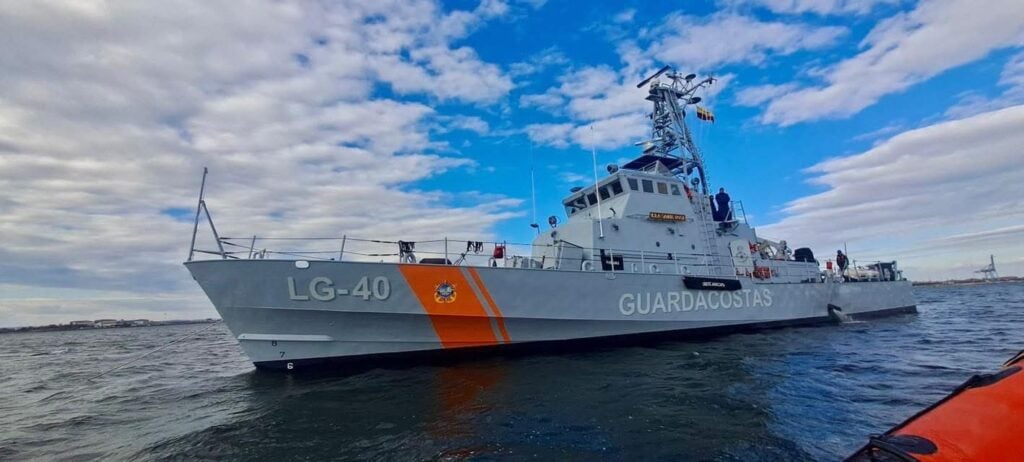
Ecuador has achieved a significant milestone in its naval modernization efforts through this bilateral framework. In mid-January, the Ecuadorian Navy officially integrated the LG-40 Isla Santa Rosa into its fleet. This Island-class coast guard cutter donated by the U.S. Coast Guard, provides a critical tactical advantage. According to the Ecuadorian Ministry of National Defense, the vessel is equipped with state-of-the-art navigation and communication systems tailored for surveillance, maritime control and interdiction, and search and rescue missions.
The patrol boat has a five-day operational endurance, capacity for a crew of 18, and a rigid-hull inflatable boat for boarding operations. Maffei characterized the addition as a pivotal tactical advancement, noting, while the country still faces infrastructure challenges, platforms like the Island-class cutter dramatically enhance the ability to respond to threats such as semi-submersibles and go-fast vessels used by criminal organizations.
During the commissioning ceremony, Minister of National Defense Gian Carlo Loffredo remarked that “defending until victory” requires protecting the sea as a vital frontier of opportunity, citing cooperation with the United States as a pillar for strengthening operational capabilities.
The Isla Santa Rosa is part of a package of two Island-class cutters, following a long history of maritime transfers from the United States. This ongoing support underscores a decades-long commitment by Washington to bolster Ecuador’s sovereignty at sea.
Launch of Maritime Intelligence Fusion Center
A transformative development in Ecuador’s intelligence architecture occurred on January 19, with the inauguration of the Maritime Intelligence Fusion Center in Guayaquil. Financed and technically supported by the European Union, this facility is the first of its kind in Latin America, modeled directly after the Maritime Analysis and Operations Centre – Narcotics (MAOC-N) in Lisbon. The center unites specialized personnel from the Ecuadorian Navy and the National Police to process and analyze real-time data from national and international sources, identifying criminal patterns and facilitating operations against criminal networks.
This center serves as a “mirror unit” for European intelligence systems, allowing for seamless coordination between South American and European authorities. Maffei pointed out that historical gaps in monitoring have previously allowed illicit activities, such as illegal fishing from the Chinese fleet near the Galapagos Islands, to go unchecked. She stressed the necessity of extending this strategic intelligence umbrella to the archipelago, which serves as a logistical nexus for drug transit toward Mexico and Central America.
According to the expert, fishing vessels departing from Ecuador use this territory as a resupply point before continuing their journey, which favors the convergence of semi-submersibles and boats from other regions.
During the center’s opening, the Security Block — the unified command that unites the Ecuadorian Armed Forces and the National Police — received a fleet of advanced drones and AI-driven monitoring tools to further extend their surveillance reach. These resources were secured through a multi-partner funding model: The United States provided $6 million specifically for the acquisition of the drone hardware, while the European Union supplied the AI-driven software and command systems necessary to process this data in real-time.
Operational success and future challenges
The impact of these integrated efforts has been immediate and substantial. On January 11, the Security Block reported the seizure of four vessels in the Gulf of Guayaquil, carrying ammunition and controlled substances, an operation made possible through coordinated operations with U.S. naval and coast guard assets.
Building on this momentum, on January 21, the Ecuadorian Navy, coordinating with the transnational crime investigation unit, intercepted a vessel south of the Galapagos Island, resulting in the seizure of 1.2 metric tons of cocaine. Furthermore, the international reach of the new Maritime Intelligence Fusion Center was highlighted more recently on February 16, when Panamanian security forces, acting on intelligence from Ecuador, intercepted a Maltese-flagged vessel at the Port of Balboa containing 936 packages of narcotics.
These 2026 successes build upon a strong foundation laid in late 2025, including a December operation that seized 4.6 tons of narcotics in international waters. In total, the Regional Directorate of Aquatic Spaces and Island Coast Guard reported seizing 19.4 tons of narcotics during 2025 through sustained patrolling.
Maffei emphasized that the alignment of interests between Ecuador, the United States, and the European Union provides the country with unprecedented resources and regional positioning. In this context, the integration of satellite-based AI analytics and autonomous sensors into the defense grid marks a definitive shift toward a proactive and technologically superior maritime strategy.
By bridging the gap between traditional patrolling and modern digital surveillance, Ecuador is not only securing its own waters but is also positioning itself as a regional leader in the global fight against organized crime.