
The transformation of Brazilian organized crime — from a phenomenon primarily associated with illegal activities into a network capable of exercising territorial and coercive control — is redefining the nature of the challenge criminal factions pose to the state. Criminal power is no longer measured solely by the amount of drugs trafficked or firepower, but also by the ability to supplant state institutions in certain areas, determining who can enter, what activities can take place, and what rules must be followed.
For Brazil’s major criminal groups, particularly the First Capital Command (PCC) and Red Command (CV), territory is therefore no longer simply a place in which to operate, but a strategic resource to be conquered, governed, and defended. By dominating entire communities, criminal organizations can protect their illicit activities, control people and information, impose rules, shape local economies, and create new sources of revenue.
“About 44 million Brazilians, nearly 20 percent of the population, live under the control of factions, even in small towns of just 10,000 inhabitants,” Rodrigo Pimentel, a former captain with the Special Police Operations Battalion (BOPE), the special operations unit of the Rio de Janeiro Military Police, and co-author of the book Elite Squad (Elite da Tropa), told Diálogo.
Paradoxically, the consolidation of criminal control can reduce visible violence. “When a faction is hegemonic, when it is not fighting over territory, homicides tend to disappear,” Pimentel said. This creates “a false impression of peace,” behind which lies “the faction’s complete territorial control.”
In 2025, intentional violent deaths in Brazil fell 8.2 percent from the previous year to 40,775 cases, the lowest level since 2012, according to the 2026 Brazilian Public Security Yearbook. According to Pimentel, once competition for territory has been eliminated, clashes decline while security forces face greater obstacles to accessing these areas and residents remain subject to intimidation. Violence does not disappear; instead, its function changes, shifting from confrontation to conquer territory to the permanent threat needed to control it.
Social control
One of the clearest instruments of this dominance is the so-called “drug tribunal,” a parallel justice system through which factions exercise social control. According to Chief Paulo Saback, head of the Rio de Janeiro Civil Police’s Narcotics Enforcement Division, it is “a mechanism for replacing the state” that regulates “practically every aspect of daily life.” Those who violate the organization’s rules can face threats, violence, expulsion, or, in the most serious cases, death at the hands of drug traffickers.
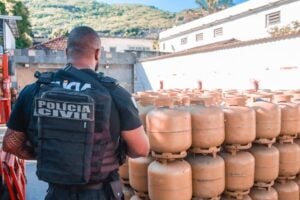
This power over the population also extends to the coercive control of economic activities and services. In Icapuí, on Ceará’s eastern coast, CV members demanded that a local internet provider pay about $2 for every customer in the area under their control. After the company refused, three masked men broke into its facilities in July 2026 and destroyed equipment. The same model is used in areas of Rio de Janeiro controlled by militias and criminal factions, where organizations impose or monopolize essential services such as cooking gas, cable television, and internet access.
In Ceará, the expansion of CV has helped extend this model to waste collection, water supply, and school transportation. “Twenty-five years ago, it was a state with little violence; today, 90 percent of its cities are controlled by factions,” Pimentel said.
In Sobral, also in Ceará, Operation Omertá, carried out in August 2026, uncovered indications that CV members allegedly demanded payments of up to $11,650 from candidates seeking to campaign in neighborhoods under the group’s influence. Investigators also found indications of threats aimed at preventing campaign events and meetings.
The population ultimately bears the brunt of this control, in some cases even being forced to abandon their own communities. In Uiraponga, in the Vale do Jaguaribe region, a dispute between Guardiões do Estado (GDE) and TCP Cangaço, linked to Rio de Janeiro’s Terceiro Comando Puro (TCP), turned the community into a ghost town in 2025. Isolated and difficult to access, the area offered criminal organizations a refuge from police operations and a favorable position for their illicit activities.
From territory to infrastructure: The projection of criminal power
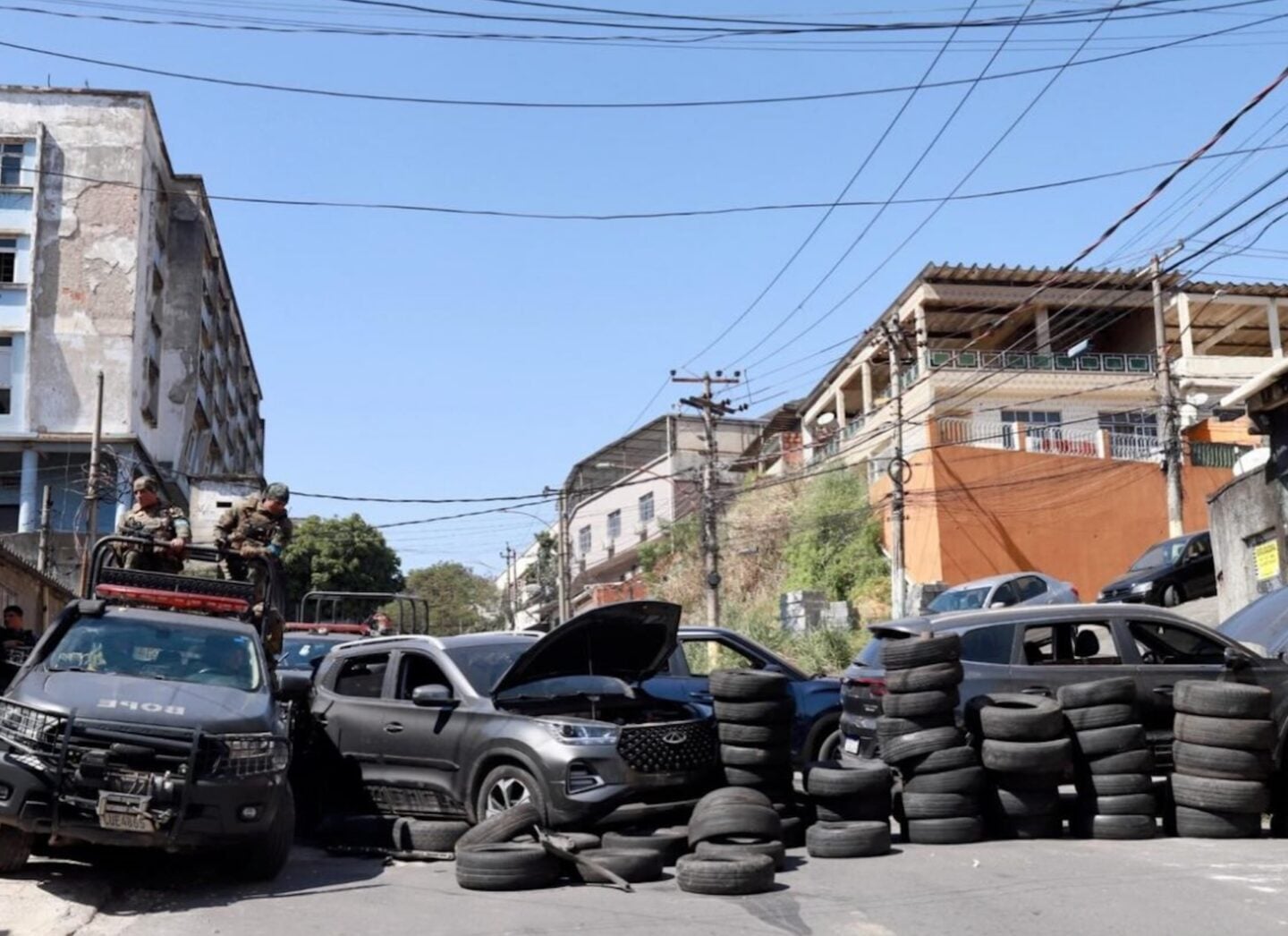
Criminal groups also reshape the urban environment, turning it into a tool to consolidate their control and obstruct security forces. The phenomenon is particularly evident in Rio de Janeiro. In August 2026, in the Complexo de Israel in the city’s North Zone, the Military Police discovered, for the first time, car bombs and barricades equipped with explosives designed to be detonated remotely. Their purpose was to prevent police from entering the criminal-controlled area.
This defensive infrastructure is accompanied by the use of increasingly sophisticated technology. Drones are used to surveil territory, monitor police movements, and attack rival groups with explosives. In Rio de Janeiro, authorities are investigating 18 incidents involving bombs dropped from drones and have even documented training sessions organized by criminals to teach members how to operate them.
“There are already reports of people injured in several communities by shrapnel from these explosives. It is a chaotic scenario,” Pimentel said. According to the former BOPE captain, Rio de Janeiro was an early adopter of the technology: “Even before the war between Ukraine and Russia, in 2017, Terceiro Comando was already using drones to attack CV.”
In the Complexo do Alemão, roofs and other structures have also appeared over streets and open spaces, apparently to protect drug traffickers from aerial attacks, while also hindering police aerial surveillance. “The main purpose of these roofs […] is to prevent rival factions from dropping explosive devices. But obviously, this greatly hinders police monitoring,” said Chief Marcos Motta, head of the Rio de Janeiro Civil Police’s Unmanned Aircraft Operations Coordination unit.
While control of the urban environment allows factions to appropriate streets and public areas for their own purposes, restrict freedom of movement, and subject residents to their authority — effectively holding entire communities hostage to the criminal system — control of infrastructure represents a strategic extension of that power. Ports, airports, highways, and logistics companies connect criminal-controlled territories with external markets and allow groups to project their illicit activities far beyond the communities under their control.
Recent investigations have revealed organized crime infiltration even at São Paulo-Guarulhos International Airport, Brazil’s busiest airport and one of the region’s major aviation hubs. On July 31, 2026, the Federal Police thwarted an attempt to load some 400 kilograms of cocaine onto an aircraft bound for Europe. In June 2025, unauthorized drones prompted the temporary closure of the airspace during an attempt to load a shipment of cocaine onto an aircraft. Police investigated whether the drones were being used to monitor security forces at the airport.
A New paradigm for countering criminal factions
It is precisely this interconnectedness between territory, the economy, and infrastructure that has forced the state to adapt its response. The challenge is no longer simply to seize drugs or arrest traffickers, but to prevent factions from consolidating their control over communities and logistical networks.
One example of this shift is Law 15,358, enacted in March 2026, the Legal Framework for Combating Organized Crime, known as the Raul Jungmann Law. The legislation creates the standalone offense of “structured social domination,” punishable by 20 to 40 years in prison for those who use violence or threats to control territories, economic activities, and populations. The law also covers conduct intended to prevent or hinder the actions of security forces, including the use of barricades and other obstacles and the destruction of access routes.
The change is primarily enforcement oriented. Previously, to prosecute a faction, investigators had to establish the specific crimes through which such control was exercised, such as extortion, threats, drug trafficking, or homicide. The new law instead makes territorial domination itself a direct basis for criminal prosecution, strengthening authorities’ ability to target the faction’s power structure.
Criminal prosecution is complemented by financial intelligence, the freezing and confiscation of assets, cooperation among security forces, and greater protection of logistics hubs. At ports, for example, authorities and operators are strengthening controls and technologies, ranging from artificial intelligence-enabled scanners to video surveillance systems and counter-drone measures.
For Pimentel, tougher penalties are only one part of the response. Measures to counter corruption within institutions are also necessary, along with, above all, a sustained strategy to “retake territory.” What is at stake, he said, extends beyond drug trafficking. Criminal factions have diversified their sources of revenue and expanded their influence over economic activities and services.
Brazil’s experience illustrates the increasingly complex challenge that criminal organizations pose to security forces across the region. As these groups diversify their activities, expand their logistical and financial networks, and adapt to pressure from authorities, disrupting them requires more than action against individual leaders or drug shipments. It also requires stronger intelligence sharing, financial investigations, and cooperation among countries to identify and disrupt the networks that allow organized crime to operate across borders.