

Cooperation between the United States and the Caribbean has become an essential pillar of regional security, founded on a deep and enduring strategic alliance. Over the past four decades, a consistent framework of economic and security programs has enabled Caribbean nations to build capabilities to address transnational threats, contributing to the stability and prosperity of the entire Western Hemisphere. This alliance is defined by mutual support and a shared commitment to common values.
A foundation of shared prosperity and security
The alliance is built on a foundation of both economic and security cooperation. The Caribbean Basin Economic Recovery Act (CBERA), in effect since the 1980s, has been a key pillar for economic stability, promoting trade and growth in the region. This was later complemented by the Caribbean Basin Security Initiative (CBSI), which broadened the scope of cooperation, to include maritime surveillance, combating drug trafficking, and training security forces, programs that are a cornerstone of a mutually beneficial partnership.
These initiatives are not just unilateral aid; they are a direct response to the region’s shared needs. The United States is the Caribbean’s main trading partner, with a relationship that has grown significantly over the past decades. This economic bond strengthens the foundation for security cooperation, as threats to the Caribbean’s stability are a direct challenge to the prosperity of the entire hemisphere.
High-level strategic alignment
At the highest level, the partnership is cemented through strategic dialogue and collaborative exercises. The Caribbean Nations Security Conference (CANSEC), an annual strategic forum sponsored by U.S. Southern Command (SOUTHCOM), brings together military and security leaders to design a coordinated response to shared challenges like organized crime, natural disasters, and cyber threats. This high-level dialogue informs the on-the-ground training that makes the alliance so effective.
Joint training is a critical pillar of this strategic relationship. The annual SOUTHCOM-sponsored Tradewinds exercise is among the main multinational security preparedness engagements for the Caribbean, where U.S. and regional forces train together to counter criminal networks, conduct humanitarian assistance, and respond to disasters.
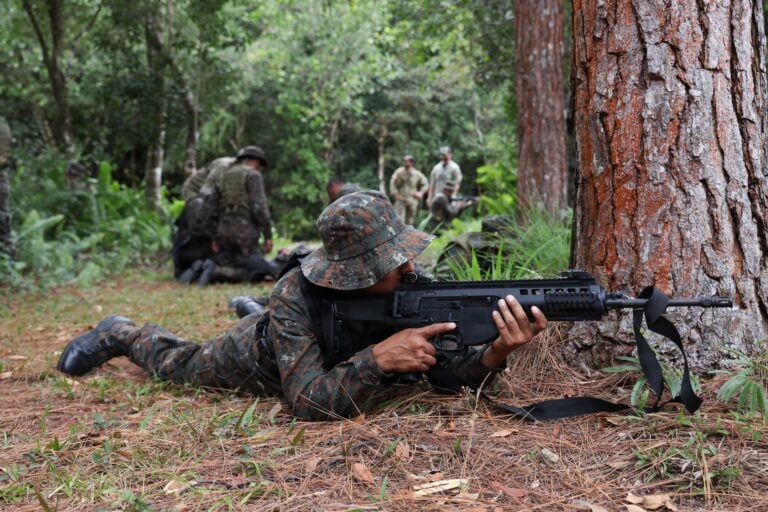
A crucial framework for this long-term collaboration is the State Partnership Program (SPP), which pairs U.S. National Guard units with partner nations. For example, the 2025 Caribbean Regional Training Camp (CRTC), held July 12-27, brought soldiers from the District of Columbia National Guard together with their counterparts from the Jamaica Defence Force (JDF) and Barbados Defence Force for joint training on combat exercises and firearm techniques. The South Dakota National Guard also recently conducted a jungle warfare exchange with the Suriname Armed Forces. These SPP engagements are instrumental in building the trust and common procedures necessary for a truly unified response to protect the region.
In addition, the JDF recently hosted Exercise Event Horizon 2025, a major multinational and multi-agency event that included U.S. participation. This exercise tested regional cooperation in areas like maritime security, search and rescue, and cybersecurity, reinforcing the collective readiness to protect the region.
The partnership also has a significant humanitarian component. U.S. military forces regularly deploy for missions that provide critical medical, dental, and engineering support, demonstrating the alliance’s commitment to regional public health and disaster resilience. Recent examples include the Lesser Antilles Medical Assistance Team (LAMAT) 2025, which embedded medical personnel in hospitals in countries like Saint Lucia and Guyana to provide care and exchange expertise. Similarly, the AMISTAD 2025 mission provided clinical care in Suriname, while the USNS Comfort deployed to the region for Continuing Promise 2025, offering a wide range of services in nations including Grenada, the Dominican Republic, and Trinidad and Tobago. These missions not only provide essential services but also build trust and interoperability among military and civilian personnel for future crises.
A unified front against transnational crime
The strategic alliance is most evident in the successful fight against transnational crime. The Caribbean’s geography makes it a key corridor for drug trafficking, with an estimated 15 percent of cocaine trafficking in the Western Hemisphere passing through the region. As security expert Daniel Pontón, a professor at Ecuador’s State Postgraduate University, told Diálogo, this illicit activity is exacerbated by the complicity of the Venezuelan regime, which allows drug flows to reach the Caribbean from the Catatumbo region. This makes the region’s security a collective responsibility for all nations in the hemisphere.
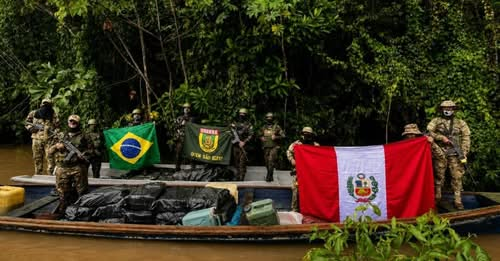
In response, U.S. and Caribbean forces work hand-in-hand to disrupt these criminal networks. The Joint Interagency Task Force South (JIATF-S), with liaison officers from over 20 partner nations, monitors drug traffic and coordinates interdictions with U.S. and regional coast guards. This cooperation yields tangible results. In August 2025, the USCGC Hamilton seized a historic amount of illegal narcotics — more than 34.5 tons — in the Caribbean and Eastern Pacific. Similarly, the USCGC Vigilant intercepted 1,450 kg of illicit drugs south of the Dominican Republic. These operations are a testament to the seamless coordination of the alliance and the collective effort to safeguard the region.
Beyond drug interdiction, the partnership supports broader capacity building. In Jamaica, police completed an FBI-led forensic evidence course, and the Community Resilience and Transformation (CREATE) project was launched to reduce local violence. In Trinidad and Tobago, a new elite police unit was established in late 2024 with DEA training. These efforts demonstrate that the alliance is not only about high-seas operations but also about strengthening the rule of law and enhancing internal security across the region.
“International cooperation with the Caribbean islands is essential, as they cannot face these threats alone,” Pontón said. “U.S. cooperation extends to the political, technological, and financial spheres, consolidating alliances to effectively combat organized crime.”
The partnership also includes direct security assistance and donations. For example, in September 2024, SOUTHCOM’s Humanitarian Assistance Program donated two mobile medical units, known as “Clinics in a Can,” to Trinidad and Tobago, enhancing the nation’s capacity for disaster response. In July 2025, the United States and Belize signed a Memorandum of Cooperation for a Biometric Data Sharing Partnership, strengthening border security by enabling access to U.S. databases of known criminals and terrorists.
Looking to the future: consolidating the alliance
The strength of this alliance is a key geopolitical anchor for the Western Hemisphere. The U.S. presence in the region — through a robust network of security cooperation initiatives, partnerships, and training — provides Caribbean nations with the tools to defend their sovereignty and counter malign influences. As Pontón concluded, “U.S. cooperation […] provides Caribbean countries with tools to coordinate and increase their geopolitical maneuverability.” This enduring partnership not only secures the region against immediate threats but also ensures its continued stability in the face of broader global challenges.