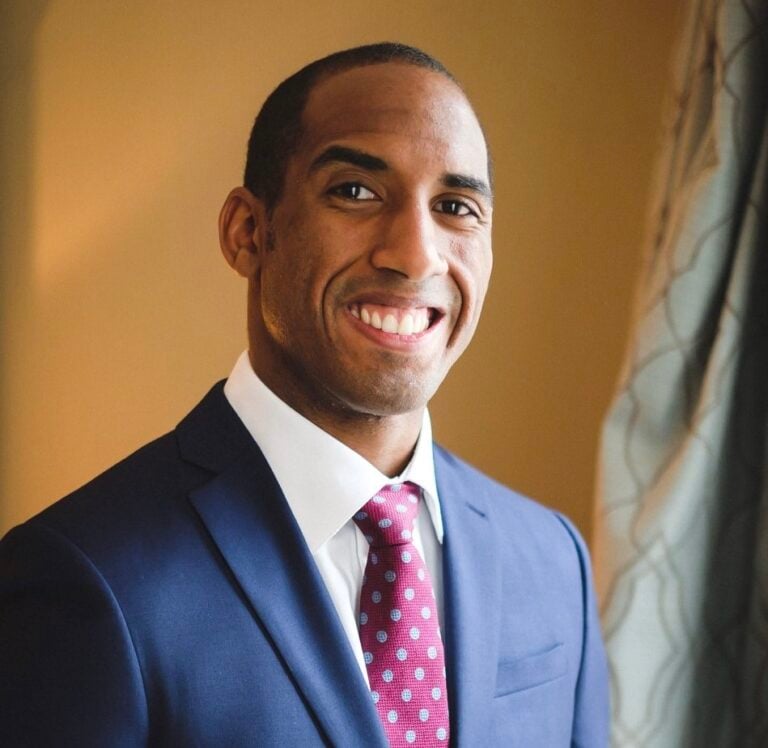

In an eye-opening interview with Diálogo, Leland Lazarus, a leading expert on China-Latin America relations and transnational crime and founder and CEO of Lazarus Consulting firm, discussed the alarming rise of Chinese organized crime networks in Latin America and the Caribbean.
Lazarus detailed how these networks engage in drug trafficking, money laundering, wildlife smuggling, and human trafficking, often blurring the line between crime and state interests. Drawing on fresh research, Lazarus reveals how they leverage advanced technology, diaspora communities, and geopolitical blind spots to expand their influence, connecting underground money flows and cyberattacks to Beijing’s broader strategic goals.
Diálogo: Who are the main Chinese criminal groups operating in Latin America and the Caribbean? Are we looking at a single dominant organization or several distinct groups?
Leland Lazarus, founder and CEO of Lazarus Consulting: Let me first start off with the facts. This is an issue. There’s been a rise in Chinese organized crime throughout the world, but specifically in Latin America and the Caribbean. It’s focused on four key areas. One is fentanyl precursors, chemicals coming from China, entering through Mexico, with the Sinaloa and Jalisco cartels using them to make pills. Second, there’s the increased prevalence of money laundering. China has become the main money launderers for the Sinaloa and Jalisco cartels. Third, wildlife trafficking. Chinese individuals and networks are engaged in all kinds of wildlife trafficking — shark fins, totoaba fish bladders, and jaguar skins — shipped from Ecuador, Peru, Suriname, and other areas throughout Latin America and the Caribbean to China, to meet the demand for traditional Chinese medicine. And the last area is helping to facilitate human smuggling and human trafficking.
But to answer your question about who these groups are, one thing I want to stress is that there doesn’t seem to be an overarching leader behind all of this. In the open-source evidence I’ve seen, there’s no smoking gun that connects all these different groups to, say, one Triad leader or the Chinese Communist Party (CCP). It’s much more decentralized.
Diálogo: How do these groups operate? Are we talking about smaller, decentralized networks that work directly with local criminal organizations in Latin America and the Caribbean?
Lazarus: It’s quite nuanced and complex. In some cases, there are individuals who serve as key connectors, with ties to Chinese triads, who play a significant role in facilitating money laundering and drug trafficking. These are individuals who often have either direct or indirect connections to both transnational criminal groups and legitimate institutions.
In other cases, the head of a criminal network might also be a prominent member of a local Chinese business association in a given country. These associations often maintain strong ties to the local Chinese embassy, creating an environment where legal and illegal activities can coexist or even overlap.
This raises serious questions: To what extent are Chinese embassies aware of these criminal elements within the diaspora? Are they turning a blind eye, or are they actively involved?
Diálogo: Do we have any clear answers to those questions?
Lazarus: That’s the million-dollar question. We know these networks and individuals are engaged in various forms of illegal activity, money laundering, trafficking, smuggling, but we don’t yet know how pervasive they are compared to other major criminal organizations in the region, like the First Capital Command, Tren de Aragua, or the Sinaloa cartel.
Equally important and equally unclear is the extent to which these criminal nodes are connected to the CCP itself. Are they operating independently, or are their actions aligned directly or indirectly with Beijing’s broader strategic interests? That’s what we’re still trying to understand.
Diálogo: In the context of Mexico’s drug trade, what is the significance of fentanyl, and how are Chinese criminal organizations involved in its production and trafficking? Is there evidence that these networks are directly supporting the operations of Mexican cartels simultaneously benefiting China’s chemical industry?
Lazarus: So let me start off with a hearing that the U.S. House of Representatives’ Special Committee on the Chinese Communist Party held in April 2024. After that, they wrote an extensive report showing evidence of the ways in which the CCP, while maybe not directly involved, is at least complicit.
There’s a Chinese saying, “keep one eye open and one eye closed.” In other words, turn a blind eye to certain illicit activities that may be going on. A specific example is that quite a few of the fentanyl precursor chemical companies based in China are either state-owned or have significant state investment. That means the government is directly or indirectly benefiting economically from the export of some of these fentanyl precursors.
Another example is that many of these companies are openly marketing their products online, not even on the dark web, just regular websites. They cater specifically to Spanish-speaking customers and explain in detail how they can hide their product in certain boxes or disguise it as makeup, or something similar. So they clearly know that what they’re exporting is illegal.
We also know that China is the world’s largest techno-authoritarian state. It can cut off internet access and online activity at a moment’s notice. So why are these websites still operating?
Third, U.S. and other Western law enforcement agencies have tried for years to get cooperation from their Chinese counterparts when they identify a specific person or company involved in the fentanyl precursor trade. That kind of collaboration is not forthright. It’s inconsistent — on again, off again.
Diálogo: Experts have pointed out to the long time relationship between the Chinese state and Chinese organized crime overseas. How does the Chinese state support organized crime within diaspora communities, particularly when these networks maintain ties back to China, and how would you describe the relationship between Beijing and organized crime networks operating overseas?
Lazarus: So let me first explain the way that China and the Chinese state view what they call the “overseas Chinese.” They very much see them as an asset to assert influence and advance their national interests in various countries around the world. There are examples of the CCP leveraging prominent individuals from the Chinese diaspora who are also engaged in illegal activities. A specific example is a man named Wan Kuok-koi, whose nickname was “Broken Tooth.” He was the head of the 14K Triad, which is one of the largest triad offshoots.
Wan Kuok-koi was based in Southeast Asia. He portrayed himself as a legitimate businessman, and in some ways he was. He led the Hongmen Brotherhood Association, which is a kind of overseas Chinese friendship organization. But at the same time, he was also leading a criminal network involved in drug smuggling, human trafficking, illegal gambling, and other illicit activities.
He is a textbook example of the murky gray area where the Chinese state may be indirectly benefiting from someone engaged in illegal activity, simply because that person is of Chinese descent and aligned with their broader goals. Wan Kuok-koi, in addition to leading that Hongmen Association, also spearheaded various Belt and Road Initiative projects. So you see the overlap — economic interests, illegal networks, and state political interests — all converging.
And we’re seeing a similar playbook being used around the world.
PART II:
In the second part of this interview Lazarus delves deeper into the strategic implications of China’s growing criminal footprint in Latin America and the Caribbean. As China’s state-owned enterprises gain control of critical infrastructure across the region, Lazarus unpacks how these criminal networks could be leveraged to advance Beijing’s interests, and what that means for Latin America’s security and sovereignty.