

In recent years, South American security forces have intensified a coordinated campaign against the First Capital Command (PCC), one of Brazil’s most powerful and far-reaching criminal organizations. Paraguay has become a key front in this battle, as authorities work to dismantle the gang’s extensive network and disrupt its lucrative drug trafficking operations.
The PCC’s expansion into Paraguay has been methodical and violent. The organization is believed to have cemented its control over strategic drug routes in 2016, following the murder of Brazilian drug trafficker Jorge Rafaat Toumani in the border town of Pedro Juan Caballero. According to Brazilian journalist and organized crime specialist André Caramante, Toumani had been an obstacle to the PCC’s international ambitions.
“Rafaat controlled the passage of drugs and charged fees to Brazilian factions to allow shipments to pass through — a bottleneck that the PCC needed to eliminate in order to expand its international business,” Caramante told Diálogo.
With Toumani’s death, the PCC gained greater access to weapons and a direct route for smuggling drugs from South America to Europe and Africa. This expansion was reportedly spearheaded by Sérgio de Arruda Quintiliano Neto, alias Minotauro. Caramante noted that the vulnerability of the Brazil-Paraguay border has allowed the PCC to strengthen its power in both countries.
This strategic shift has transformed Paraguay’s role in the drug trade. Paraguayan daily ABC reports that in recent years, the country has evolved from being primarily a hub for marijuana production to a critical transit point for cocaine destined for markets in Brazil, Europe, and Africa.
The PCC operates both inside and outside of prisons, exploiting fragile prison systems to recruit members and coordinate criminal enterprises, a dynamic that makes it a formidable challenge for law enforcement. “This network, operating simultaneously on the streets and behind bars, ensures centralized command that is difficult to dismantle,” Caramante said.
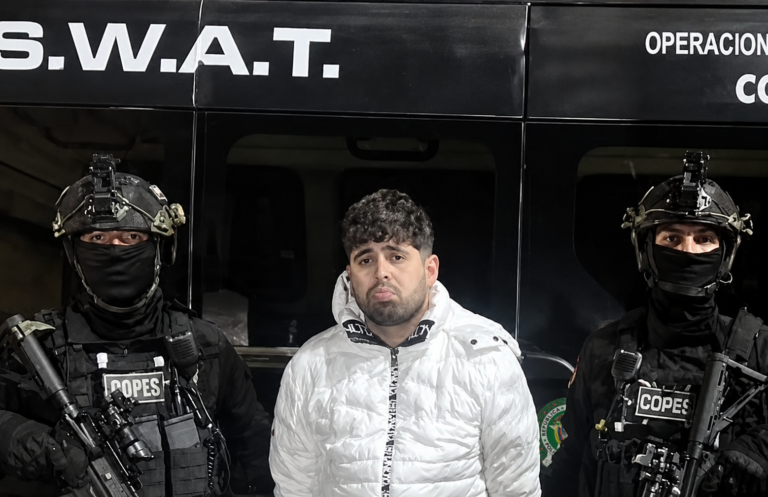
Paraguay has responded with forceful and coordinated actions. In February 2019, a joint operation by the Brazilian and Paraguayan federal police led to Minotauro’s arrest in Santa Catarina, Brazil. Caramante described this as a “milestone in the fight against the faction,” demonstrating the power of international cooperation.
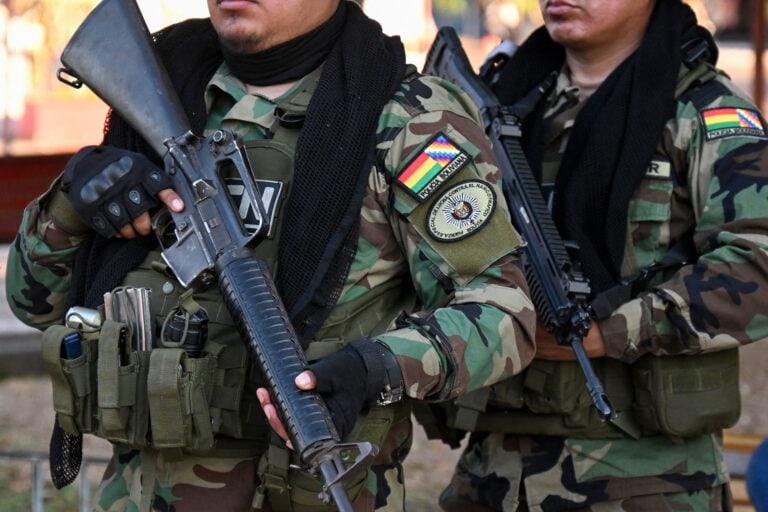
This collaborative effort has continued throughout the years. In 2024, Paraguay expelled 25 prisoners belonging to the PCC and other Brazilian criminal groups. The prisoners were sent to serve the remainder of their sentences in Brazil. The large-scale operation, which involved more than 800 members of the Paraguayan National Police and Armed Forces, highlighted Paraguay’s commitment to disrupting the gang’s power within its own prison system.
Recent judicial successes further illustrate this resolve. On July 28, a Paraguayan court convicted three PCC members for drug trafficking and criminal organization. Alcides de Jesús Villasboa Peralta was sentenced to 12 years and Milciades Pedra to eight years for cocaine trafficking, while Elio Balvino Ovelar received four and a half years for criminal organization. The convictions stemmed from a 2022 investigation into the murder of Marcos Rojas, alias Marcos Capital, and model Cristina “Vita” Aranda during a concert.
According to a report by the São Paulo Public Prosecutor’s Office, Paraguay has the largest number of PCC members outside of Brazil, with nearly 700 confirmed members. The gang’s global reach is staggering; the same report, obtained by GloboNews and G1, indicates the PCC has at least 2,078 members across 28 countries on four continents. Other countries with significant PCC presence include Venezuela (656 members), Bolivia (146), and Uruguay (140).
Organizations like the PCC are not just a regional issue. Luis Fleischman, a professor of sociology and political science at Palm Beach State University, notes that the gang’s ties extend to the Lebanese militia Hezbollah. “Organizations like the PCC are dangerous not only because of their illegal activities and criminal actions,” he said. “Today, these groups cooperate with terrorists and facilitate their activities.”
The PCC’s business model is sophisticated, leveraging Brazil’s extensive port network, particularly the Port of Santos, to export drugs to Europe and Africa. There, the gang negotiates directly with European mafias, such as Italy’s ‘Ndrangheta. “This ‘crime franchise’ model expands the organization’s reach and hinders the action of security forces,” said Caramante.
In response to this growing threat, Argentina recently announced the creation of an “elite force” modeled after the FBI. The new Federal Department of Investigations (DFI) has been tasked with combating complex crimes, with its first mission focused on the PCC. Argentina’s Ministry of Security has identified several key cases that demonstrate the PCC’s influence in the country, including individuals involved in weapons trafficking and intercontinental cocaine smuggling.
The collective security of the region depends on the sustained, collaborative efforts of all nations. The experiences of countries like Paraguay and the new initiatives in Argentina underscore a shared understanding that confronting the transnational threat posed by the PCC requires a united front that transcends borders.