

The Dominican Republic and the United States share a robust security and defense partnership, cooperation, working together to combat common threats. This alliance is evident in their joint efforts against organized crime and drug trafficking, enhancement in emergency management, and specialized training for security personnel, strengthening cooperation among the institutions of both nations.
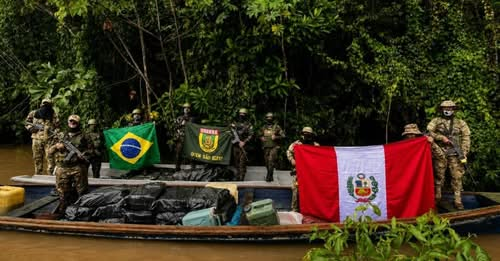
Building over 140 years of bilateral relations, the Dominican Republic has become a crucial ally on security and migration matters. In 2024, the Dominican Republic, in cooperation with U.S. agencies, seized more than 30 tons of cocaine. They also implemented additional measures to curb irregular migration, fostering regional cooperation and bolstering overall security. The Central American country’s growing regional leadership is further highlighted by its hosting of the upcoming 10th Summit of the Americas in November.

Unreserved commitment
In February, Dominican Republic President Luis Abinader pledged “unlimited” cooperation with the United States in the fight against drug trafficking and crime, Spanish news agency EFE reported. This commitment was underscored by the arrest of Efraín Sánchez Cabanillas, alias Bala, a Mexican national and member of the Sinaloa Cartel wanted by the United States for fentanyl trafficking. He was apprehended at Punta Cana Airport on the same day.
“The United States’ cooperation with Caribbean countries, especially the Dominican Republic, is becoming increasingly important in light of the advance of organized crime,” Jorge Serrano, a security expert and advisor to the Peruvian Congress’ Intelligence Committee, told Diálogo.
The Dominican Republic’s geographical location makes it vulnerable to complex regional dynamics. “Its proximity to regimes such as Venezuela, which operates as a narco-state, places it on a key route for the transfer of drugs from Colombia, Peru, and Bolivia to the United States,” Serrano added.
The United States also supports the Dominican Republic’s first anti-money laundering task force, further disrupting the financial networks of transnational criminal organizations operating through the Caribbean. This multi-faceted approach, including both interdiction and financial crime countermeasures, underscores the depth of the shared security agenda.
A tactical partner
The Dominican Republic holds a vital position in U.S. Southern Command’s (SOUTHCOM), as emphasized by Serrano. “Like other countries in the region, it faces growing concerns related to the increase in drug trafficking and organized crime.” Its proximity to established drug routes from South to North America and Europe makes it a critical partner in countering these transnational threats.
Cooperation with SOUTHCOM is a direct response to these identified risks. As Serrano elaborated, “The U.S. presence in the region has a purpose: to respond to concrete threats. In this context, the Dominican Republic’s location makes it a key point for containing these challenges.” This strategic partnership is consistently demonstrated through various joint initiatives and material support.
For instance, in February 2024, the U.S. government, through the Defense Department, donated an aircraft valued at over $8 million to the Dominican Republic’s Ministry of Defense. This crucial asset, intended to enhance aerial and maritime control capabilities, directly supports the shared fight against illicit narcotics trafficking by transnational criminal organizations.
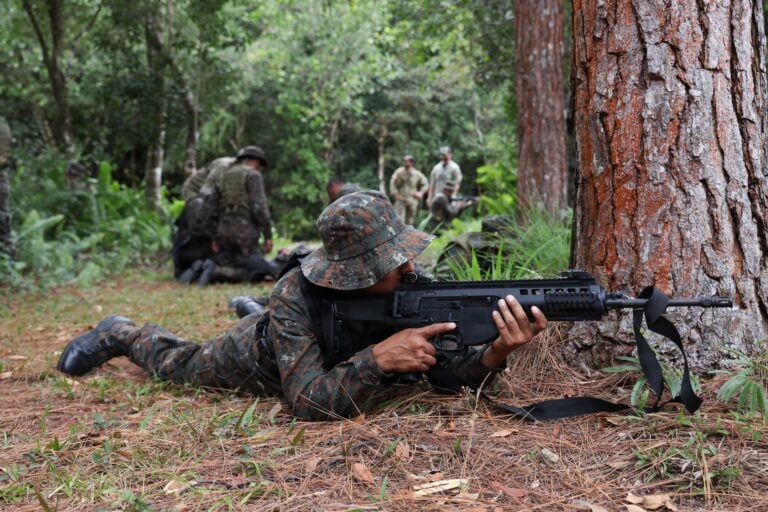
Crucially, SOUTHCOM actively supports the professional development of enlisted leaders within the Dominican Republic’s military, recognizing the vital role noncommissioned officers (NCOs) play in a modern fighting force. Through specialized programs and subject matter expert exchanges, U.S. service members, including those from the Western Hemisphere Institute for Security Cooperation (WHINSEC) and the U.S. Army’s Noncommissioned Officer Leadership Center of Excellence, collaborate directly with Dominican NCOs.
This is part of a broader pattern of collaboration, including regular participation in multilateral exercises like Tradewinds, where Dominican forces engage in joint training with U.S. and other partner nations on counternarcotics operations, disaster relief, and enhancing regional interoperability. These sustained efforts underscore the critical and ongoing nature of the cooperation between the Dominican Republic and SOUTHCOM in safeguarding regional stability and addressing common security challenges.

Sustained investment in security and development
The United States provides the Dominican Republic with substantial technical assistance and resources. In October 2024, the U.S. Department of State allocated $17.5 million for public security projects, Dominican daily Diario Libre reported. This funding underscores the U.S. commitment to enhancing the nation’s capacity to combat crime and promote stability.
A key vehicle for this support is the Caribbean Basin Security Initiative (CBSI). Through CBSI, the Dominican Republic has achieved significant advancements, including the strengthening of its 911 emergency system, professionalization of its police force, leading to improved anti-money laundering controls, and increased drug seizures, the daily added. “U.S. support is critical to dismantling criminal networks and improving capabilities.”
Beyond law enforcement and interdiction, U.S. support extends to preventative measures and institutional good governance. Programs are being developed with young people to prevent drug use and crime, alongside initiatives offering legal advice for vulnerable communities, and anti-corruption training to government officials. These efforts contribute to strengthening Dominican institutions and improving citizen security conditions, Diario Libre noted.
This strong alliance was recently reaffirmed during CENTSEC 2025, where Dominican Minister of Defense Lieutenant General Carlos Antonio Fernández Onofre, U.S. Secretary of Defense Pete Hegseth, and U.S. Navy Admiral Alvin Hosley, SOUTHCOM commander. According to the Dominican Presidency, the leaders reiterated their commitment to collective action against shared threats, including organized crime, cybersecurity, and natural disasters.
The long-standing partnership with the Puerto Rico National Guard under the State Partnership Program, further cements the bond between the two nations. This partnership facilitates ongoing collaboration on critical areas such as disaster preparedness, emergency management, aviation, logistics, and professional development.
Multidimensional cooperation
“The cooperation of the U.S. Defense Department with the Dominican Republic and other countries in the region is multidimensional,” Serrano said. “It’s not limited to support for law enforcement, but includes advice on climate resilience, disaster management, and institutional strengthening.”
As a tangible example of this comprehensive assistance, SOUTHCOM will deploy the Continuing Promise 2025 mission to the Dominican Republic, August 5-12. This humanitarian and civic assistance mission, which uses the U.S. Navy hospital ship USNS Comfort, will provide medical, dental, veterinary, and engineering services to local communities. U.S. military and civilian professionals will collaborate with their local counterparts fostering interoperability and joint work while directly addressing public health and infrastructure needs.
Serrano underscored that this enduring relationship is maintained through a shared history of consistent training and cooperation. “Dominican officers regularly participate in training programs in the United States,” he said. “This not only improves their capabilities, but also strengthens a relationship based on coordinated work and trust building.”