
The Dominican Republic has intensified its counternarcotics efforts, supported by robust strategic alliances with partner nations. The Caribbean nation is leveraging all its resources to block the air, sea, and land routes used by transnational criminal organizations (TCOs) attempting to move drugs from South America to the United States and Europe, the Dominican Ministry of Foreign Affairs indicated.
“The Dominican Republic is making significant contributions to the fight against drugs in the Caribbean, and this has forced criminal groups to reorganize their routes,” Oriel Óscar Ortega, an expert on security and organized crime in Panama, told Diálogo. “The Caribbean plays a crucial role as a logistical platform for these criminal organizations seeking to evade continental controls on their way to Europe and Africa. Control in the area is, in a way, denying them the illegal operations that were much easier before.”
Dynamics and operational modernization
In recent years, drug trafficking routes in the Caribbean have become more sophisticated, transforming seas and ports into a complex international logistics board. Shipments of cocaine originating in Colombia often move overland into Venezuela, taking advantage of state corruption. From there, the drugs are shipped to countries such as Trinidad and Tobago, the Dominican Republic, or Jamaica, where they are repackaged and redirected to new destinations, often using intermediate islands as transit points.
Ortega warned of these groups’ ability to adapt. “The influence of transnational organized crime in the Caribbean and Central America is deeply rooted, with groups quickly seeking other forms of trafficking and new routes.” He explained that, for example, “trafficking via containers with legal goods leaving South American ports […] is facilitated through bribes and threats.”

The Venezuelan regime’s criminal threat
The Dominican Republic’s strategic shift has been driven in part by the threat posed by Venezuelan-linked narco-terrorist organizations. The Dominican Republic is among the hemisphere’s nations that have formally designated the Cartel of the Suns (CdS) — the Nicolás Maduro-led network of high-ranking Venezuelan military and political officials — as a terrorist organization in 2025.
This designation underscores the regional consensus on the threat posed by this state-embedded network and its proxy forces. The CdS relies on groups like the Tren de Aragua (TdA) to serve as an enforcement arm. The TdA, a transnational gang that has exploited the Venezuelan migrant crisis to spread violence across the Americas, uses Caribbean and Central American routes as part of the Cartel’s broader distribution network.
Tangible results and strategic synergy
In late October, the Dominican Republic’s National Drug Control Directorate (DNCD) presented the most notable achievements in its fight against drug trafficking: Between 2020 and 2025, the country seized more than 226 tons of drugs and arrested more than 187,000 people linked to international trafficking networks. This remarkable increase is the result of operational modernization, intelligence sharing with international partners, and the implementation of a sustained strategy of pressure on criminal networks.
“The cooperation of security agencies has been decisive in the fight against drug trafficking and transnational organized crime,” Carlos Devers, spokesperson for the DNCD, told Diálogo. “The coordination between the Attorney General’s Office, the Armed Forces, and state intelligence agencies has consolidated an alliance that marks a turning point in the national strategy.”
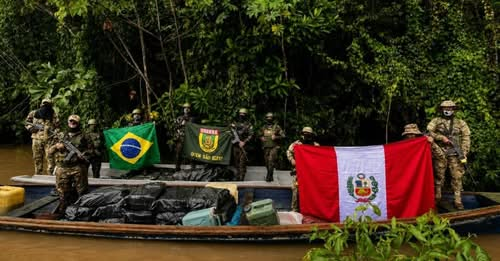
International collaboration has been a fundamental pillar of the Dominican Republic’s anti-drug strategy. In coordination with foreign agencies, mainly from the United States, the country seized more than 67 tons of drugs in international waters in 2025. This reflects a multi-level cooperation structure that integrates shared intelligence and joint operations at strategic points in the Caribbean, Dominican channel CDN 37 reported.
A significant operational milestone was achieved in late September 2025 when Dominican authorities, in a historic joint operation with the U.S. Navy and U.S. Southern Command, successfully interdicted a vessel carrying about one ton of cocaine in the Caribbean Sea. This operation demonstrates the strength of the bilateral security commitment.
“The sustained support of allied countries and real-time coordination with the Dominican Republic has made it possible to dismantle international trafficking structures and confiscate significant shipments inside and outside the national territory,” Devers said. “This synergy has strengthened the country’s operational capacity, yielding historic results in seizures and boosting international cooperation against drug trafficking.”
Evolution of cartels and persistent challenges
Criminal organizations have evolved into more fragmented and specialized structures, where different cells manage specific stages such as cultivation, storage, or transportation of drugs, Infobae reported.
Ortega emphasized the dominant presence of Mexican cartels and the TdA in Latin America, stating that “they demand that producing countries sell only to these cartels. They are the ones responsible for moving drugs around the world.”
Dominican leadership in security has been recognized internationally, with the nomination of Leandro José Villanueva Acebal to head the United Nations Office on Drugs and Crime (UNODC), Diario Libre reported.
For Ortega, in order to maintain this progress, it is necessary to amplify good security practices and strengthen cyber defense and cybersecurity, key pillars for protecting facilities, personnel, and strategic equipment. “Only through coordinated operations against cybercrime and the fight against financial crimes will it be possible to consolidate a modern, resilient security architecture capable of anticipating threats in the digital environment,” he concluded.