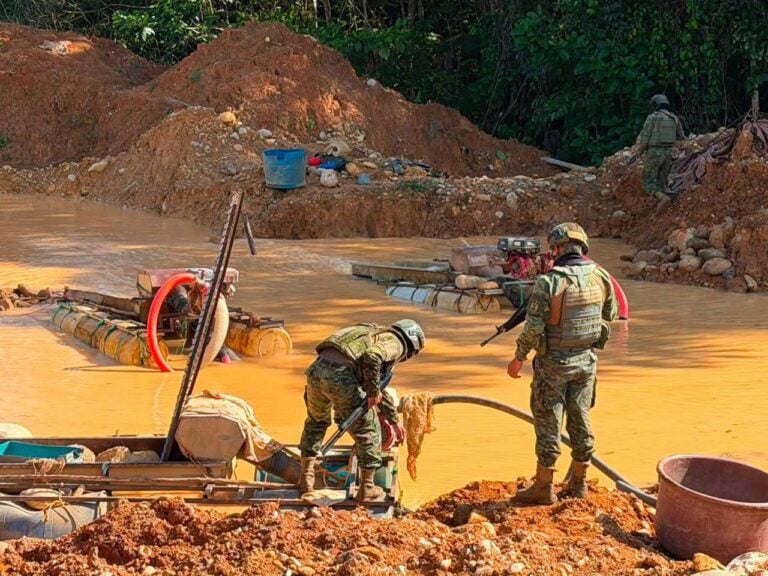

Cocaine production tripled in the last decade, having an unprecedented impact in Latin America. The boom in drug trafficking has intensified violence, challenging the stability of nations, the United Nations Office on Drugs and Crime (UNODC) World Drug Report 2024 indicated.
In 2022, cocaine production reached an all-time high of 2,757 tons, a 20 percent increase from 2021, and triple the volumes recorded in 2013 and 2014. In parallel, global coca cultivation expanded by 12 percent between 2021 and 2022, reaching 355,000 hectares, the report details.
The increased supply and demand for cocaine, driven by its low cost, according to UNODC, is generating an escalation of violence in transit routes such as Ecuador and the Caribbean. It also causes serious public health problems in consumer countries, especially in Western and Central Europe.
“The UNODC report is bad news: Coca and cocaine production tripled in the last decade,” Jorge Serrano, a member of the team of advisors to Peru’s Congressional Intelligence Commission, told Diálogo on August 10. “This escalation far exceeds the worst predictions and demands an immediate and coordinated response.”
The increase in coca and cocaine production not only fuels organized crime, but also undermines the foundations of democracy in the region. “The increase of violence and corruption associated with drug trafficking erodes citizens’ trust in their governments, weakens institutions, and puts the rule of law at risk,” Serrano says.
“Producing countries such as Peru, Colombia, and Bolivia could face an unprecedented crisis that threatens their stability and their future and that of transit nations,” he added. “Ecuador is a palpable example of this. In the last decade it went from being one of the quietest and relatively safe countries to being an unwieldy country, without producing a single gram of cocaine.”
Narcotrafficking hub

UNODC indicates that Ecuador is the epicenter of drug trafficking. The presence of transnational and local criminal groups intensifies disputes for control of drug trafficking routes, triggering an exponential increase in homicides, especially in coastal areas, from where drugs are exported to North America and Europe.
In 2023, the country recorded 7,600 homicides related to organized crime, one of the highest rates in the region. The seizure of more than 220 tons of drugs in 2023 and an additional 77.5 tons in the first months of 2024 confirms Ecuador’s position as a key point on drug trafficking routes, Voice of America (VOA) reported on May 6.
Faced with this crisis, the international community took action. The UNODC announced in May the opening of a new office in Ecuador to combat cocaine trafficking, reported Ecuadorian newspaper El Comercio. Meanwhile, Ecuador and the United States have been increasing cooperation to strengthen the capabilities of the South American country’s security sector. Among the agreement are increased collaboration on technical matters, best practices, lessons learned, and equipment, including capacity building of the Ecuadorian Armed Forces and acquisition of essential resources.
VOA said that Ecuador’s geographical position has made it a key link in the international drug trafficking chain. The drugs, which enter from its northern neighbors (Colombia and Peru), are stored in the country before being exported to the world’s main consumer markets through ports such as Guayaquil. “It’s a business unlike any other,” Serrano said.
The Caribbean, a key point
“Caribbean countries are in an extremely vulnerable position to drug trafficking. The shortest route for cocaine leaving Colombia for the United States goes through Venezuela, making this region a strategic corridor for drug trafficking,” Serrano said. “This situation exposes Caribbean countries to a series of threats such as violence, corruption, and money laundering.”
The increase in violence in this region is mainly attributed to disputes between criminal groups for control of drug trafficking routes, the UNODC indicated. Countries such as Haiti, Jamaica, Puerto Rico, the Dominican Republic, and the Dutch Caribbean have become key transit points for large quantities of cocaine, marijuana, and other drugs, according to InSight Crime, an organization that studies organized crime in Latin America and the Caribbean.
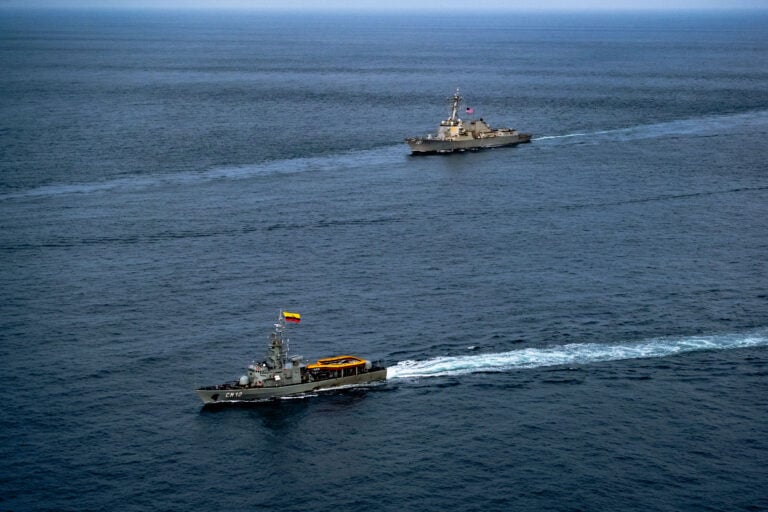
The Caribbean’s extensive and poorly guarded coastline, combined with heavy maritime and air traffic, facilitates the concealment of illicit shipments, InSight Crime said. Remote areas such as the Mosquitia, a tropical rainforest that extends from northern Honduras into Nicaragua, have become strategic hubs for the dispatch and transshipment of drugs, in addition to the proliferation of illegal firearms, driven by transnational criminal organizations.
Committed to regional security and partnership, the United States has increased support in the fight against this scourge. Through the Caribbean Basin Security Initiative and U.S. Southern Command operations, it has invested more than $900 million to strengthening maritime and port security in 13 countries in the region since 2010, Insight Crime indicated.
Comprehensive reformulation
This scenario is compounded by the proliferation of other drugs such as fentanyl, which is entering the United States from Mexico, causing an unprecedented wave of deaths and crime, Serrano said.
“It is crucial to adopt a new global approach to combat illicit drug trafficking. We are at a tipping point, which calls for a comprehensive reformulation of strategy at all levels, as drug trafficking and other related crimes are on the rise throughout the Americas,” Serrano said. “The United States must convene Latin American democracies to design and strengthen a joint strategy in the face of these threats.”