

China has expanded its global intelligence-gathering capabilities to Cuba, Washington-based think tank Center for Strategic and International Studies (CSIS), indicated in its July 1 report, Secret Signals. By analyzing satellite imagery and open sources, CSIS was able to identify four sites on the island that could facilitate espionage activities.
One of the newest facilities is located at El Salao, near the U.S. naval base at Guantanamo Bay. The facility, for which construction began in 2021, appears to consists of antennas arranged in a configuration known as circularly disposed antenna array (CDAA) capable of intercepting signals over long distances, making it an ideal outpost for monitoring military activities in the Caribbean.
“Once operational, this CDAA will serve as a powerful tool for enhancing air and maritime domain awareness in the region, where the U.S. military and its international partners operate regularly,” the CSIS report indicates.
A key site is in Bejucal, near Havana, the largest active signal intelligence (SIGINT) site in Cuba that CSIS reviewed. This former military complex, which once housed Soviet nuclear weapons, has been modernized and equipped with state-of-the-art technology. In addition, CSIS identifies two other facilities at Wajay and Calabazar, both in the vicinity of the Cuban capital.
Wajay, which began as a small station in 2002, is experiencing exponential growth, now housing a complex of 12 antennas, the report says. In Calabazar, the CSIS noted the shift over time in the number, location, and orientation of antennas, likely due to the evolution of missions, and points out to a newest dish installed in 2016.
“These surveillance installations on Cuban territory are key in China’s global ambition,” Euclides Tapia, professor of International Relations at the University of Panama, told Diálogo on August 7. “Not only will they allow it [China] to gather intelligence on its adversaries, but they also seek to project its military might in the region.”
The implication that China operates spy bases on Cuban territory could generate prolonged instability, increase the risk of conflict, increase Chinese influence in Latin America, cause greater political fragmentation, and increase the risk of maritime incidents, Tapia said.
In addition, its proximity to the Panama Canal raises concerns about the security of this waterway, which is crucial for world trade. “China could use its presence in Cuba to influence Canal operations or even control it for its own purposes,” Tapia said. “It’s like they are squeezing the throat of the whole continent.”
Growing presence
In its February 5 Annual Threat Assessment, the U.S. Office of the Director of National Intelligence warned of plans by China’s People’s Liberation Army to establish military bases abroad, including in Cuba. With this strategy, Beijing seeks to project its power and protect its global interests.
“This would escalate regional tensions and put hemispheric security at risk. Washington must show a strong posture to defend the region’s interests,” Tapia said. “With its intelligence capabilities, the United States can detect and neutralize these threats.”
Parallel to these military plans, Chinese companies such as Huawei and ZTE are weaving a telecommunications network in the region, installing equipment that, according to reports such as that of Argentine news site Infobae, could serve as surveillance tools. The donation of surveillance technology to several Latin American countries by these companies raises questions about national security and citizens’ privacy.
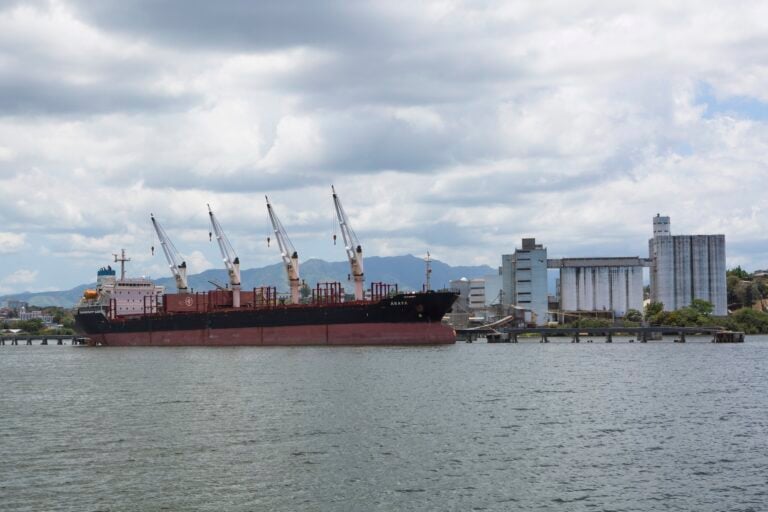
In addition to its influence in the telecommunications sector, China continues to invest in port infrastructure in Latin America and the Caribbean. These ports, built by Chinese state-owned enterprises, offer a strategic advantage for monitoring maritime traffic and gathering naval intelligence. This capability could allow Beijing to plan for potential military action in the event of conflict.
China is not only investing in land and maritime infrastructure. It has established space research centers in South America, which raises concerns about their dual use for scientific research and espionage, Infobae reported. “The United States fears that these facilities could intercept satellite communications, putting its national security and that of its allies at risk,” added Infobae.
Guoanbu
The Guoanbu or Ministry of State Security, China’s intelligence service, plays a crucial role in this complex plot. This “powerful and aggressive” secret service has been stealing military, technological, and industrial secrets crucial to the West, the Spanish Radio and Television Corporation (RTVE) reported on June 13.
Nicolas Eftimiades, an expert on the Guoanbu, told RTVE that “this espionage service has some 100,000 employees; five times more than the largest intelligence agencies in existence.” Bernard Barbier, who was deputy director of the French intelligence DGSE between 2006 and 2014, added that “there are tens of thousands of Chinese military personnel working in that field.”
“This worldwide network of agents, the Guoanbu, could be using the bases in Cuba for their secret operations,” Tapia said. “The strategic location of these bases, close to important U.S. facilities, makes them valuable assets for the Guoanbu in its pursuit of intelligence.”
However, both China and Cuba deny the existence of Chinese facilities on the island or any plans to establish military bases, U.S.-based news site Voice of America reported. “The re-emergence of Cuba as a key player in this scenario should raise concerns in the United States and countries in the region.”.