

The Caribbean faces a growing threat from drug trafficking and transnational organized crime, prompting its nations to strengthen regional alliances as a central response to their security challenges. These partnerships allow for the coordination of cross-border operations, intelligence sharing, and the implementation of financial countermeasures to combat criminal networks. Cooperation has become the backbone of a shared security system designed to protect the entire region.
The Caribbean Basin Security Initiative (CBSI) and the Caribbean Security Cooperation Dialogue with the United States are key pillars of the region’s anti-crime architecture. These platforms facilitate effective coordinated actions in the fight against drug trafficking, as well as efforts to improve maritime security and combat cybercrime.
While Caribbean nations have made significant strides, they face a shared challenge in monitoring their expansive waters due to limited resources. In this context, “the United States contributes its robust intelligence, surveillance, and reconnaissance capabilities, in addition to facilitating joint training that builds trust and accelerates information sharing,” Henry Ziemer, researcher at the Center for Strategic and International Studies (CSIS), told Diálogo. This collaborative approach ensures a more comprehensive and effective security response.
Strategic dialogue and collective action
The region’s unified approach to security is underpinned by strategic dialogue at the highest levels. The U.S. Southern Command- (SOUTHCOM) sponsored Caribbean Nations Security conference (CANSEC) brings together defense and security leaders from across the region to discuss shared challenges and forge consensus on collective action. To emphasize the conference’s regional nature, it is hosted by a different Caribbean nation each year. It serves as a crucial forum for senior military and security officials to discuss pressing issues, including transnational organized crime and disaster response.
This high-level strategic alignment informs practical, on the ground efforts. Regional security initiatives are spearheaded by the CARICOM Implementing Agency for Crime and Security, CARICOM-IMPACS. As the nerve center for regional security cooperation, IMPACS coordinate a collective response to crime priorities and oversees key sub-agencies like the Joint Regional Communications Centre in Barbados and the Regional Intelligence Fusion Centre in Trinidad and Tobago. A recent milestone was reached in August when IMPACs trained 27 police, customs, and prison officials in Grenada to design and deliver content on CBSI-Connect (a secure, web-based platform for standardized training and information sharing). This integrated Grenada into a network of 23 training institutions, standardizing practices and accelerating cross-border cooperation.
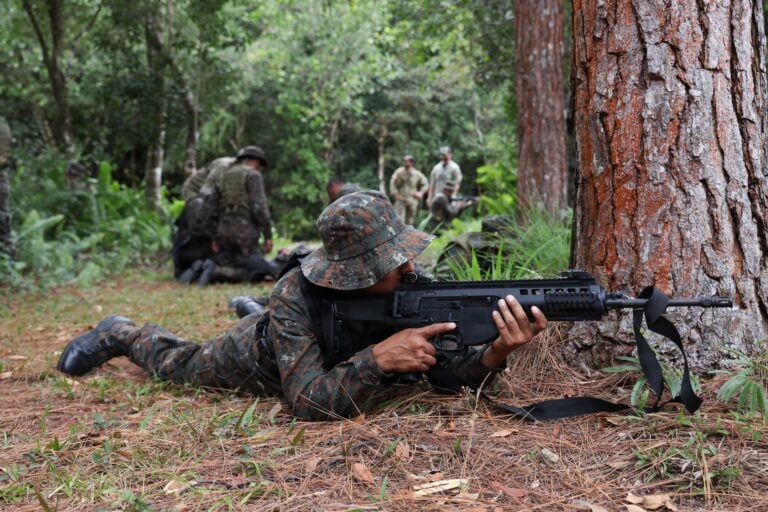
The region’s commitment is also solidified through Tradewinds, a yearly exercise sponsored by SOUTHCOM, which purpose is to improve the collective ability of defense and security forces to counter transnational criminal organizations and respond to humanitarian crises and natural disasters.
Caribbean nations are actively leading these efforts. For instance, Jamaica’s Major Organised Crime and Anti-Corruption Agency (MOCA) works with international partners to dismantle criminal organizations. The Belize Defense Force recently worked with U.S. Air Force advisors to conduct specialized training missions to destroy clandestine airstrips used by cartels.
Similarly, Guyana reaffirmed its support for a collaborative and integrated approach with bilateral partners and regional initiatives to dismantle criminal networks that have the capacity to pervert the rule of law. Additionally, countries like Barbados have taken a lead role in combating human trafficking by strengthening their legal and judicial capacities. St. Kitts and Nevis has also adopted a public health approach to violence, which has shown a notable reduction in overall crime.
The Dominican Republic is a major partner in these initiatives, and its judiciary is making notable progress with a technology package from the U.S. Bureau of International Narcotics and Law Enforcement Affairs (INL). This project, intended to strengthen cybersecurity and the digital transformation of the courts, aims to reinforce “digital shielding” and ensure more efficient, secure, and transparent access to justice, in line with regional standards.
Operational support and concrete results
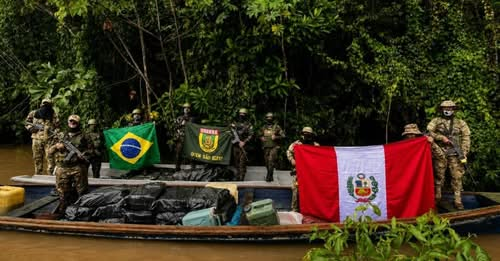
Eighty percent of drugs are intercepted on the high seas, which requires high levels of interagency and international coordination. SOUTHCOM’s Joint Interagency Task Force South (JIATF-South) monitors drug traffic in close collaboration with regional partners and supports missions to intercept and apprehend. The liaison officers from over 20 nations embedded at JIATF-South demonstrate the truly international nature of this operational support.
The results of this cooperation are tangible: The USCGC Hamilton seized more than 34.5 tons of drugs in 19 operations in the Caribbean during August, thanks to joint work. In addition, on September 2, the crew of the USCGC Vigilant intercepted 1,450 kilograms of illicit drugs 290 kilometers south of the Dominican Republic, following a 59-day operation, the U.S. Coast Guard indicated.
Regional context and outlook
For Ziemer “the more the United States can share intelligence with partner governments, the more easily these countries will be able to intercept illicit trade flows. The role of the United States should be that of a ‘fusion center,’ capable of integrating efforts, synthesizing intelligence, and providing strategic direction in the fight against drug trafficking.”
Record highs in cocaine production has led to increases in violence and homicides in the Caribbean. This is driven by gang competition as criminal organizations use the region as a major transit corridor for drugs produced in South America. In this context, regional cooperation is no longer just an option — it has become the only sustainable strategic advantage for anticipating and neutralizing transnational crime. Given the scale of the threat, strengthening these partnerships is a crucial and ongoing commitment for all involved nations.