

The growing presence of the Red Command (CV), one of Brazil’s most powerful criminal organizations, outside its national territory is transforming the crime landscape in South America. In Chile, the arrival of CV — facilitated through alliances with local gangs and support networks from Bolivia and Paraguay — is creating an illicit corridor that links the Amazon to the Pacific. This dynamic introduces unprecedented challenges for regional security cooperation.
New routes and regional pressure
Tighter enforcement controls in the Caribbean, the Pacific, and Central America have forced drug trafficking networks to seek less monitored routes. According to Juan Belikow, a political scientists and organized crime specialist at the University of Buenos Aires, “the best businesses are transnational, because fragmenting operations across several countries makes criminal prosecution more difficult. Slow extradition and legal cooperation mechanisms facilitate this expansion.”
According to Belikow, increased operational pressure within Brazil — especially during the Jair Bolsonaro administration — encouraged criminal groups to relocate to countries where they faced lower operational risk. “Chile, with sustained [economic] growth and expanding routes, became a point of interest for these criminals,” he said.
Illicit markets and transnational networks in Chile
The Chilean General Attorney’s Office’s Organized Crime 2025 report highlights that drug trafficking is the country’s main illicit market, favored by its proximity to Bolivia, Peru, and Colombia, its porous border, growing domestic demand, and high profits. The report documents the presence of CV and its rival the First Capital Command (PCC), as well as connections with Mexico’s Sinaloa and Jalisco New Generation cartels, which are responsible for drug shipments destined for Europe and Oceania.
Chilean criminal organizations have rapidly evolved, adopting the structures and capabilities typical of transnational crime and far surpassing traditional local microtrafficking. The report details that marijuana circulating in Chile originates mainly from Paraguay and Bolivia, while cocaine primarily enters from Bolivia, with secondary routes from Peru and, to a lesser extent, Colombia. Drugs enter through both authorized and unauthorized border crossings in regions such as Arica and Parinacota, Tarapacá, and Antofagasta, which aids internal distribution.
Simultaneously, there has been a steady increase in kidnappings linked to the financing of criminal activities. The same transnational networks are involved in human trafficking, migrant smuggling, and contraband, using kidnapping and extorsion as a mechanism for expansion and financing.
History and CV consolidation
CV was founded in the 1970s in a Rio de Janeiro prison as a self-protection organization. According to InSight Crime, the group shifted from common crime to cocaine trafficking in the 1980s, linking up with Colombian cartels and expanding into marginalized urban areas. Today, CV maintains its headquarters in Rio de Janeiro, a strong presence in Brazilian prisons, and strategic positions in the Amazonas and Mato Grosso regions.
“Brazilian commandos operate as criminal federations rather than vertical structures,” Belikow explained. “Local cells can change their affiliation depending on the conditions of the territory, which creates a volatile scenario in the Southern Cone.”
Between 2022 and 2023, CV aggressively expanded its control in the Rio de Janeiro Metropolitan Region, regaining territory from militias and asserting dominance over 51.9 percent of the areas held by armed groups, according to the BBC.
In the Amazon, CV consolidated its dominance over the Solimões Route, a major river corridor connecting Brazil with Colombia and Peru. These routes have become key trafficking pipelines, with speedboats moving drugs and weapons hidden in legal cargo, the LatinAmerican Post reported.
From Bolivia to Chile: The Andean corridor
Douglas Farah, an organized crime expert and president of IBI Consultants, explained to Chilean media outlet Ex-Ante that “for two decades, the CV and the PCC expanded in Santa Cruz, Bolivia, controlling rural areas and border towns.” That expansion, he added, reached Peru and successfully opened routes to Chile through Bolivian groups familiar with the terrain and the structure of illicit markets. Farah warned that these organizations do not limit themselves to intermediation but, once operational, seek to directly control local markets.
Competition for control of territories in Chile involves significant risks. Farah warns of potential clashes between CV, the Tren de Aragua (TdA) — the highly violent transnational criminal organization originating in Venezuela and designated a terrorist organization by several nations — and other networks present in the country.
Belikow, for his part, points out that “drug trafficking is sustained by four interrelated factors: low-cost production with no economic alternatives; expanding global demand; intermediation that multiplies profits and includes weapons; and money laundering, which moves and hides those resources. Until these elements are addressed together, the problem will not stop.”
Operational challenges and successes
In confronting this expansion, Chile faces some institutional and operational challenges. Belikow identifies key areas that require strengthening, including the need to modernize police, judicial, and technological resources to effectively contain the infiltration of large transnational criminal organizations (TCOs) like CV.
The expert further notes that criminal organizations have created operational asymmetry by adopting advanced technologies that currently challenge the state’s counter-response capacity. While TCOs quickly integrate tools such as drones and new-generation semi-submersible vehicles, legislative processes for updating laws and technological capabilities often lag behind the sophisticated adaptations of drug trafficking networks.
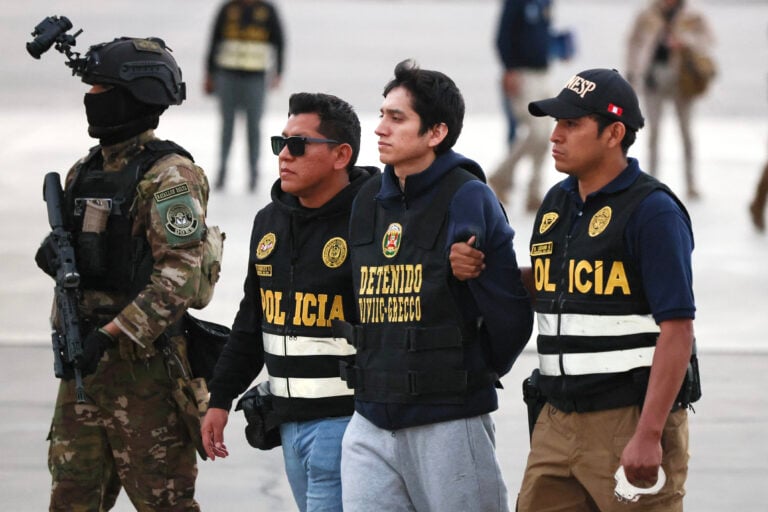
However, Chile’s independent judiciary and specialized prosecutorial units have secured notable successes against TCOs, particularly TdA. In March 2025, prosecutors in Arica achieved hefty sentences for 34 TdA members in one of the gang’s northern Chile offshoots, marking a significant milestone in dismantling the gang’s roots. Additionally, in September 2025, the country successfully secured the extradition of three alleged TdA members from the United States to face prosecution for murder and kidnapping charges in Chile, demonstrating robust international cooperation.
Hemispheric security
In the face of the expansion of organized crime, international cooperation is crucial. Belikow warns that “most criminal groups use terrorist tactics to intimidate authorities and the population.”
He stresses the need for regional partners to use international technical cooperation mechanisms similar to those applied during the pandemic. He suggests that adopting a non-ideological approach focused on technical collaboration would allow for faster and more unified responses, noting that the pandemic forced governments to prioritize rapid, practical action to address an existential threat.
Finally, Belikow concludes that the CV expansion “is a hemispheric challenge with implications for partners such as the United States and the European Union,” underscoring that “security is indivisible: Organized crime tends to spread rapidly and generate spillover effects that impact the entire region.”