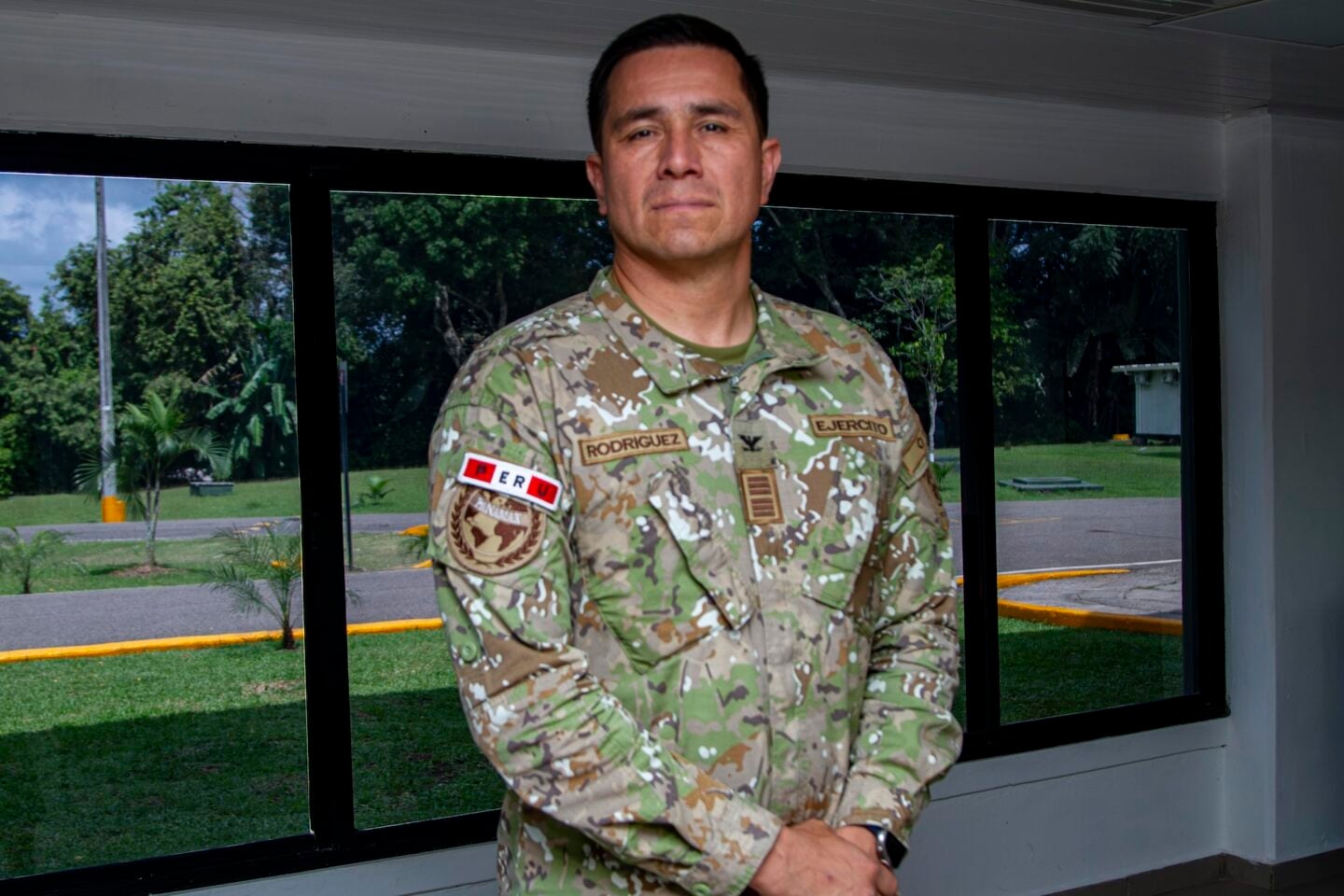

Special operations, military education, and years of working with forces from different countries have given Peruvian Army Colonel José Luis Rodríguez Gonzáles a broad perspective on an increasingly important challenge for the region’s militaries: how to bring different experiences, capabilities, and doctrines together into a force capable of working toward a common purpose.
Director of the Peruvian Army Commando School, Col. Rodríguez has also brought that perspective to hemispheric cooperation forums, including the Western Hemisphere Institute for Security Cooperation (WHINSEC), the Inter-American Defense College, and the Inter-American Defense Board. In August 2026, he put some of that experience into practice during PANAMAX 2026, where he served as deputy commander of the Combined Forces Land Component Command (CFLCC).
In Panama, Diálogo spoke with Col. Rodríguez about leadership, interoperability, the lessons armies can learn from one another, and why the trust needed to confront a crisis together must be built long before that crisis occurs.
Diálogo: During PANAMAX 2026, you served as deputy commander of the Combined Forces Land Component Command, and you currently lead the Peruvian Army Commando School. How do these two roles complement each other?
Peruvian Army Colonel José Luis Rodríguez Gonzáles, director of the Peruvian Army Commando School: They complement each other closely because in both we seek to develop the skills needed to solve difficult problems. At the Commando School, we train special operations personnel with a national mindset, but from the beginning of their training we instill in them the need to be prepared to work in combined environments with other countries and participate in multinational exercises.
In the CFLCC, we face complex problems in a multinational exercise. We have to build on the training we have received, but think multinationally: move from the national to the multinational level and from the individual to building truly cohesive teams.
Diálogo: You have served as an instructor at WHINSEC, represented Peru at the Inter-American Defense Board, and held a leadership role in the land component during PANAMAX 2026. How have these experiences shaped your view of regional military cooperation?
Col. Rodríguez: From an educational perspective, WHINSEC teaches us what cooperative security means and the kind of profile we need to solve complex problems. I also had the opportunity to pursue a Master of Science in Inter-American Defense and Security and, during my second year, serve as an assistant professor in several courses. That experience gives us a hemispheric perspective and helps us understand transnational threats. It allows us to develop strategic thinking, analyze political economy and illicit economies, and contribute to defense and security policies from the perspective not of a single country, but of a community of nations.
That has helped me tremendously during PANAMAX. Here I have reconnected with colleagues from WHINSEC and the Inter-American Defense College. Those relationships allow us to work with greater trust and interoperability and respond more effectively during operations.
Diálogo: How do those relationships affect the work of a multinational component?
Col. Rodríguez: My chief of staff is also an officer who studied at WHINSEC, and that allows us to quickly establish bonds of trust. In addition, 20 Peruvian Army War College officers enrolled in the Master of Military Sciences program participated in PANAMAX’s land component. They were able to see firsthand the value of having experience in a joint and combined environment and of having established relationships beforehand.
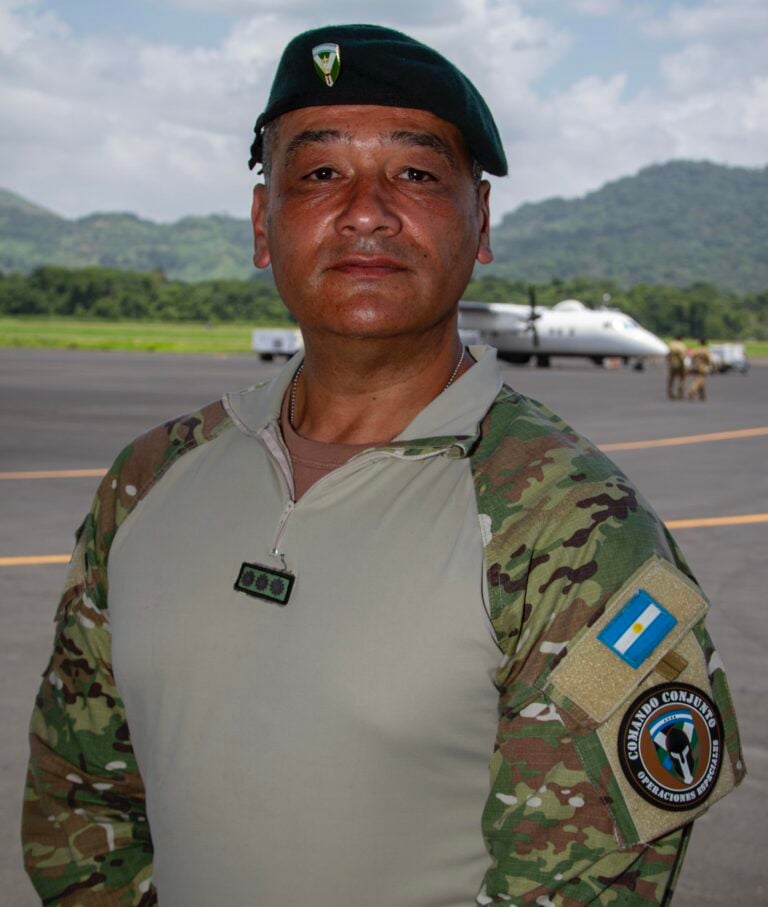
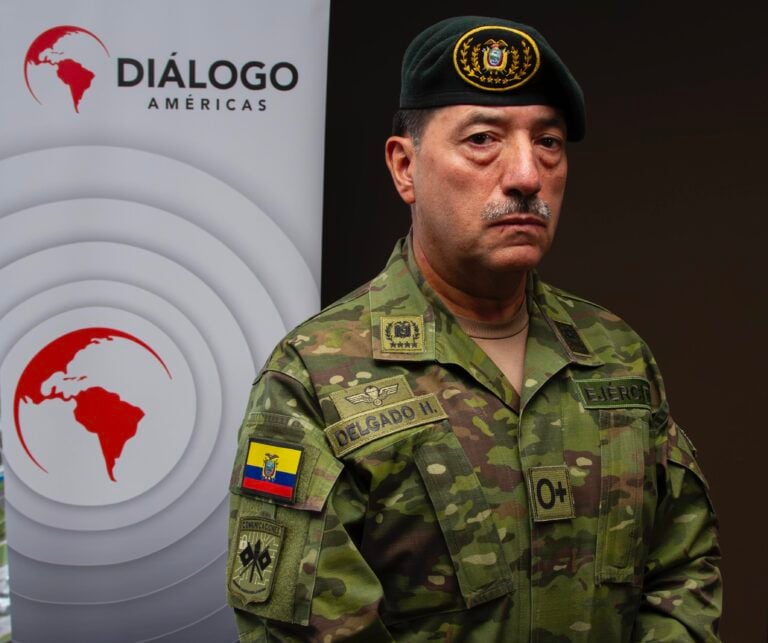
I believe the same thing happens with Argentina, Ecuador, Colombia, and other countries. We see that the interaction we have built over time serves us now and will also serve us in the future.
Diálogo: PANAMAX brings together land forces with different doctrines, capabilities, and operational cultures. From a commander’s perspective, what are the most important factors in turning those differences into an effective multinational force?
Col. Rodríguez: The first is to have a very clearly defined purpose. From that purpose, we derive our actions and build a shared understanding throughout the planning, preparation, execution, and assessment of operations.
That shared understanding is also tied to trust. I remember that on the first day, everyone was sitting with people from their own countries. By the end of the exercise, I saw Argentines interacting with Ecuadorians, Colombians, Americans, and Peruvians in different working cells.
That demonstrates that it is possible to increase our levels of interoperability. With small adjustments, we can make our tactics, techniques, and procedures, as well as our staff processes, compatible and build staffs capable of working together to address transnational problems and complex threats.
Diálogo: The Peruvian Army Commando School prepares its soldiers to operate under highly demanding conditions. Beyond technical skills, what leadership qualities do you consider most important for officers who may one day command multinational operations?
Col. Rodríguez: At the Peruvian Army Commando School, we have a program called the Special Leadership Program. One of its components is adaptive leadership, based on training in complex situations where we test our endurance, resilience, and spiritual strength so we can truly work as a team in the most difficult moments.
We also seek to develop leaders who serve others, who are responsible, and who are aware of the problems that currently exist in the hemisphere. To command complex missions, we need leaders who provide purpose, motivate others, and know how to provide guidance. We do not want leaders who have only a tactical perspective; we need leaders who learn to anticipate consequential decisions for the future and think strategically.
All of that is very important in a multinational environment. During PANAMAX, there is a great deal of information, many messages, and considerable complexity. We work with colleagues from other countries and, in some cases, in different languages. We need resilience, adaptability, and trust, but we also need to think cooperatively and understand that our allies can contribute to solving a problem.
Today, countries cannot solve every complex problem on their own. We have to think in Andean and hemispheric terms, across Central America, the Caribbean, South America, and North America. The policies of one country can affect another, which is why we need to integrate our efforts. That is also built here, when we exchange ideas respectfully and recognize that our armies share many characteristics and have enormous potential to work together.
Diálogo: What was the greatest challenge in building that cohesion during PANAMAX 2026?
Col. Rodríguez: This was the first time the Peruvian Army assumed command of the land component. We had a deputy commander, a chief of staff, and 32 land component planners. It was an achievement, but above all, a great responsibility.
We had participated in coordination meetings since 2025, offering our capabilities with a hemispheric mindset, not competing but cooperating. The entire process — from planning at the joint task force level to land component planning, preparation, and finally execution — required us to prepare ourselves for the complexity of the exercise.
The purpose was to support Panama in protecting critical infrastructure such as the Panama Canal, which is enormously important to international trade. We did not come with the mindset of replacing Panama, but rather of supporting Panama through a multinational force capable of working toward a common purpose.
Another challenge was the language differences and the small cultural differences. I remember that at the beginning of the exercise, the headquarters had not yet come together. We made more progress on the second day, and by the third, our land component headquarters had essentially come together. There were challenges, but a hemispheric mindset allowed us to find solutions.
Diálogo: Looking ahead, what do you consider the greatest challenges for military leaders in multinational environments?
Col. Rodríguez: The first is strategic thinking. Every day, threats are becoming more sophisticated, coordinating across countries, and forming networks. That requires strategic leaders to understand what could happen in the coming cycles, toward 2035 or 2045, and to think about how we envision the Western Hemisphere. What happens in one country can affect another; what happens in Central America can affect South America.
The second is having the humility to work with other armies and learn from them. Here we have shared a great deal with Ecuador, Colombia, and Argentina, and there is much to learn from other armies. Although we have succeeded in militarily defeating groups such as Shining Path in Peru, there is still much to learn from Colombia, Ecuador, Argentina, the United States, and other countries.
Finally, I believe military leaders need to adopt a hemispheric mindset, think about forming combined task forces, and seek solutions that allow us to build forces that truly operate with interoperability and toward a common purpose in the hemisphere.
Diálogo: After your experience in PANAMAX 2026, what message would you give military leaders and forces across the region?
Col. Rodríguez: As leaders, we have an imperative to develop our armies with a multinational mindset and develop leaders capable of responding to the problems of the future. The problems may be complex, but it will depend on our operational art and strategic thinking to begin laying the groundwork and building trust now.
Once we are in a crisis, we cannot begin building that trust. That is why we need to demonstrate now that our forces and our armies are capable of working together against current threats. We need to demonstrate concrete efforts and work with humility and harmony with other armies. That is the message I would give.