Throughout 2025, Panama solidified its standing as a strategic leader in hemispheric security. By integrating advanced technology, institutional leadership, and a sophisticated network of international alliances, Panamanian security forces achieved historic victories against transnational criminal organizations (TCOs) across air, sea, and land.
Under the framework of Plan Firmeza 2025-2029, the Panamanian National Police (PNP), National Border Service (SENAFRONT), and National Air and Naval Service (SENAN) delivered a massive blow to the financial heart of TCOs. According to data provided to Diálogo by Panama’s Ministry of Public Security, authorities seized more than 118 tons of illicit substances in 2025, including cocaine, marijuana, methamphetamine, ecstasy, and ketamine. The Ministry of Public Security highlighted that nearly 80 tons of the total volume were cocaine, illustrating the massive scale of the challenge.
A year of record-breaking victories
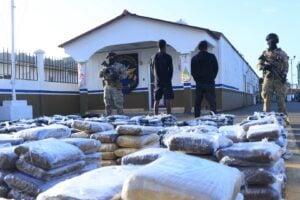
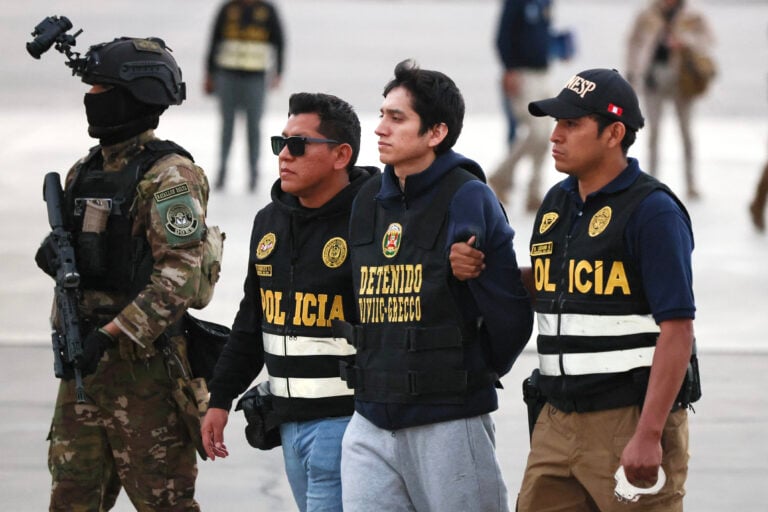
A standout success occurred in November 2025, when Panamanian security forces conducted one of the largest seizures in Pacific waters, intercepting 13.2 tons of cocaine bound for the Northern Hemisphere. This operation, supported by U.S. intelligence, led to the arrest of 10 individuals from Venezuela, Ecuador, and Nicaragua aboard a vessel originating from Colombia, and represented a major disruption to maritime trafficking corridors.
“Panamanian authorities have demonstrated a firm commitment and concrete results in the frontal fight against drugs,” Public Security Minister Frank Alexis Ábrego told Diálogo in a statement, emphasizing that these successes are the result of a comprehensive national strategy.
Beyond this major bust, SENAN and SENAFRONT maintained a relentless operational tempo. In July 2025, for example, a joint operation in the Las Perlas Archipelago uncovered a strategic surface cache containing 685 kilograms of cocaine, dismantling a key storage enclave used by TCOs.
International synergy
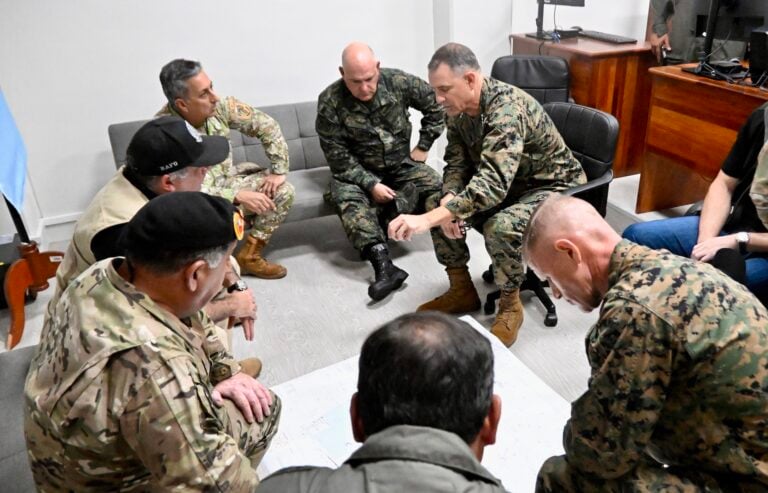
Panama’s success is amplified by its ability to lead and coordinate with global partners. In April 2025, Panama City served as the strategic heart of the region by co-hosting the Central American Security Conference (CENTSEC) 2025 alongside U.S. Southern Command (SOUTHCOM). The conference brought together defense and security leaders from across the hemisphere to focus on joint operations and cybersecurity. During the event, Panama and the United States signed a Memorandum of Understanding to further modernize joint training and protect the critical infrastructure of the Panama Canal.
A critical pillar of this strategy is the long-standing partnership with the United States. This collaboration provides Panamanian security forces with access to high-level training, advanced surveillance technology, and real-time intelligence sharing.
“Thanks to this cooperation, we carry out joint patrols that reinforce our maritime and aerial surveillance,” Ábrego noted. This was clearly demonstrated during the PANAMAX Alpha exercises in early and mid-2025, where SENAN, SENAFRONT, and the PNP worked with U.S. forces to hone rapid response capabilities and logistical coordination.
This synergy allows Panama to project power far beyond its coastlines, ensuring regional stability through shared resources. The U.S. Embassy in Panama reiterated that disrupting drug trafficking networks in the Western Hemisphere is essential for regional stability.
“This challenge is not just Panama’s; it is a problem that affects the entire region,” Ábrego said.
This collaborative model extends across the Atlantic as well. In December 2025, Panama signed a landmark joint declaration with the customs authorities of Belgium, France, and the Netherlands. This agreement facilitates the exchange of operational data to secure maritime trade routes to Europe, effectively narrowing the window of opportunity for TCOs to exploit legal commerce.
Internal security and triumphs
Panama’s leadership is equally evident in its domestic security achievements. The government has balanced robust interdiction with social prevention and humanitarian efforts.
In a major milestone for regional stability, Panama achieved a 99.9 percent reduction in irregular migration through the Darién jungle. This was achieved by dismantling human smuggling networks and conducting dangerous operations to clear anti-personnel mines left by criminal groups.
Simultaneously, the “Arms for Food” program successfully removed 1,142 weapons and over 100,000 rounds of ammunition from the streets, directly improving citizen security. To maintain this momentum, Panama integrated drones and advanced sensors into the surveillance of borders and correctional facilities, ensuring that law enforcement maintains a constant technological edge.
Prevention and rehabilitation
Minister Ábrego also underscored that the fight against drugs requires more than just interdiction; it demands a deep commitment to the social fabric of the nation. To this end, Panama’s law enforcement agencies work in unison with the National Commission for the Study and Prevention of Drug-Related Crimes (CONAPRED) to implement robust prevention and rehabilitation programs. These initiatives are specifically designed to mitigate the social impact of drug use and provide constructive alternatives for at-risk youth, ensuring that internal security is bolstered by long-term social resilience.
By addressing the root causes of vulnerability, Panama ensures that its tough stance against organized crime is matched by an equally strong investment in its citizens.
Future challenges and the digital frontier
As 2025 concluded, the Latin American Center for Innovation in Public Policy (CLIPP) hosted a forum in Panama City to address the digital evolution of organized crime. Experts from various institutions highlighted that criminal groups are increasingly moving into digital environments, requiring the state to modernize its regulatory frameworks and cyber defense capabilities.
“Criminal organizations, when impacted, continually adjust their methods,” Ábrego noted. CLIPP 2025 reaffirmed the importance of regional cooperation to anticipate, prevent, and respond to transnational crime.
“Maintaining operational supremacy will require not only continued interdictions, but also the sustainability of naval resources and technological modernization,” Minister Ábrego concluded.
By combining strategic stewardship with a robust network of international allies, Panama enters 2026 as a beacon of security for the entire Western Hemisphere.