

Facing persistent threats to regional security and stability posed by transnational crime, Jamaica and the United States maintain a steadfast and vital security alliance. This partnership serves as a fundamental pillar for the security of both nations and the entire Caribbean region. Build on mutual trust and common strategic goals, this bilateral relationship is an essential engine for addressing the complex challenges posed by transnational criminal organizations.
Through close cooperation, both countries have solidified joint agreements and programs that not only enhance Jamaica’s domestic security but also strengthen maritime domain awareness and regional security across the wider Caribbean Sea.
The evolving Caribbean threat landscape
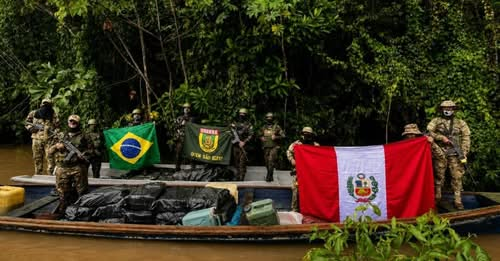
The Caribbean has for decades been a critical operational area for global organized crime. While trafficking routes have diversified over the years, the region remains a key corridor. The increased pressure on other routes has led to the Caribbean corridor regaining relevance, particularly in the movement of illicit drugs. This dynamic underscores the enduring importance of security efforts in the waters near major trafficking hubs.
This reality of shared threats compels a concerted effort. International cooperation is not merely supplemental; it is essential to ensure that solutions are robust and supported by shared intelligence and resources, creating resilience against the sophisticated strategies of transnational criminal enterprises.
Strengthening capabilities
The United States stands as a key partner, providing technical, military, and logistical support that has empowered authorities in Kingston to expand their capabilities in surveillance, intelligence, and the fight against transnational threats.
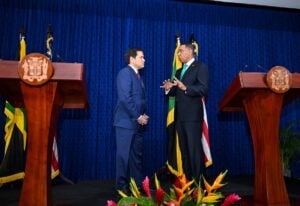
This commitment was strongly reaffirmed during a visit by U.S. Secretary of State Marco Rubio to Jamaica in March 2025. During the high-level meeting, both delegations stressed the importance of working “shoulder to shoulder to stem the flow of weapons and drugs, combat criminal networks, and ensure the safety of citizens,” the U.S. State Department said in a statement.
Prime Minister Andrew Holness was emphatic about the alliance’s importance, stating: “We reaffirm our commitment to strengthening cooperation in the fight against transnational crime, ensuring the collective security of our citizens and the mutual security of our borders.” He highlighted that “The U.S. has been instrumental in supporting Jamaica’s efforts to strengthen its maritime domain awareness and surveillance and intelligence capabilities, which are crucial in our fight against organized crime networks.”
Secretary Rubio, for his part, emphasized the value of collaborative initiatives that deliver tangible results. One such project is the Joint Operations Logistics and Technology (JOLT) Fusion Center, a critical collaboration that targets cybercrime, including the persistent threat of lottery scams. In addition, new initiatives have been launched to equip Jamaican law enforcement with advanced resources, ranging from forensic equipment and gang recruitment prevention programs to cutting-edge technology, such as night vision goggles and intelligent software.
The demonstration of high-level commitment continued in May 2025 with a visit by U.S. Navy Admiral Alvin Holsey, commander of U.S. Southern Command (SOUTHCOM). Adm. Holsey met with Vice Admiral Antonette Wemyss-Gorman, Jamaica Defence Force (JDF) chief of Defence Staff, specifically to bolster military collaboration and tackle shared security challenges, underscoring the enduring strategic importance of the JDF as a regional leader.
Jamaica’s leadership in regional defense
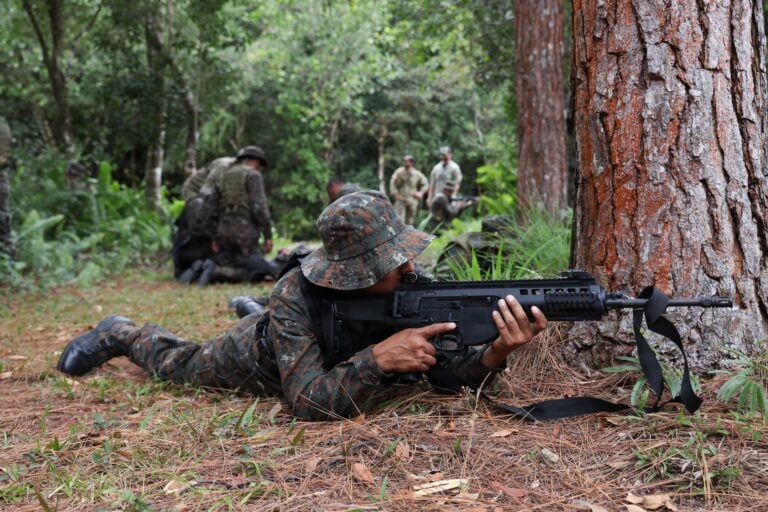
The strong partnership is anchored in military training and operational readiness, with Jamaica routinely taking an active role in regional security planning and execution. The underlying cooperation is institutionalized through the State Partnership Program, a robust alliance between the JDF and the District of Colombia National Guard (DCNG) that spans over 25 years.
As a direct outcome of this enduring SPP relationship, joint exercises, like the Caribbean Regional Training Camp (CRTC) are routinely held. The last iteration took place in Jamaica in July, bringing together forces from the DCNG, the JDF, and other regional partners. These engagements are vital for strengthening regional security and improving the interoperability of all participating forces.
“The CRTC represented a vital opportunity to strengthen readiness with our allies and partners in the […] region,” U.S. Army Major General John C. Andonie, DCNG commanding general (interim) said at the conclusion the exercise. “We were pleased to have the Barbados Defence Force Reserves join us for this important exercise, expanding the scope of our regional cooperation.”
In a powerful demonstration of its broader commitment, the JDF led multinational Exercise Event Horizon 2025 in January. This major exercise saw up to 14 nations participating in complex scenarios across various domains, including humanitarian assistance/disaster relief, maritime security, and cybersecurity, showcasing Jamaica’s leadership and enhancing regional readiness. Jamaica’s dedication to strategic dialogue is further demonstrated through its long-standing participation in, and hosting of, the annual Caribbean Nations Security Conference (CANSEC), a critical SOUTHCOM-sponsored forum where regional leaders gather to coordinate defense policy and counter-threat strategies.
Further cementing this commitment, Jamaica also participated in Exercise Tradewinds 2025, the annual multinational exercise sponsored by SOUTHCOM. This participation, alongside over two dozen partner nations, demonstrates the country’s dedication to strengthening regional interoperability and reinforcing the collective capacity of Caribbean forces to respond to both counternarcotics missions and disaster relief efforts. The JDF also hosts active knowledge exchanges at its Joint Information and Operations Center, focusing on crucial domains like cybersecurity, command and control, and tactical deployments, which reinforces regional resilience in both the physical and cyber domains.
Joint maritime successes and future commitment
Finally, continuous joint operations in the Caribbean Sea remain a core focus. The U.S. Coast Guard regularly deploys assets to work alongside the JDF. These maritime patrols have proven successful in detecting and monitoring illegal cargo for interdiction, leading to significant seizures of drugs and vessels, while also deterring undocumented migration attempts.
A recent, comprehensive example of this daily collaboration was the 75-day patrol of the U.S. Coast Guard Cutter USCGC Mohawk, which concluded in late August 2025. During its deployment in the Caribbean Sea, the Mohawk crew frequently worked directly with the JDF, intercepting illicit activities on multiple occasions. This joint effort contributed to the seizure of significant quantities of cocaine and marijuana and successfully assisted in the interdiction and transfer of undocumented migrants attempting to enter Jamaica illegally, underscoring the functional depth of the bilateral maritime agreement.
The sustained and renewed partnership between Jamaica and the United States, not only provides an immediate response to current security challenges, but also lays the necessary foundation for a safer, more resilient, and more prosperous future for the entire Caribbean. This bilateral cooperation is a role as a model for regional stability in an increasingly complex scenario.