China’s growing influence in Latin America is being felt in Chile in several areas. Among others, the Asian country is pursuing increased access into the energy sector. China’s push, experts say, is a threat to national security and increases Beijing’s leverage over the Andean country.
According to international news magazine The Diplomat, Chinese companies now control about two-thirds of Chile’s energy sector. “The numbers show that control of the Chilean energy sector is practically in Chinese hands,” Euclides Tapia, professor of International Relations at the University of Panama, told Diálogo. “It’s not just any area. China does not direct its interest to minor sectors, it focuses its efforts on the critical infrastructure of the countries of the region.”
For years, the Chilean energy sector was competitive, made up of domestic and foreign companies. However, the 2008 financial crisis and the COVID-19 pandemic caused financial instability, forcing several companies to take on debt and then sell, The Diplomat reported in September.
With the exit of international competitors, Chinese state-owned companies, supported by their government through the Belt and Road Initiative, acquired energy firms in Chile, often with low bids, The Diplomat reported. In 2020, for example, China State Grid bought 97.3 percent of Compañía General de Electricidad (CGE) for $3 billion. CGE transmits and distributes power in 11 of Chile’s 16 regions.
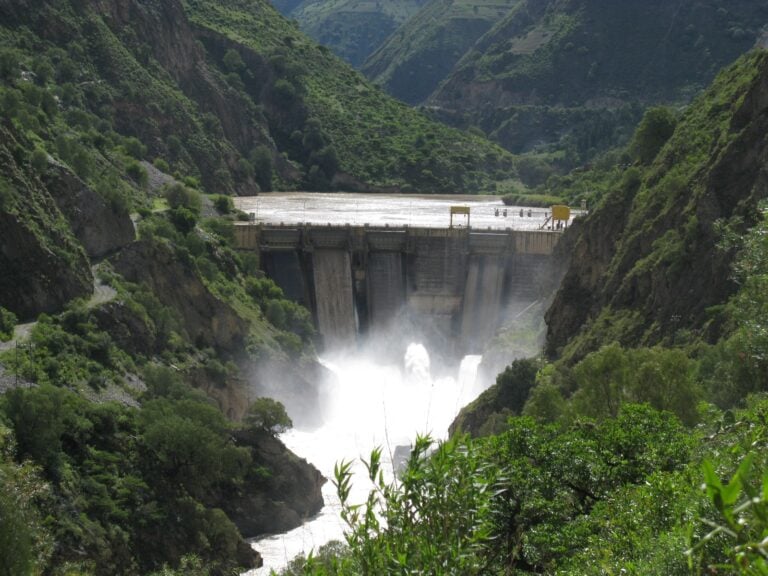
In 2018, China Southern Power Grid acquired 27.79 percent of Transelec, a leader in high-voltage transmission in Chile, for $1.3 billion. State Grid International also bought the assets of Sempra Energy, the third largest power distributor in Chile, for $2.2 billion. Two years earlier, State Power Investment Corporation acquired Pacific Hydro, which owns several hydroelectric power plants in the country, for $3 billion.
China uses its investments in the Chilean energy sector as a strategy to “create economic entanglement” to support other projects on its agenda, taking advantage of Chile’s position in the Lithium Triangle, its large copper mines, and its location on the Pacific, which facilitates the trade of essential resources to China, The Diplomat added.
This interest in Chile’s natural resources is reflected in the fact that most of China’s foreign direct investment is focused on energy and mining. Since 2019, Beijing consolidated its position as Chile’s main investor, with a marked growth in recent years, think tank Inter-American Dialogue indicated.
Sharpened power
Chinese influence in Chile is gradually and strategically expanding through “sharp power” tactics including the negotiation of advantageous trade agreements, persuasion of the elites, and subtle warnings of the consequences for not aligning with Chinese interests, the report China in Chile, from human rights nongovernmental organizations Sustentarse, from Chile, and Latinoamérica Sustentable, from Ecuador, indicated.
According to the China Index 2022 of think tank Doublethink Lab, Chile is one of the 15 countries most influenced by Beijing in economy, politics, and media.
The project that measures China’s overseas influence through comparable data indicates that Chinese interference includes an increase in paid advertisements by the Asian country state media in local press, participation in public tenders, investments in critical infrastructure such as the purchase of Chilean utility company CGE, and preferential relations with some local politicians who defend Chinese authoritarianism.
“Behind these actions is the objective of controlling the fundamental assets of the countries in the region, which is no coincidence,” Tapia said. “China follows a clear strategy: to displace other countries from these key resources, to possess them and use them to its advantage in case of conflict.”
Transparency
Although energy distribution facilities in Chile are considered critical infrastructure, the country does not have a law protecting these strategic assets, which limits the action of the authorities, environmental journalism platform Dialogue Earth reported.
“If antitrust rules existed in Chilean law, China’s advance in the energy sector would not have happened,” Tapia said. “There is a legal vacuum that must be filled as soon as possible. Otherwise, Chile runs the risk of handing over other critical infrastructure companies to foreign hands.”
Often, Chinese investments are hidden behind fictitious names, companies, and people that make it difficult to trace their connections with Chinese interests and to understand both the origin and the nature of the final beneficiaries, Latinoamérica Sustentable indicated. Sales contracts, financing, and other commercial operations always include confidentiality clauses.
Measures
“China imposes conditions in its economic relations, gradually bringing the countries with which it negotiates to their knees. It is a predatory power that absorbs everything in its path, and restricts without leaving alternatives,” Tapia said. “This strategy is not limited to small countries in the region.”
According to Tapia the relationship between Chile and China will continue to evolve toward greater control of the energy sector, as long as there is no legislation to limit it. In addition, Beijing will continue to make inroads into local politics to strengthen its influence and expand its control in key sectors of the country, he added.
Chile must protect its sovereignty through mitigation measures. These include creating an investment control committee, diversifying the energy sector to avoid monopolies, protecting infrastructure with the help of partner nations, and evaluating the background of Chinese companies with specialized databases, The Diplomat reported.