
Criminal organizations operating in the Caribbean exploit maritime routes, illicit markets, and multiple jurisdictions to move drugs, weapons, and other illegal goods. Against networks that operate across national borders, information provided by local communities can become an operational asset when it is protected, evaluated, and connected with data from other countries.
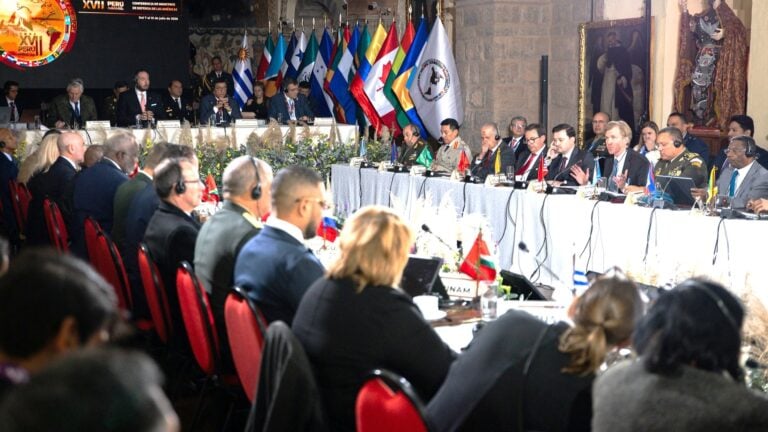
With that goal in mind, the Caribbean Community Implementation Agency for Crime and Security (CARICOM IMPACS) and the Crime Stoppers Foundation for the Caribbean, Bermuda, and Latin America (CBLA Crime Stoppers) signed a memorandum of understanding to strengthen crime prevention, intelligence coordination, and public participation across the Caribbean. The agreement was signed during the Annual Conference of Caribbean Commissioners of Police, held in May in Paramaribo, Suriname.
According to CARICOM IMPACS, the memorandum establishes a structured framework for the secure exchange of information through confidential and anonymous reporting mechanisms while respecting national sovereignty, legal frameworks, and institutional mandates. The agency described the agreement as an important step in addressing the serious and transnational organized crime affecting the Caribbean.
Crime Stoppers operates anonymous reporting programs in partnership with governments, international organizations, and law enforcement agencies, Dominican newspaper El Nuevo Diario reported. CARICOM IMPACS, meanwhile, implements the region’s crime and security agenda and coordinates intelligence analysis and operational cooperation among member states.
Local information against transnational threats
Criminal organizations operate across multiple jurisdictions, rely on maritime and commercial routes, and adapt their methods more quickly than traditional information-sharing mechanisms. In that environment, a report received from a local community can take on regional significance once it has been evaluated, corroborated, and linked with information from other jurisdictions.
“This alliance represents a significant advancement in our regional security architecture,” CARICOM IMPACS Executive Director Lieutenant Colonel Michael Jones of the Barbados Defence Force told the press. “Integrating the community reach of Crime Stoppers with the strategic coordination of CARICOM IMPACS creates a stronger front against transnational organized crime.”
The agreement seeks to complement the knowledge held by local communities with the region’s ability to identify patterns, connections, and criminal activity that transcend national borders. Anonymous reporting can encourage citizens who fear retaliation to provide information on suspicious movements, criminal activity, or potential trafficking routes.
For that information to become operationally useful, it must first undergo a process of evaluation, corroboration, and analysis before being shared with the appropriate authorities or incorporated into an investigation.
From citizen reporting to regional analysis
“This is a major milestone in strengthening trusted partnerships between regional institutions and civil society mechanisms,” said Alejo Campos, Regional Director and CEO of CBLA Crime Stoppers. “Transnational organized crime is evolving rapidly across our region […], making stronger regional coordination, public cooperation, and secure intelligence-sharing mechanisms essential to protecting our countries, economies, and communities.”
The memorandum aims to bridge the gap between information provided by local communities and the regional mechanisms responsible for evaluating it. Its effectiveness will depend on protecting the identity of sources, filtering reports, corroborating information, and linking data from different countries.
“This agreement should represent a qualitative step toward greater democratization and decentralization of the information cycle because it proposes a hybrid communication structure capable of integrating open-source and human intelligence at the community level,” Paz Crisóstomo, an international analyst and researcher at Chile’s Finis Terrae University, told Diálogo. “Anonymous reports will be processed at much higher levels and with a strategic perspective that will make it possible to consolidate the data.”
Expanding regional capabilities
The model allows information provided by the public to be evaluated, corroborated, and, when appropriate, incorporated into investigations or regional intelligence analysis. This new mechanism is part of a broader regional security architecture supported by initiatives such as the Caribbean Basin Security Initiative (CBSI), which brings together the United States and 13 Caribbean countries to reduce illicit trafficking, strengthen citizen security, and combat transnational crime.
Through the CBSI, U.S. agencies provide training and technical assistance to Caribbean partners to investigate and dismantle organizations involved in drug and arms trafficking. Those agencies include the DEA, the Bureau of Alcohol, Tobacco, Firearms and Explosives (ATF), U.S. Customs and Border Protection (CBP), and Homeland Security Investigations (HSI).
The initiative also supports specialized police units and CARICOM’s Caribbean Crime Gun Intelligence Unit (CCGIU), while providing assistance to investigate money laundering and facilitate the seizure of illicit assets.
In the maritime domain, U.S. cooperation supports the Regional Security System in interdiction operations, enhances the readiness of maritime units, and promotes multinational exercises such as Tradewinds, sponsored annually by U.S. Southern Command (SOUTHCOM) and conducted in coordination with a host nation.
“The U.S. has tremendous capabilities to provide and integrate advanced maritime and aerial surveillance platforms, real-time satellite imagery, and artificial intelligence tools,” Crisóstomo said. “Its support is particularly valuable for modeling maritime routes and identifying ghost ships and non-cooperative vessels.”
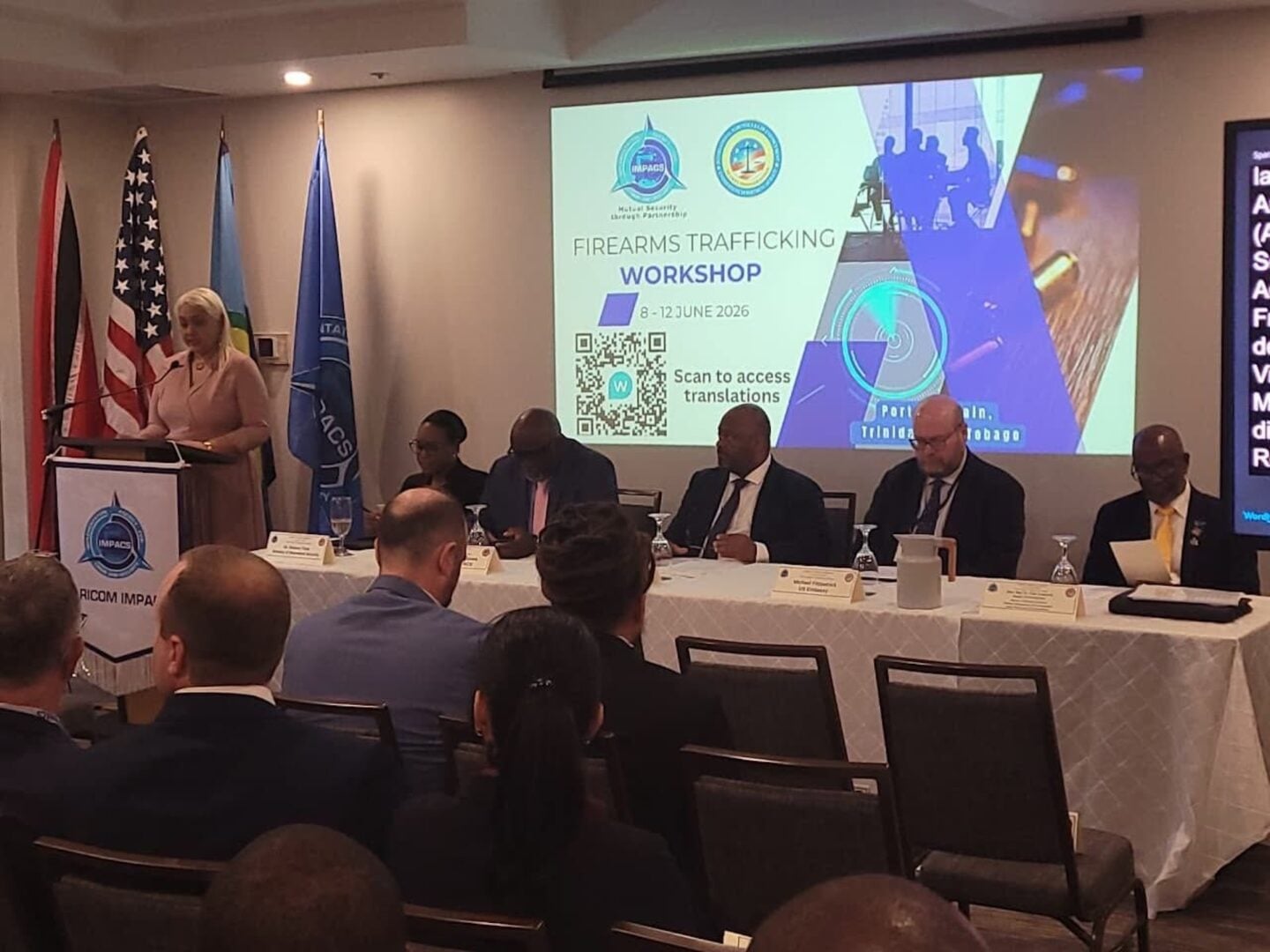
In June 2026, CARICOM IMPACS and the U.S. Bureau of International Narcotics and Law Enforcement Affairs (INL) organized a five-day regional firearms trafficking workshop in Port of Spain, Trinidad and Tobago.
The training brought together frontline Caribbean law enforcement personnel and specialists from ATF, CBP, HSI, and the U.S. Bureau of Industry and Security. The goal was to strengthen cross-border investigations, standardize firearms data collection, and address emerging trafficking methods, including the smuggling of firearms components, 3D-printed weapons, and the use of the dark web.
The workshop also enhanced participants’ ability to collect intelligence, build prosecutable cases, and identify illicit shipments before they reach Caribbean shores.
The convergence of an anonymous civilian reporting mechanism, a regional coordinating agency, and U.S. technical assistance can reduce the information advantage exploited by Caribbean criminal networks. Drug and arms trafficking organizations thrive on communication gaps between jurisdictions and institutions; a flow of information that connects local communities with regional analysis can help close those gaps and shorten response times.
More than creating a new reporting mechanism, the partnership strengthens the Caribbean’s ability to transform scattered information into shared knowledge. By integrating citizen participation with regional intelligence analysis, cooperation among Caribbean states, and technical support from partner nations, the initiative expands the region’s collective capacity to anticipate threats, coordinate responses, and limit the operating space of transnational criminal organizations.