

Navy units from Brazil, Colombia, and Peru carried out multinational exercise BRACOLPER 2024 in the Amazon River border regions shared by the three countries. The exercise sought to keep troops prepared in the fight against organized crime to guarantee regional security, Peruvian news agency Andina reported.
BRACOLPER was conducted in three stages between July 17 and September 9, including the ports of Iquitos in Peru, Leticia in Colombia, and Manaus in Brazil, with the deployment of naval assets and the participation of more than 2,000 service members. This edition marks the 50th anniversary of this combined activity.
“This type of training serves to reinforce the navies’ capabilities and increase river cooperation, where these nations share borders, to exchange knowledge and strengthen their capabilities in the fight against transnational threats,” Andrei Serbin Pont, a defense specialist and director of Argentina’s Regional Coordinator of Economic and Social Research, told Diálogo on September 22.
During the second phase, troops sailed between the ports of Leticia and Iquitos, carrying out communications, cargo transfer, interdiction, and patrolling exercises.
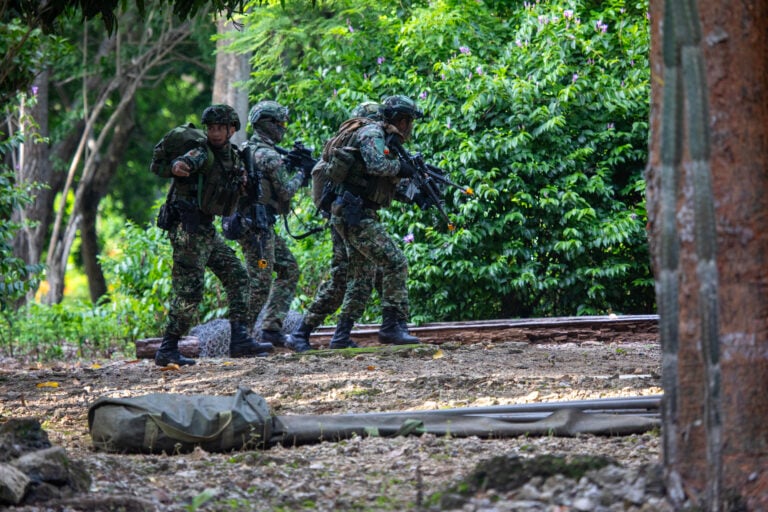
According to Spanish news site Infodefensa, the third phase was carried out between Leticia and Manaus, with Marines’ amphibious landing and various operations related to tactical maneuvers in the jungle.

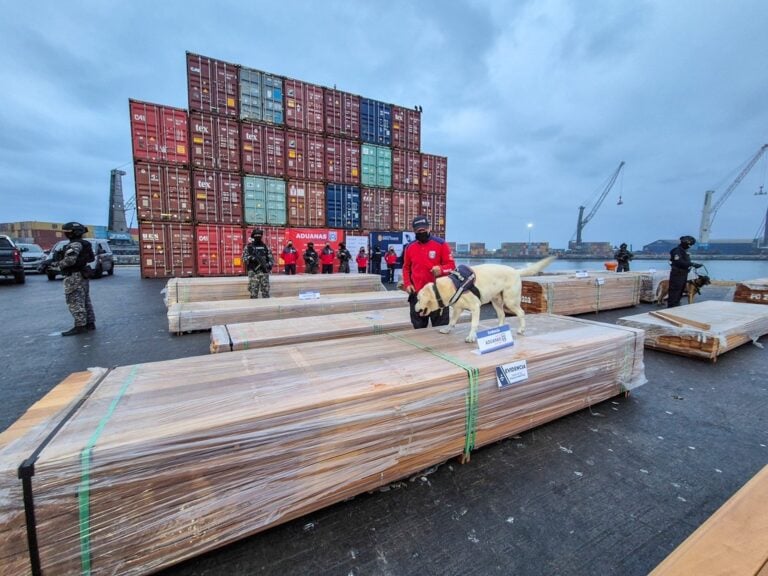
“It must be taken into account that in recent years, crimes such as drug trafficking, environmental exploitation, wildlife trafficking, and illegal mining have increased in the Amazon,” said Serbin Pont. “Brazil, Colombia, and Peru share 80 percent of the Amazonian territory; it is therefore essential that they work together in a coordinated manner for the benefit of the development and protection of this region.”
In a report, Brussels-based nongovernmental organization International Crisis Group warns that in the region where Brazil, Colombia, and Peru converge, deep in the Amazon, a wide variety of criminal organizations “are taking advantage of the scarce state presence, the abundance of natural resources, and the poverty of local communities to grow, diversify, and incubate new cross-border criminal enterprises.”
Brazilian criminal groups partner with Colombian guerrilla factions and Peruvian drug traffickers, engaging in a range of illegal activities, from growing coca and processing it into cocaine to logging, dredging for gold, and fishing in protected areas, International Crisis Group added.
Argentine news site Zona Militar reported that in late July Peru’s President Dina Boluarte announced the creation, implementation, and development of the Amazon and National Surveillance System, which focuses on the protection of natural resources and biodiversity, implementing strategies for the sustainable management of these resources, as well as the Amazon and National Protection System, focused on the protection of the rights of communities living in the Amazon region and its environment.
These systems will complement the tasks of operational forces in their fight against the different threats and multidimensional risks that affect the preservation of the Amazon. In addition, they will serve as a tool for national development.
For BRACOLPER, the Peruvian Navy deployed the river gunboats BAP Ucayali, BAP Clavero, and BAP Castilla, as well as the 1st Marine Infantry Battalion and the 3rd Special Operations Group. For its part, the Brazilian Navy participated with the river patrol vessels Raposo Tavares (P21) and Roraima (P30) and the Hospital Ship Carlos Chagas, while the Colombian Navy was represented by the gunboats ARC Leticia and ARC Arauca.
“Combined training in the field is key to practical learning in any military activity,” Serbin Pont said. “In addition, the cooperation between these three countries ratifies the intention of being a zone of peace and respect for the sovereignty of the countries, guaranteeing territorial integrity in the face of new threats such as organized crime.”
For its part, the Colombian Navy informed that through its Amazon Naval Force, it will continue to carry out international operations such as BRACOLPER, which will strengthen naval capabilities, improve training levels, and counter transnational crime.
BRACOLPER operations originated in 1974, when the three countries opted to focus on combined operations in the Amazon and agreed to carry out the multinational exercise annually and without interruption, with the conviction that interoperability and coordination are fundamental pillars of its success, Peru21 reported.
Patrols, securing of riverside areas, parachute drops, and rescue and medical evacuation maneuvers were also part of the multinational event.
“These exercises test compatibility, techniques, strategies, and operability in the field, simulating real situations,” concluded Serbin Pont. “Military interoperability between partner countries that share borders is crucial to guarantee peace and security in Latin America.”