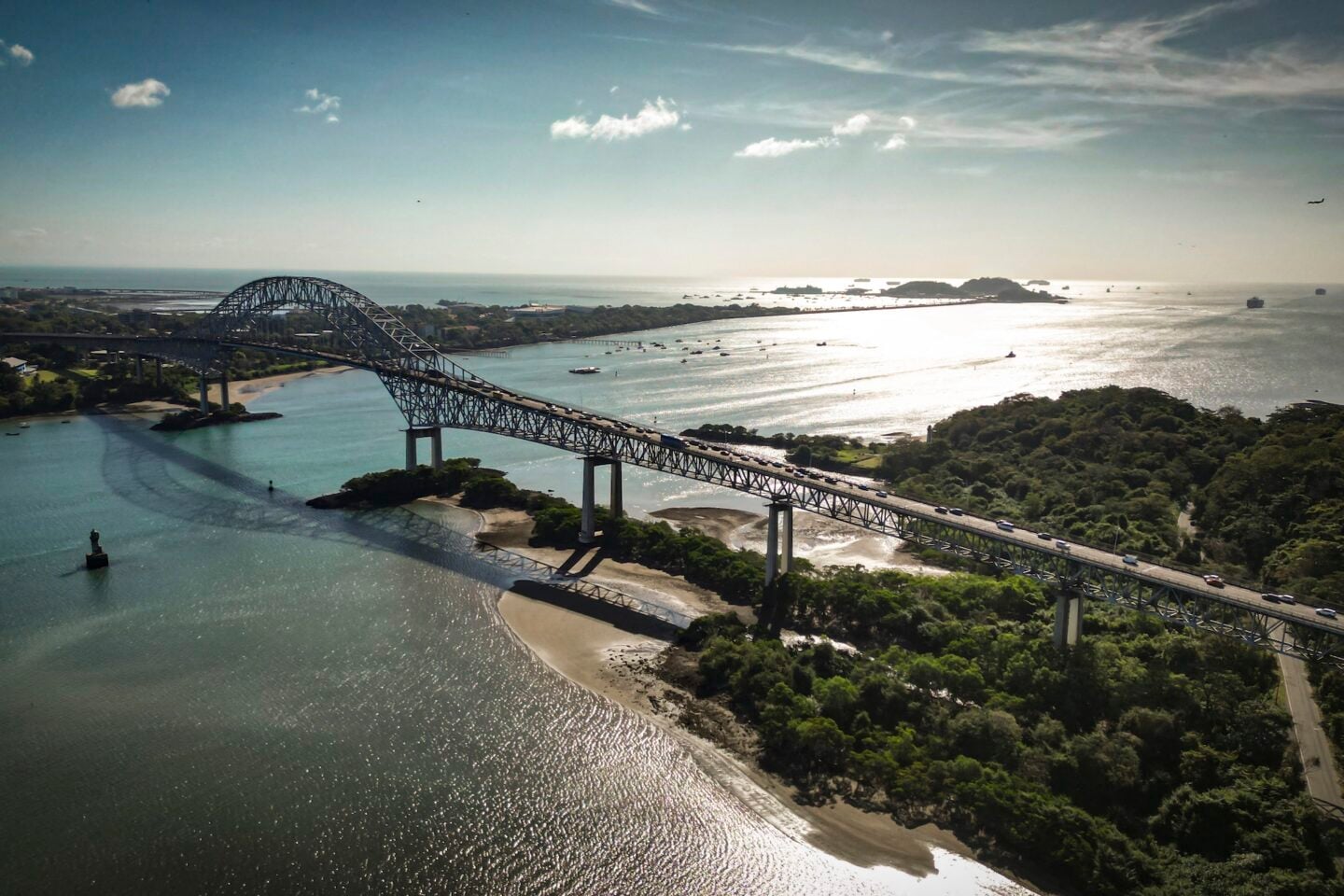

The explosion and fire beneath the Bridge of the Americas in April, which killed one person, injured two others, and forced the temporary closure of one of Panama’s vital transportation routes, underscored the importance of resilient strategic infrastructure and alternative routes capable of sustaining mobility and logistical continuity during an emergency.
The incident also revived debate over delays in the construction of the Fourth Bridge over the Panama Canal. Designed to ease congestion on the Bridge of the Americas and the Centennial Bridge, the project was intended to strengthen connectivity between the Canal’s two banks. However, the project’s continued lack of completion is placing additional pressure on existing crossings and increasing the potential impact of accidents and disruptions.
“The Fourth Bridge was announced nine years ago and was supposed to be delivered in 2023. Today, it carries cost overruns of more than $1.84 billion,” Panamanian lawmaker Jhonathan Vega said, describing the April explosion as “further proof of the fragility of the entire system while this project remains unfinished.”
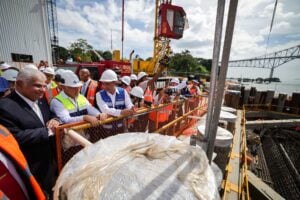
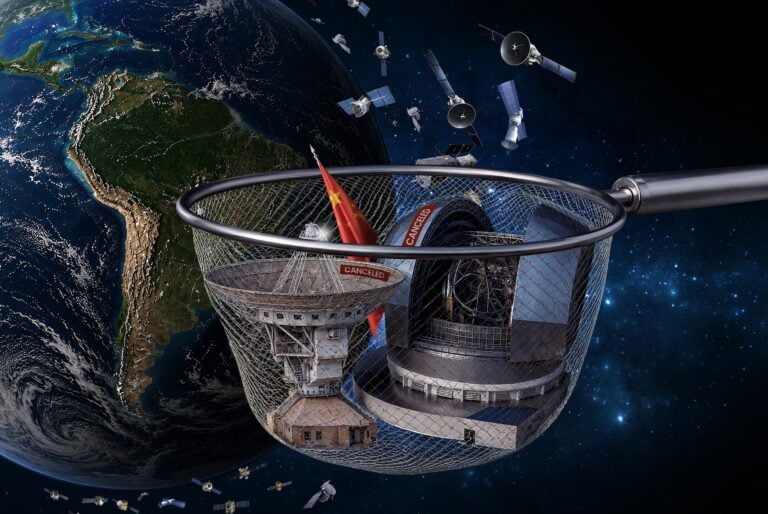
Awarded in 2018 to a consortium formed by China Communications Construction Company (CCCC) and China Harbour Engineering Company (CHEC), the project has become one of the most visible examples of the growing scrutiny Latin American governments are applying to Chinese investments in strategic infrastructure, as major projects promoted by Chinese state-owned companies fall behind schedule, overrun cost estimates, and face questions about the quality of their execution. In response, governments across the region are reviewing numerous strategic projects linked to Beijing, renegotiating, freezing, or even canceling them outright.
In Panama, the debate extends far beyond technical considerations. The Fourth Bridge has become a test of the broader reassessment the country is undertaking of Chinese investment in strategic sectors.
“China’s interests in Panama are tied to maintaining a degree of control over global supply chains, within which the Panama Canal clearly represents an element of enormous importance,” Guillermo Holzmann, a political analyst at the University of Valparaíso in Chile, told Diálogo.
Following Panama’s 2017 decision to sever diplomatic relations with Taiwan and establish them with Beijing, Chinese investment in the country grew rapidly. However, delays, cost overruns, and concerns about the transparency of some projects have fueled growing skepticism. Experts have warned of the risks posed by so-called “corrosive capital”: investments that, beyond their economic risks, can expand Beijing’s political influence and control over strategic assets such as ports, energy networks, and logistics infrastructure.
The Fourth Bridge
The Fourth Bridge over the Panama Canal has become one of the most prominent cases in the regional debate over Chinese investment. Entrusted to the Panama Fourth Bridge Consortium, formed by Chinese state-owned companies, and located next to one of the world’s most strategic trade routes, the project is now marked by delays, technical reviews, contractual changes, and rising costs. In April, Panama’s Labor Minister Jackeline Muñoz announced sanctions after authorities also identified irregularities involving working conditions and immigration requirements.
The main challenges, however, remain the timeline and the cost. According to Panama’s Ministry of Public Works, the project is nearly five years behind schedule and had reached only 37 percent completion this year. The government had already sanctioned the consortium in 2020 over delays during the design phase, while subsequent administrations were forced to revise significant portions of the contract.
Costs have also risen sharply. From an initial estimate of $1.42 billion, the total value of the project has surpassed $2.6 billion. According to Panamanian authorities, part of the increase resulted from the need to correct deficiencies identified in the original design.
Public Works Minister José Luis Andrade said traffic studies conducted by the current administration showed that the initial project would have created congestion as soon as it became operational.
“An investment of this magnitude cannot be delivered with a traffic jam,” Andrade said.
For many analysts, these dynamics are not merely an economic problem. They can also increase governments’ dependence on projects that are difficult to renegotiate or halt, including because of Chinese diplomatic pressure.
“This pressure can slow projects, suspend them, or alter their conditions in order to influence government decisions,” Holzmann said.
The profile of the companies involved has added to concerns. In 2020, the U.S. Department of War included China Communications Construction Company on a list of firms considered linked to China’s People’s Liberation Army. The designation fueled concerns that major infrastructure projects could be used to advance strategic objectives beyond purely commercial interests.
In Panama, those concerns carry particular weight because the Fourth Bridge forms part of the logistics ecosystem surrounding the Canal, through which approximately 5 percent of global maritime trade passes.
A regional trend
The Panamanian government has reviewed several projects linked to Chinese companies, reflecting a shift in its approach to investments that were initially presented as opportunities to expand strategic infrastructure. The review comes as Panama seeks to strengthen oversight of critical infrastructure given the strategic importance of ports, logistics networks, and the Panama Canal.
In January, authorities revoked the concession for the Colón container port held by the Chinese companies Shanghai Gorgeous Investment Development and Landbridge Group, citing contractual violations. The Gas to Power Panamá energy project, developed by Sinolam Smarter Energy with an announced investment of $900 million, has also faced delays and uncertainty over its implementation. This has drawn international attention because Panama’s ports and logistics infrastructure, together with the Panama Canal, are critical to global commerce, regional supply chains, and U.S. national security interests.
The reassessment of Chinese investment reflects an increasingly visible trend across Latin America, where governments are reexamining infrastructure projects in light of growing concerns over transparency, strategic dependence, economic security, and the resilience of critical infrastructure. In Bolivia, controversy surrounding the El Sillar highway project, built by Chinese state-owned company Sinohydro, has included allegations of construction defects, contractual breaches, and disputes between authorities and the contractor.
In Ecuador, the state-owned electricity company Corporación Eléctrica del Ecuador, or CELEC, declared a $47 million tender for electricity transmission infrastructure void in July shortly before it was expected to be awarded to a consortium that included China Railway First and Xian Electric Engineering. CELEC cited public interest, transparency, and the protection of public resources.
“Latin American countries are learning to respond by seeking to preserve their sovereignty and protect their national interests,” Holzmann said.
However, he added that “many countries in the region still lack a clear and consolidated definition of their national interests, which are often confused with short-term needs related to social welfare or economic growth.”
Recent cases in Panama, Bolivia, and Ecuador show that the debate is no longer limited to attracting foreign investment. These governments are increasingly evaluating how infrastructure investments affect economic security, national security, supply chain resilience, and their ability to safeguard critical assets during periods of geopolitical competition. As critical infrastructure plays an increasingly important role in economic security national security, and supply chain resilience as well as the functioning of the state, governments across the region are also assessing how these projects may affect the resilience of strategic assets, institutional transparency, and the ability to make decisions independently.
Protecting critical infrastructure goes beyond building new projects. It also requires evaluating who develops them, the conditions under which they are carried out, the degree of oversight retained by the state, and how they could affect the operational continuity of services and strategic corridors during a crisis or emergency. Governments across Latin America are seeking to balance the need for foreign capital with greater attention to transparency, resilience, and the long-term protection of strategic assets.