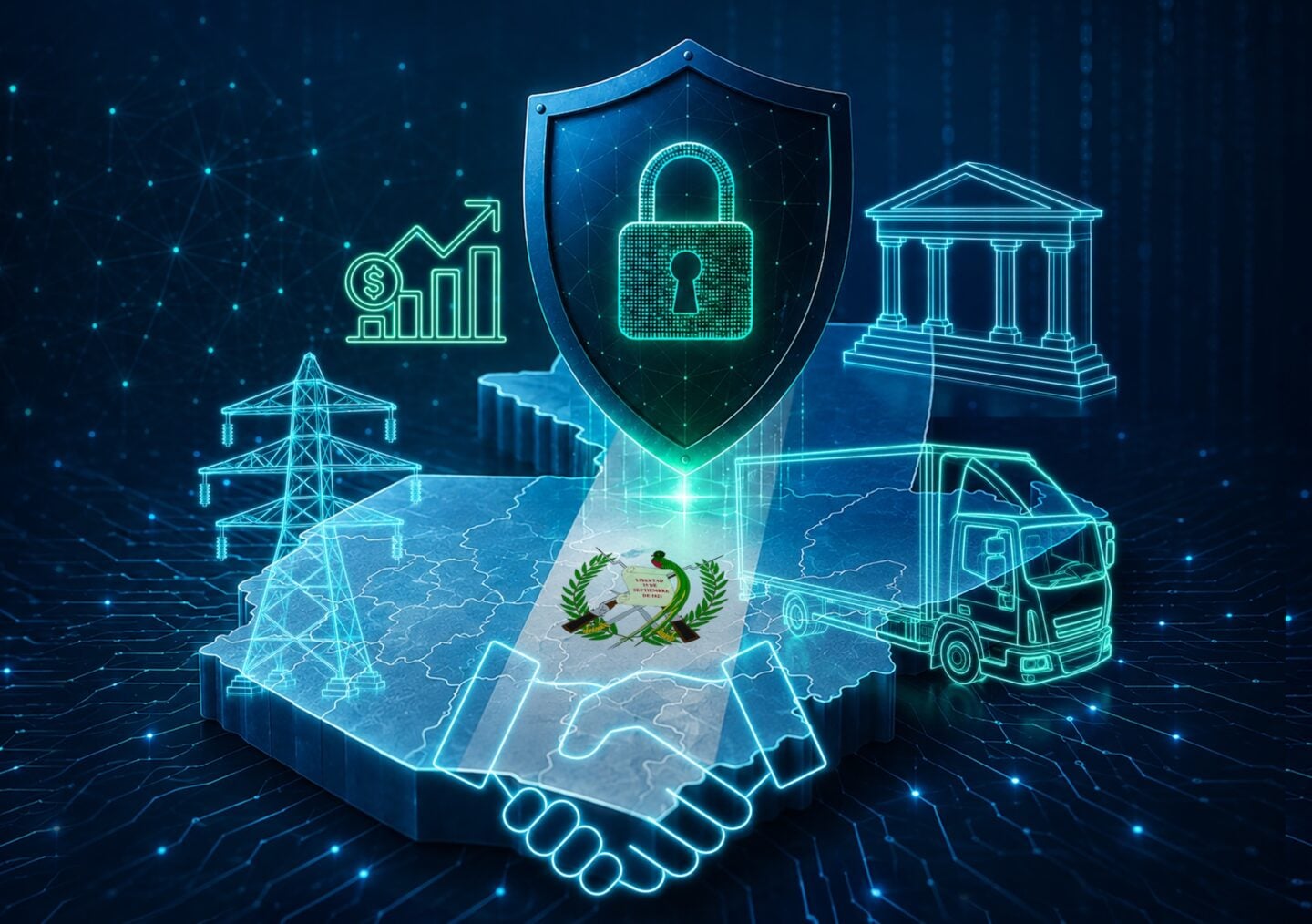

Cyberspace has emerged as a critical domain for national security. Beyond the traditional domains of land, air, and sea, the digital networks that support energy, transportation, communications, finance, customs, emergency response, and government operations have become critical infrastructure — and increasingly attractive targets for cybercriminals and hostile state actors.
Recognizing these growing risks, Guatemala has expanded efforts to strengthen cyber resilience through international cooperation, specialized training, and legislative initiatives designed to better protect its digital infrastructure.
Guatemala takes center stage
In April 2026, Guatemala hosted the International Cybersecurity Seminar under the Global Cooperation and Training Framework (GCTF), a platform established in 2015 by Taiwan and the United States to address global challenges through practical cooperation, with Japan later joining as a full partner. The seminar brought together more than 100 government officials, cybersecurity specialists, and technical experts from Guatemala, Taiwan, Japan, and the United States.
The workshop — the first GCTF cybersecurity event held in Guatemala — focused on strengthening cyber resilience, protecting critical infrastructure, improving digital governance, and sharing best practices for responding to increasingly sophisticated cyber threats.
Hosting the seminar reflected Guatemala’s growing role in regional cybersecurity cooperation and its commitment to strengthening the capabilities needed to protect essential government services and critical infrastructure. It also underscored the importance Guatemala places on working with trusted partners to build secure digital networks and resilient government systems.
During the event, Taiwan’s Ambassador to Guatemala Vivian Chang highlighted Taiwan’s willingness to share the practical experience it has gained defending against persistent cyber threats. According to Taiwan’s National Security Bureau, the island experienced an average of more than 2.6 million cyberattacks per day targeting its critical infrastructure in 2025, attacks that Taiwan attributes to China. The experience has provided Taiwan with valuable operational expertise that it now shares with partner countries seeking to strengthen cyber resilience and secure critical infrastructure.
Building stronger cyber capabilities
As cyber threats continue to evolve across Latin America and the Caribbean, governments are increasingly investing in stronger institutional frameworks, modern legislation, and incident response capabilities.
The 2025 Cybersecurity Report, prepared by the Inter-American Development Bank, the Organization of American States, and the University of Oxford, found that while several countries have made significant progress in strengthening national cybersecurity systems, important capability gaps remain, particularly in protecting critical infrastructure, strengthening incident response, and developing the specialized workforce needed to counter increasingly sophisticated cyber threats.
Guatemala is among the countries working to strengthen national cyber capabilities. Its participation in the GCTF, expanding cooperation with Taiwan and the United States, and ongoing efforts to modernize its legal framework demonstrate a growing commitment to aligning with international standards and improving national resilience.
Partnerships that strengthen readiness
International cooperation has become one of Guatemala’s principal tools for strengthening its cyber capabilities.
Guatemalan Navy Ensign Pamela Figueroa, spokesperson for the Ministry of National Defense, told Diálogo that Guatemala has participated in multinational cyber exercises such as Cyber Shield and Defensa del Sur, while military personnel have received specialized training through the William J. Perry Center for Hemispheric Defense Studies and academic programs in Spain, Brazil, Mexico, and Taiwan.
“Partnerships with allied countries allow us to identify vulnerabilities with a more comprehensive perspective. Cooperation strengthens national capabilities through joint exercises, training programs, and the exchange of experiences,” said Ensign Figueroa.
As governments across the hemisphere modernize telecommunications networks, cloud services, and digital infrastructure, many are placing greater emphasis on working with trusted technology partners to reduce vulnerabilities, safeguard sensitive government information, and strengthen long-term resilience.
These partnerships have provided technical assistance, specialized training, and opportunities to modernize technological capabilities that support military operations, customs systems, logistics networks, emergency response, and other government functions that increasingly depend on secure digital infrastructure.
Guatemala is also considering legislative reforms — including proposed Cybersecurity and Personal Data Protection laws — that seek to strengthen the protection of critical systems and establish clearer institutional responsibilities.
“Taiwan has established itself as a key partner, thanks to its leadership in the development of strategic technologies and the relationship of trust built over decades of cooperation,” Ensign Figueroa added.
Guatemala’s continued cooperation with Taiwan reflects a broader effort to strengthen cybersecurity through partnerships with countries that have extensive experience defending against persistent state-sponsored cyber activity.
Protecting critical infrastructure in an evolving threat environment
As governments become more dependent on interconnected digital systems, cybersecurity has emerged as an increasingly important component of national defense and public security. Decisions regarding telecommunications networks, cloud services, government data, and other critical technologies carry long-term implications for operational resilience, the protection of essential services, and the security of sensitive government information. As digital infrastructure becomes increasingly strategic, governments are also evaluating how technology partnerships affect national sovereignty, institutional resilience, and their ability to independently secure critical systems.
Guatemala’s expanding cooperation with Taiwan, the United States, and other trusted partners reflects a broader regional recognition that strengthening cybersecurity is not only about improving technical capabilities, but also about ensuring that the digital infrastructure supporting national defense and essential government services remains secure, resilient, and under reliable oversight.