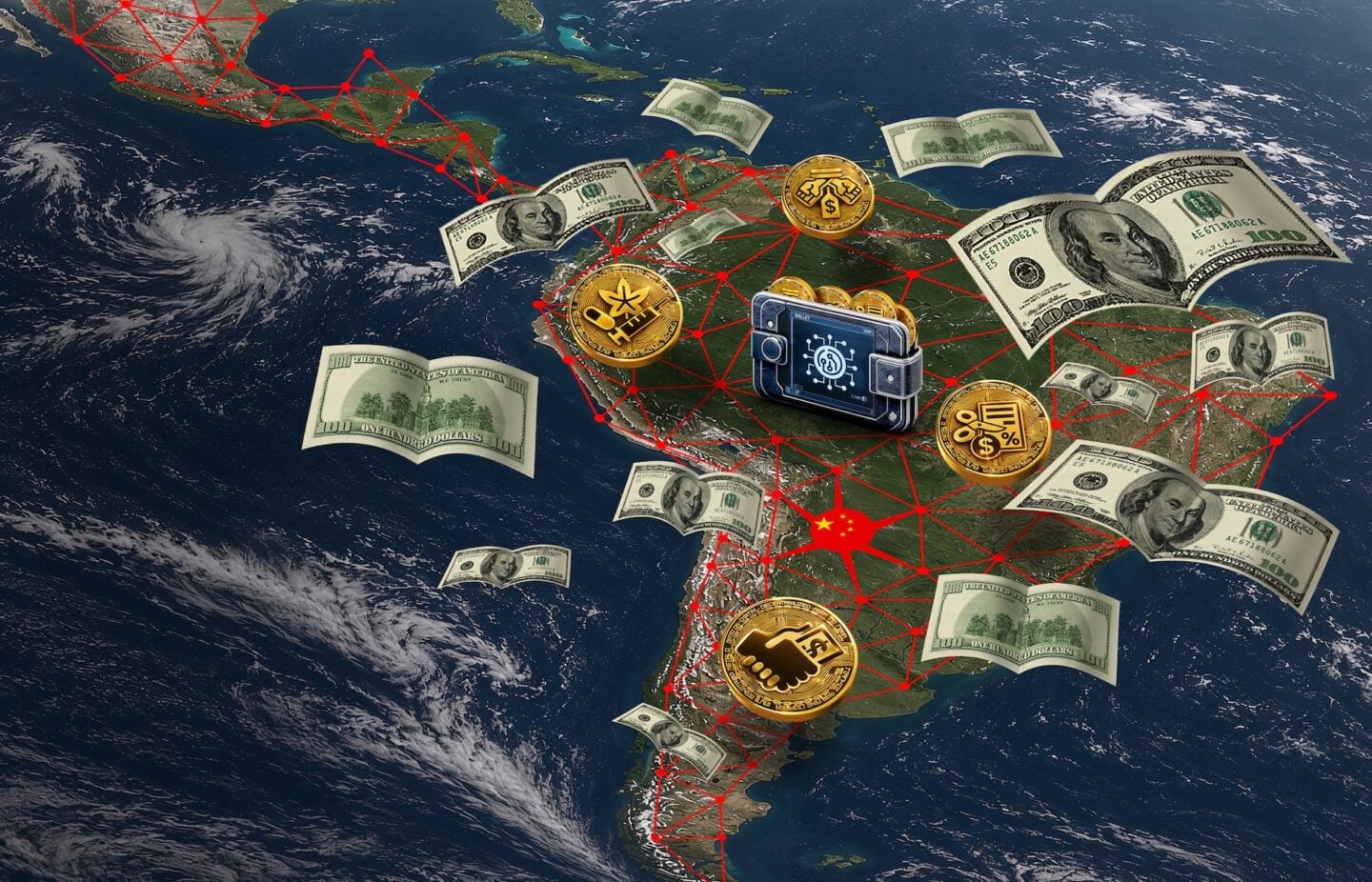

Chinese money laundering networks have become a key financial engine for transnational organized crime in Latin America and the Caribbean. Through informal value transfer systems, underground banking, international trade, and cryptocurrencies, these organizations move billions of dollars in illicit funds.
“Chinese organized crime has expanded worldwide and has turned Latin America into one of its principal financial operating hubs,” Leland Lazarus, security expert and director of Lazarus Consulting, told Diálogo, describing the region as part of what he calls a “Silk Road of crime.”
The U.S. Department of the Treasury’s Financial Crimes Enforcement Network (FinCEN) analyzed 137,153 suspicious activity reports filed between 2020 and 2024 linked to potential Chinese money laundering networks, representing approximately $312 billion in transactions. According to the agency, many of these structures maintain ties to transnational criminal organizations, including Mexican cartels, although the full scope of their operations is likely far greater due to their transnational nature and the difficulty of tracing illicit financial flows.
These networks process proceeds from fraud, human trafficking, illegal mining, illicit crop cultivation, and tax evasion. “Their role has evolved into that of financial platforms serving multiple criminal economies,” Lazarus added.
The “flying money” system
At the center of this architecture is the “flying money” system, an informal value transfer mechanism based on trusted networks and historically associated with the Chinese diaspora. In its modern form, it allows large sums of illicit money to be moved without using the formal banking system and without physically transferring cash across jurisdictions.
According to organized crime researcher Sebastián Rotella, the model is highly efficient for criminal economies. “It allows billions of dollars to be moved for international cartels in multiple directions simultaneously within days,” he told Diálogo.
Its primary advantage is cost. “While traditional intermediaries may charge up to 20 percent, these networks reduce fees to less than 5 percent,” Rotella said.
The DEA has noted that the system emerged from the convergence of two needs: Chinese citizens seeking to circumvent China’s annual $50,000 overseas transfer limit, and Latin American criminal organizations requiring fast and discreet money laundering mechanisms.
The system also incorporates foreign trade, maritime logistics, imports, and real estate, adding additional layers of opacity.
Cryptocurrencies and accelerating risk
The expansion of the digital asset ecosystem has strengthened the operational capabilities of these networks. According to Chainalysis, a blockchain analytics company, illicit cryptocurrency-related money laundering flows increased from $10 billion in 2020 to $82 billion in 2025.
Within that total, Chainalysis estimates that Chinese-speaking money laundering networks processed approximately $16.1 billion in illicit assets during 2025, accounting for roughly 20 percent of the globally identified cryptocurrency money laundering volume.
In Latin America, the phenomenon is expanding rapidly. The region has become one of the fastest-growing cryptocurrency markets in the world, recording approximately $1.5 trillion in total transaction volume between 2022 and 2025. According to Chainalysis, between 7 and 10 percent of global illicit cryptocurrency activity passes through the region.
The illicit activity extends far beyond direct digital transfers. It includes over the counter (OTC) broker networks, online gambling platforms, money mules, and encrypted communication channels such as secure messaging applications, making detection increasingly difficult.
Operational expansion across the hemisphere
Recent investigations reveal the sustained expansion of these networks across multiple countries in the region.
In Colombia, authorities arrested Haibo Zhang, alias “Chokan,” in late May. He is accused of leading a transnational money laundering network. According to the Technical Investigation Corps (CTI) of Colombia’s Attorney General’s Office, the organization operated between Bogotá and Valle del Cauca, moving cash and cryptoassets through connections in China, Mexico, Guatemala, Canada, and the United States, while maintaining possible links to dissident factions of the Revolutionary Armed Forces of Colombia (FARC).
In Brazil, also in May, Operation Dark Trader dismantled a network linked to Chinese businessmen and the First Capital Command (PCC). The group allegedly used electronics import schemes, cross-invoicing, and shell companies to launder more than $190 million in just seven months. Investigators suggest that the PCC has evolved into a multiservice criminal platform with significant financial intermediation capabilities.
In Chile, authorities dismantled the so-called Chen Clan in April 2026. The network allegedly laundered money through front companies, bank accounts, and cryptocurrencies. According to investigators, the group used the Iquique Free Trade Zone and other commercial structures to move more than $250 million, primarily from international investment scams linked to fraudulent platforms.
Crime and power
Multiple investigations point to growing convergence between illicit financial networks and actors connected to China’s political and economic environment.
Xizhi Li, identified by U.S. authorities as a key figure in the region’s “flying money” system and currently in U.S. custody, allegedly provided financial services to individuals connected to China’s political and economic elite.
Wan Kuok Koi, known as “Broken Tooth,” a former leader of the 14K triad and a member of the Chinese People’s Political Consultative Conference, has been sanctioned by the U.S. Treasury Department for his role in transnational organized crime networks linked to drug trafficking and money laundering.
A recent investigation by The Washington Post reported that the World Hongmen History and Culture Association, linked to Wan Kuok Koi, has served as a platform for cultural influence and the promotion of initiatives associated with the Belt and Road Initiative. The report further argues that the Chinese Communist Party (CCP) has tolerated the activities of overseas criminal networks so long as they do not threaten domestic stability.
Analysts warn that these cases highlight a gray area between criminal structures and influence operations within a broader context of alleged state permissiveness.
Platforms such as WeChat are openly used by criminal networks to coordinate money laundering and illicit transactions despite China’s extensive digital controls. “China is the world’s largest techno-authoritarian state. It has the means to stop these networks, but it has chosen not to,” Lazarus said.
Lazarus argues that the CCP’s ability to mobilize actors in support of strategic objectives helps explain the phenomenon. “We’ve seen it in critical minerals and emerging technologies. Some sectors may be relying on criminal actors in a similar way.”
John Cassara, a former U.S. Treasury investigator, noted that approximately $3.8 trillion left China between 2006 and 2016, making the country one of the world’s largest sources of capital flight.
The result is an increasingly visible convergence of organized crime, illicit finance, and geopolitical competition. “This system has directly benefited the Chinese state because the flow of black-market money strengthens its economic interests and weakens its competitors,” Rotella added.
Implications for hemispheric security
The growth of these networks highlights the gradual shift of organized crime from territorial control toward financial control. This paradigm shift reduces the visibility of criminal economies and complicates the use of traditional interdiction tools.
Former Costa Rican President Laura Chinchilla has warned that financial intelligence has become an essential component of modern security. “A component without which organized crime cannot be defeated today is financial intelligence,” she told Diálogo.
In this environment, governments must strengthen their capacity to analyze financial flows, improve interagency cooperation, and integrate cyber intelligence tools. More than incremental adjustments, the challenge requires a structural transformation in how states confront transnational criminal networks.
“We are facing a new security landscape in the region, where ordinary crime is no longer the dominant threat. Today we confront organizations operating on a transnational scale, and just as they operate without borders, the response must do the same,” Chinchilla said, emphasizing that international cooperation will be essential to counter the continued expansion of these criminal networks.