
In recent years, transnational criminal organizations have turned Ecuador into one of the region’s principal transit hubs for drug shipments bound for the United States and Europe. Today, however, the country faces an even more complex regional security challenge: the expansion of synthetic drugs. Primarily a transit point for cocaine, Ecuador is increasingly emerging as a hub for the importation of chemical precursors, the processing, and the redistribution of synthetic drugs — a shift that presents new challenges for border security, port authorities, and international law enforcement cooperation.
One indication of this evolution came in May, when Ecuador’s National Police dismantled a Los Tiguerones laboratory in Guayaquil dedicated to the production and distribution of synthetic drugs, including MDMA, commonly known as ecstasy. According to a report by the Ecuadorian Observatory of Organized Crime (OECO), Ecuador is playing an increasingly important role in the processing and packaging stages of these drugs. “MDMA logistics are characterized by discretion, flexibility, and movement in small shipments, making the operation low-risk and difficult to detect,” the report states.
Unlike cocaine, synthetic drug production requires less infrastructure, lower investment, and allows criminal organizations to adapt quickly to pressure from security forces. As a result, experts warn that Ecuador could become a new regional hub for illicit economies linked to synthetic drugs by exploiting the same logistics infrastructure and trafficking routes developed over decades of cocaine smuggling.
Precursors at the center of the challenge
The growth of this phenomenon is being driven by increasing imports of chemical precursors from international markets, primarily from China, through Pacific ports. Many of these substances have legitimate industrial and pharmaceutical uses. “They can be purchased directly on local markets, making them much more difficult to control,” Renato Rivera, senior researcher at the Geneva-based Global Initiative Against Transnational Organized Crime (GI-TOC), told Diálogo.
Authorities have responded by expanding the list of controlled substances, adding 10 new compounds in June following ketamine’s inclusion in 2025. However, Ecuador’s proximity to Colombia continues to represent a significant vulnerability. Rivera notes that “since the 1980s, Ecuador has played a leading role in supplying chemical precursors for cocaine processing in Colombia, including urea, bicarbonate, and gasoline.”
According to Ecuadorian Interior Minister John Reimberg, several shipments intercepted in recent months were destined for Colombia, where authorities have warned of the growing presence of networks involved in the production and distribution of synthetic drugs. In June, the Ecuadorian Armed Forces seized 95 kilograms of chemical precursors in Sucumbíos province, near the Colombian border.
Tusi and the risk of synthetic opioids
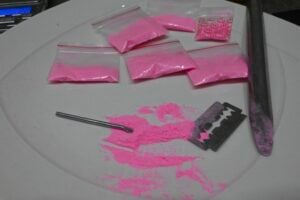
Among the synthetic drugs gaining ground in Ecuador is tusi, or pink cocaine, a polydrug mixture that can contain ketamine, MDMA, caffeine, cocaine, and other substances. Even more concerning is the possible inclusion of synthetic opioids in some of these mixtures. “Fentanyl is among the substances that may be included in this cocktail,” Rivera warns.
In June 2025, OECO reported the discovery of cutting agents alongside mixtures containing cocaine, heroin, and medical-grade fentanyl ampoules in a clandestine laboratory in Guayas province. Tusi’s danger lies precisely in its flexibility. Criminal organizations can rapidly alter its composition depending on precursor availability and market demand, complicating forensic identification, enforcement investigations, and interdiction efforts.
According to the European Drug Report 2025 published by the European Union Drugs Agency (EUDA), tusi was identified in at least three European countries in 2024, highlighting the growing internationalization of the phenomenon.
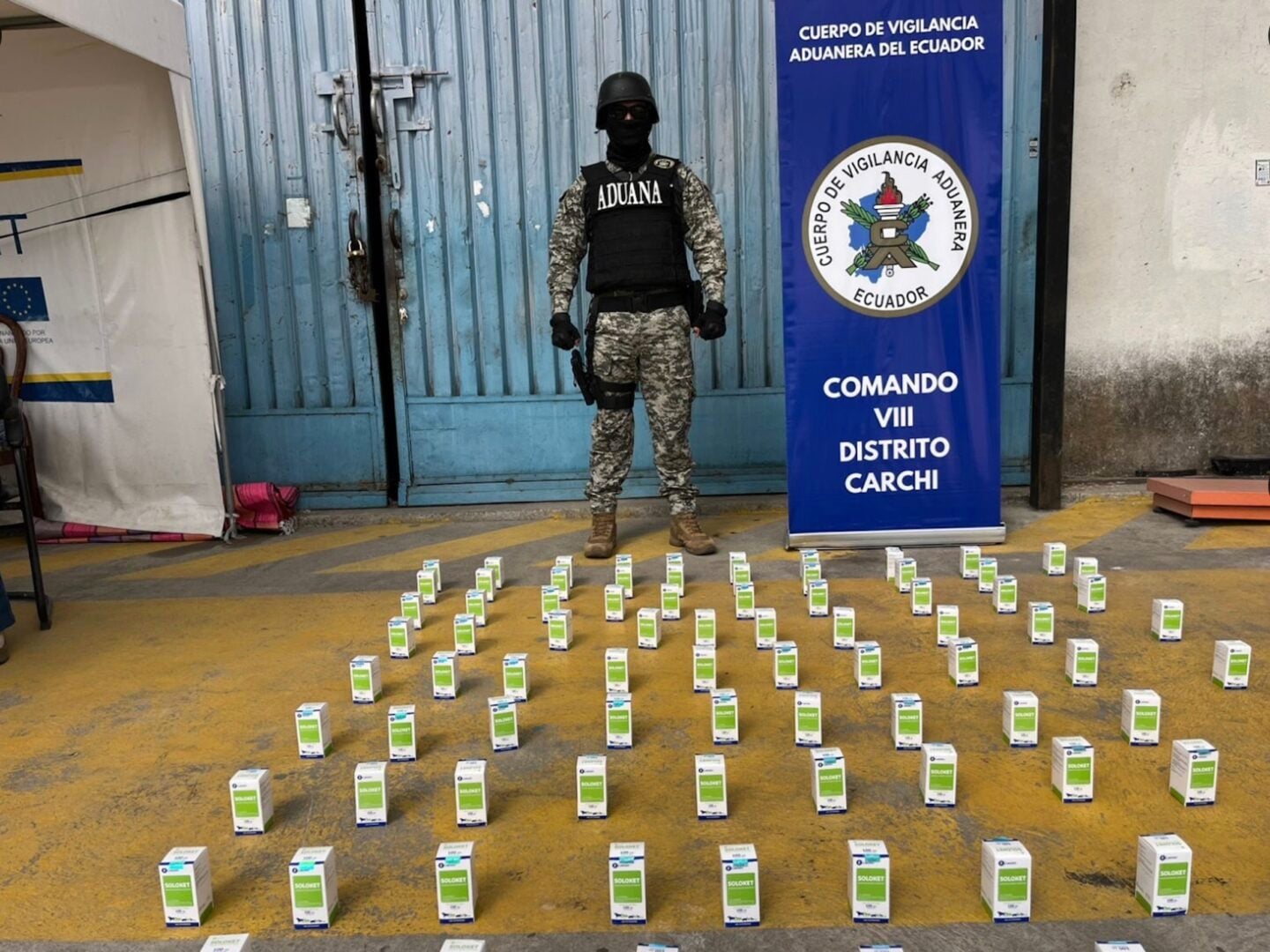
Meanwhile, ketamine trafficking continues to grow in Ecuador. In January, Ecuadorian authorities seized nearly 12 metric tons of the substance between Quito and Tulcán, near the Colombian border, along with shipments of carbonates and hydrochloric acid used in clandestine laboratories.
Experts are also closely monitoring the presence of the congona plant in Ecuador’s highlands. Rich in safrole, one of the primary precursors used to manufacture MDMA, the plant could become an alternative source of raw material. According to OECO, if criminal organizations succeed in exploiting this resource on a larger scale, they could reduce part of their dependence on imported precursors and facilitate a more self-sufficient synthetic drug production capability within Ecuador.
Mexican cartels and the Mocro Maffia
What makes the expansion of synthetic drugs in Ecuador especially concerning is the presence of powerful narcoterrorist organizations such as Mexico’s Sinaloa Cartel and the Jalisco New Generation Cartel (CJNG), both of which have strengthened alliances with local groups including Los Choneros, Los Lobos, and Los Tiguerones.
At the same time, according to various Ecuadorian law enforcement reports, the influence of the Mocro Maffia — one of Europe’s most powerful criminal organizations, based in the Netherlands and highly experienced in both cocaine and synthetic drug trafficking — is also growing.
The presence of these networks is already evident in international investigations. In March 2025, Spanish police dismantled a network linked to the Mocro Maffia and seized 873 kilograms of cocaine originating in Ecuador. Experts fear these organizations could leverage the same logistics infrastructure used for cocaine trafficking to develop a regional production and distribution network for synthetic drugs.
According to the U.S. Drug Enforcement Administration (DEA), the Sinaloa Cartel is already involved in the production and trafficking of tusi in Latin America and has demonstrated the ability to import large quantities of ketamine and other chemical precursors from China. The convergence of Mexican cartels, European criminal networks, and Ecuadorian gangs could create an integrated criminal platform capable of combining cocaine and synthetic drug trafficking, diversifying revenue streams, and strengthening its operational, financial, and corruptive capabilities while expanding its international reach.
Authorities respond
The growing spread of synthetic drugs has prompted Ecuador to strengthen international cooperation. The issue took center stage during the International Conference on Synthetic Drugs held in Quito in January 2026, which brought together Colombia, Honduras, Panama, and other countries from across the region. Participants expressed concern that specialized criminal networks dedicated to synthetic drugs are becoming increasingly capable of supplying both European and U.S. markets.
Domestically, the government approved the creation of 24 provincial committees to coordinate anti-drug policies and launched the development of the National Plan for the Comprehensive Prevention and Control of the Socioeconomic Drug Phenomenon 2027–2031.
According to Rivera, however, authorities also need “different investigative tools,” including tighter controls over chemical precursors, closer intelligence cooperation, greater information sharing among countries, and early warning systems capable of rapidly identifying new substances and emerging trafficking patterns.
Experts warn that Ecuador risks becoming an international hub for synthetic drugs if criminal organizations succeed in consolidating precursor supply chains, expanding domestic production, and exploiting the logistics infrastructure already established for cocaine trafficking. The convergence of Mexican cartels, European criminal organizations, and Ecuadorian gangs could create a more capable criminal platform for producing, diversifying, and distributing synthetic drugs, expanding the reach of these networks and raising new challenges for regional security, intelligence sharing, and international cooperation.