
In the Amazon, where criminal organizations have spent decades building networks dedicated to drug trafficking, illegal gold mining, and smuggling, a new economic frontier is emerging. As global demand rises for critical minerals used in batteries, semiconductors, defense systems, artificial intelligence, and clean energy technologies, resources such as coltan, cassiterite, nickel, lithium, niobium, and rare earth elements are becoming increasingly strategic. While illegal gold remains the criminal underworld’s primary mining economy, analysts warn that the same networks controlling its extraction and trade are now well positioned to expand into other high-value minerals.
“These networks are beginning to adapt the infrastructure they use for cocaine and gold trafficking to minerals that power the energy transition, defense systems, and artificial intelligence,” Robert Muggah, co-founder of the Brazil-based Igarapé Institute, a think tank specializing in security and environmental policy, told Diálogo. For criminal organizations, the advantages are clear: They already control territory, clandestine airstrips, river corridors, middlemen, and money-laundering channels that can be rapidly repurposed to support new, high-value illicit markets.
For now, major criminal organizations are not involved in the critical minerals sector to the same extent that they dominate the illegal gold trade. Nevertheless, the trend is raising growing concern. “Gold prices have increased roughly eightfold over the past two decades, and rising prices for critical minerals are beginning to attract more sophisticated criminal groups into this market,” Muggah said.
A testing ground for organized crime
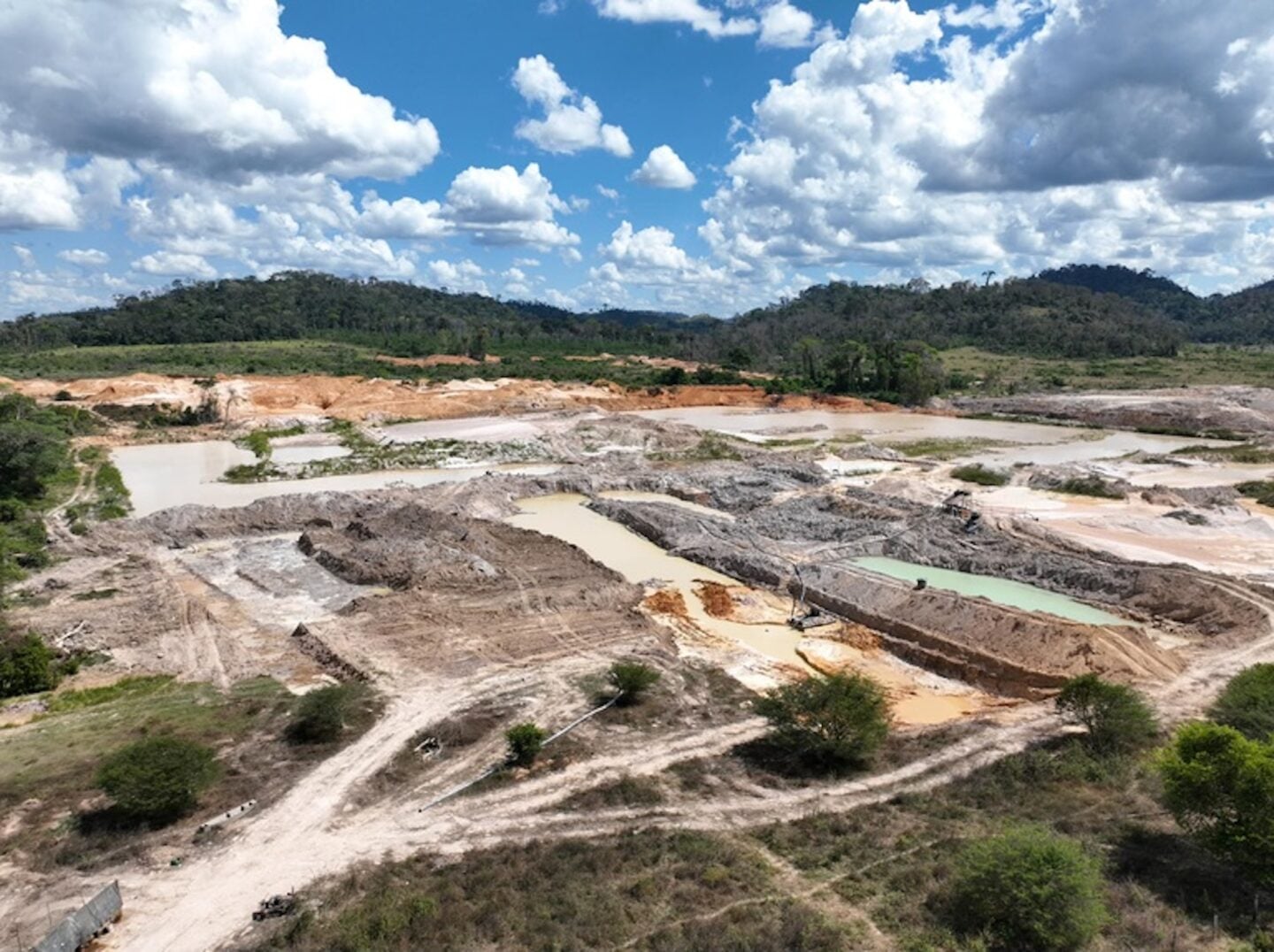
Illegal gold mining has become one of the principal sources of financing for Colombian guerrilla groups, Venezuelan criminal syndicates, Brazilian criminal organizations such as the First Capital Command (PCC) and Red Command (CV), networks linked to the Tren de Aragua, and international money-laundering organizations. Across many border regions of the Amazon, these groups not only exploit illegal mining sites but also exercise forms of criminal governance by controlling access to territory, collecting taxes, regulating mining activities, and providing armed protection for operations.
In June 2026, Brazil’s Federal Police launched Operation Gold Route (Operação Rota do Ouro) in Novo Progresso, Pará state, identifying a site where nearly 80 kilograms of gold are believed to have been extracted illegally over the previous three years. The case illustrates how illegal mining has become integrated into highly organized logistical and financial networks.
The model closely resembles the one that has characterized drug trafficking for decades. “The same groups, corridors, and financial systems that move cocaine, gold, mercury, timber, weapons, and money are now positioned to move critical minerals as well. This is the essence of the narco-mineral complex,” Muggah explained.
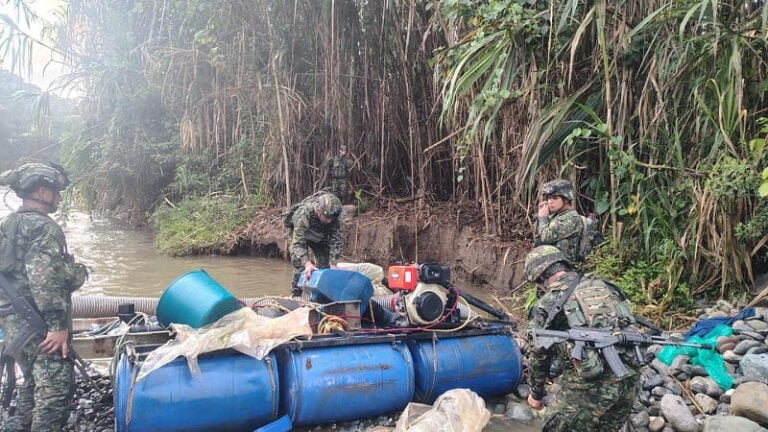
Operations carried out in recent years in the Yanomami Indigenous Territory clearly illustrate the complexity of the problem. Authorities discovered that illegal mining sites were supported by networks operating clandestine airstrips, fleets of boats, fuel supply systems, heavy machinery, and intermediaries responsible for funneling illegally mined gold into legitimate commercial supply chains. Destroying excavators and mining camps produced immediate results, but many operations quickly resumed because the underlying logistical and financial infrastructure remained intact. The experience demonstrated that dismantling camps and seizing equipment, while necessary, is not enough if the financial, logistical, and commercial networks sustaining the entire illicit supply chain remain untouched.
It is precisely this adaptability that makes critical minerals particularly vulnerable to criminal infiltration. Unlike narcotics, they can easily be blended with legally mined material. Through forged documentation, trade triangulation, and corporate laundering schemes, illegally extracted minerals can enter global supply chains appearing entirely legitimate.
A single criminal ecosystem
This trend reflects a broader transformation of transnational organized crime in Latin America. Increasingly, hybrid criminal structures no longer rely exclusively on drug trafficking but operate as diversified criminal enterprises. Drugs, gold, coltan, cassiterite, timber, smuggling, financial laundering, and institutional corruption are no longer separate illicit markets but components of a single criminal ecosystem.
Growing demand for critical minerals from the Amazon has accelerated this transformation, giving rise to what Muggah describes as the “narco-mineral complex.”
“It is a broad and enduring ecosystem involving armed groups, illegal miners, logistics operators, informal traders, political actors, public officials, and seemingly legitimate companies,” he said.
According to Muggah, the phenomenon rests on several pillars. The first is territorial control by armed groups over mining areas. In eastern Colombia, for example, dissident factions of the Revolutionary Armed Forces of Colombia (FARC) and the National Liberation Army (ELN) impose taxes and provide armed protection.
The second pillar is the repurposing of infrastructure originally built for cocaine and gold trafficking. “These systems have been refined over many years to move drugs, gold, mercury, weapons, and money. They can now also be adapted to transport cassiterite and coltan,” Muggah said.
The third pillar consists of commercial and documentary laundering mechanisms. Operation Hephaestus Forge (Operação Forja de Hefesto), conducted by Brazil’s Federal Police in 2023, demonstrated how cassiterite illegally extracted from the Yanomami Indigenous Territory could be sold through intermediary companies, processed by industrial operators, and ultimately exported to international markets, reaching major multinational corporations without revealing its illicit origin.
The fourth pillar is the ability to move minerals across jurisdictions, mix them with legally mined production, and assign them a new origin. The growing international demand for these resources further increases the profitability of this model. One example occurred in April 2025, when Colombian authorities seized nearly 49 metric tons of coltan and tin extracted from areas controlled by armed groups. According to the investigation, the minerals were destined for illegal export to China.
The challenge is no longer limited to combating illegal extraction. It also requires identifying and dismantling the logistical, financial, and commercial networks that allow illicitly sourced minerals to enter international supply chains.
Protecting the supply chains of the future
All indications suggest that the race for the Amazon’s critical minerals is only beginning. As these resources become increasingly important for defense industries, semiconductor manufacturing, advanced technologies, and the global energy transition, criminal organizations will have greater incentives to incorporate them into their illicit economies.
For Amazonian countries, the challenge extends well beyond protecting mineral deposits or combating illegal mining. It will also require strengthening financial intelligence, improving mineral traceability, tightening border and customs controls, dismantling criminal logistics networks, and expanding international cooperation to prevent illegally extracted minerals from entering global supply chains.
If illegal gold demonstrated how organized crime can capture entire extractive industries, critical minerals present an opportunity to act before that model becomes entrenched. Preventing criminal organizations from replicating this pattern in strategically important resources will be essential not only to protecting the Amazon but also to strengthening regional security and safeguarding the integrity of the supply chains on which future economies and advanced technological capabilities will depend.