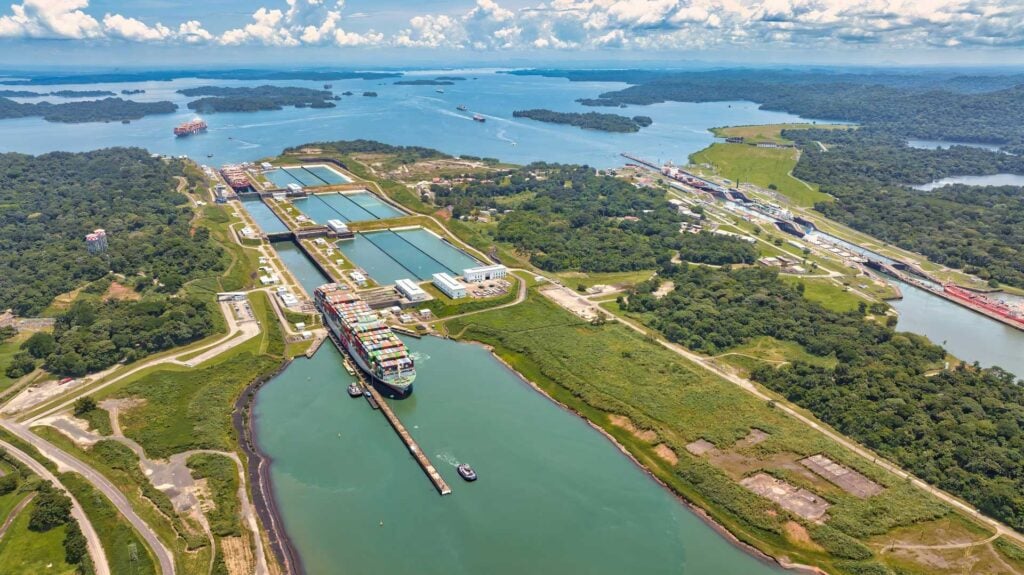

Panama has been engaged in an unprecedented legal offensive against CK Hutchison, the Hong Kong conglomerate that symbolizes Beijing’s expansion in port infrastructure, with the aim of annulling the concession of the ports of Balboa and Cristóbal due to irregularities. This litigation, widely reported, calls into question the legitimacy of the agreements and exposes the flaws in contracts with Chinese companies that, according to authorities, have seriously harmed state interests.
“The lack of transparency facilitates the inclusion of hidden clauses in the final agreements,” Henry Ziemer, a research associate at the Washington-based Center for Strategic and International Studies (CSIS), told Diálogo. “The findings of the Panamanian audit of the two ports found evidence of malpractice, which meant that the Panamanian government lost billions of dollars that it should have received as part of the revenue-sharing agreement with Hutchison.”
Contracts under scrutiny and the call for constitutional justice
The Comptroller General of the Republic has requested that the contract-law that, in the late 1990s, granted CK Hutchison the operation of the ports at both ends of the Panama Canal be declared unconstitutional. In addition, it seeks the annulment of the renewal granted in 2021, describing it as “abusive” and harmful to national interests, the Associated Press reported.
“The problem we have had for many years is that almost all of these authorities have looked the other way and allowed these abuses in the Panama Ports issue. There we have a Chinese colonial enclave of a Hong Kong company,” Comptroller Anel Flores told Panamanian daily La Estrella. “They are putting their interests above the national public interest. That is inconceivable.”
Between 1997 and 2023, according to audits by the Panamanian Comptroller’s Office, PPC billed more than $3.78 billion, but only $236 million went to the state. This difference illustrates the weight of an agreement criticized for its economic imbalance.
Sales, pressure, and geopolitical battle
The attention on the ports intensified when CK Hutchison attempted to sell its subsidiary Panama Ports Company (PPC) and 43 other terminals to a consortium of U.S. investment firm BlackRock and Terminal Investment Limited (part of international shipping giant MSC) consortiums in a deal valued at $22.8 billion. The announcement sparked a wave of criticism of the deal in China, which responded by opening an investigation into possible monopolistic concentration, thus delaying the transaction until 2026.
“We are not going to allow our port territory to be hijacked or for them to profit without passing on any benefits to the state and giving us the percentage of shares that they see fit,” President José Raúl Mulino said in an early August press conference.
At the same time, China continues to exert pressure to halt the sale plans and demands that its state-owned shipping company COSCO Shipping be included in the agreement. Only then would Beijing maintain its control and influence over the terminals, even as legal questions intensify.
A regional pattern: influence and concessions
The Panamanian experience is not isolated. “In other parts of the region, such as Chancay, Peru, the Lima government only discovered, when the port was nearing completion, that the signed agreement violated Peruvian law by granting COSCO Shipping exclusive operational control,” Ziemer said. “However, rather than risk the multi-million dollar investment, Peru chose to amend its laws to accommodate China’s wishes, highlighting the significant influence China can exert over regional governments when it comes to large infrastructure projects.”
Panama’s shift: A message about the Belt and Road
“Panama is an illustrative example of countries that turn to China expecting significant economic gains, but then regret this decision,” Ziemer added. “Panama now holds the record for being the first Latin American country to join the Belt and Road Initiative in 2017 and now, the first to abandon it.”
Panama’s decision challenges the idea that the Belt and Road Initiative is a mandatory path to regional development. Its experience sets a precedent: International cooperation can and should take place under balanced rules, not under contracts that compromise national sovereignty. Panama marks a crucial milestone for Latin America in redefining its relations with China and the world.