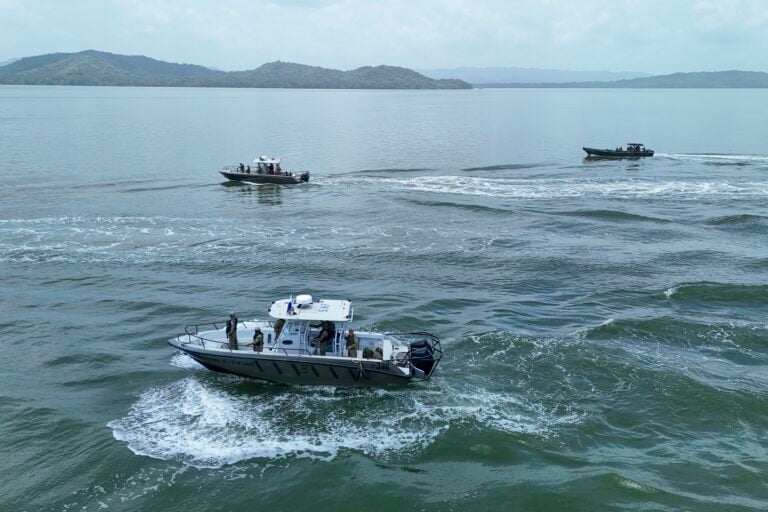
Guatemala stepped up patrols along its borders with Mexico to the north and Honduras and El Salvador to the south, as part of a regional effort to curb transnational crime and illegal migration. Guatemalan soldiers have been coordinating with their border counterparts to stop arms, drugs, and human trafficking. Multinational collaboration, and support from the United States, has been key to strengthening border security, promoting interagency coordination, mitigating the effects of violence on all sides of the borders.
Several brigades, including Guatemala’s elite Kaibil Special Force, deployed on the national boundaries to focus on countering transnational criminal organizations and regain security. The Guatemalan Air Force also supports patrols, conducting drone reconnaissance flights and allowing for faster response time, the Guatemalan government news agency Agencia Guatemalteca de Noticias (AGN), reported.

In early March, Guatemala implemented Operation Ring of Fire West on the border with Mexico, seeking to cover the nearly 1,000 kilometers of border between the two countries. A week prior, the Central American country launched the same operation, dubbed Operation Ring of Fire East, on the border with Honduras and El Salvador.
Both operations are led by the newly created Territorial Control and Border Task Force, which Guatemala’s President Bernardo Arévalo announced in early February. With this comprehensive security plan, which includes the Guatemalan Armed Forces and the National Civil Police, the government seeks to consolidate a protective shield for local communities.
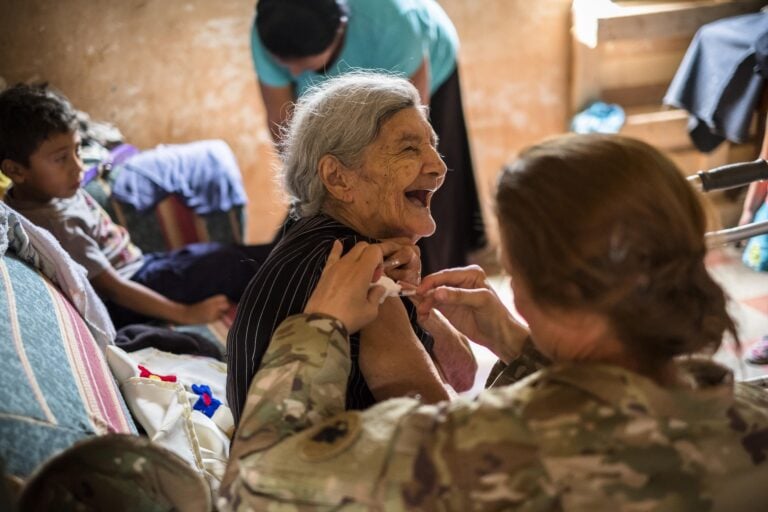
“The Army […] uses the Task Force to maintain the sovereignty and integrity of the national territory, strengthen control, and secure routes, to combat all forms of transnational organized crime,” Brigadier General Miguel Ángel Orozco, Guatemalan Army commander, told Prensa Libre. These efforts are complimented with humanitarian aid to build trust and promote coexistence with the citizens, Brig. Gen. Orozco explained.
The Chiquimula department, which borders both Honduras and El Salvador was the starting point for these deployments, with strategic surveillance points set up along the national territory. From these locations, intelligence data is being collected and threats identified to implement preventive measures to weaken narcotrafficking and smuggling networks, AGN reported.
“The Task Force has jurisdiction in the border departments of Izabal, Zacapa, Chiquimula, and Jutiapa, sensitive points used by criminal organizations,” Major Ann Marie Argueta, Guatemalan Army spokesperson, told Diálogo about Operation Ring of Fire East. “We carry out comprehensive cooperation operations, ensuring the protection of citizens and the fight against all forms of transnational organized crime, to maintain a strengthened border, guaranteeing peace and security for the Guatemalan population in this region.”
Operation Ring of Fire originally kicked off in February 2024, on the border with Mexico as criminal groups, including the Sinaloa and Jalisco New Generation cartels, fueled violence as part of their turf war, France24 then reported.
Deployment zone

In its report, Mitigating Violence in Latin America’s Drug Trafficking Hubs, nongovernmental organization International Crisis Group (ICG) stresses that criminal groups are evolving, atomizing, and diversifying into decentralized networks that subcontract each stage of the drug trade.
Instead of hierarchical structures that are easy to dismantle, narcotrafficking now operates with high-level financiers who hire international traffickers to coordinate their activities, while these traffickers associate with local groups to guarantee the flow of drugs. As such, they expand into other crimes such as extortion, including preying on irregular migrants, to consolidate their control over illicit economies, the report indicates.
“Today we have an organized crime ecosystem in the region that is more resilient than ever and because of its fragmentation it is very difficult to control,” Elizabeth Dickinson, senior analyst at ICG, told Diálogo. “There are more and more groups involved in smaller links in the production and supply chain. That really complicates efforts to combat drugs.”
In its International Narcotics Control Strategy 2025 report, the U.S. Department of State highlights Guatemala’s advancements, including that it tripled its seizures of drugs in 2024, compared to 2023 numbers. For its part, Guatemala’s Ministry of the Interior said that U.S. support was key to combat narcotrafficking, and underscored other joint actions in the fight against transnational crime in the region, such as the creation of the Inter-institutional Group for the Control and Inspection of Precursors and Chemical Substances, and the first High-Level Security Dialogue, as a crucial step toward a shared strategy to counter transnational security threats.
Guatemala has been a strategic leader in supporting broader regional security efforts. In January, it deployed 150 soldiers to support the Haiti Stabilization Mission. “National security is constantly threatened by conflicts, terrorism, cybercrime, and organized crime, among others. It endangers the stability of Guatemala, affecting its economy and undermining the security of its citizens,” Brig. Gen. Orozco said. “For this reason, the government adopts effective measures to prevent and mitigate these risks, strengthening the capacities of the different institutions, in this case of defense, cooperating at the international level. Only through collaboration and solidarity between countries will it be possible to guarantee the security and well-being of all.”