
Located at the heart of South America and home to some of the continent’s most important trade and river corridors, Paraguay faces security challenges stemming from its strategic location and the growing sophistication of transnational organized crime. In response, the country has pursued institutional reforms, modernized its security capabilities, and strengthened cooperation with regional and international partners.
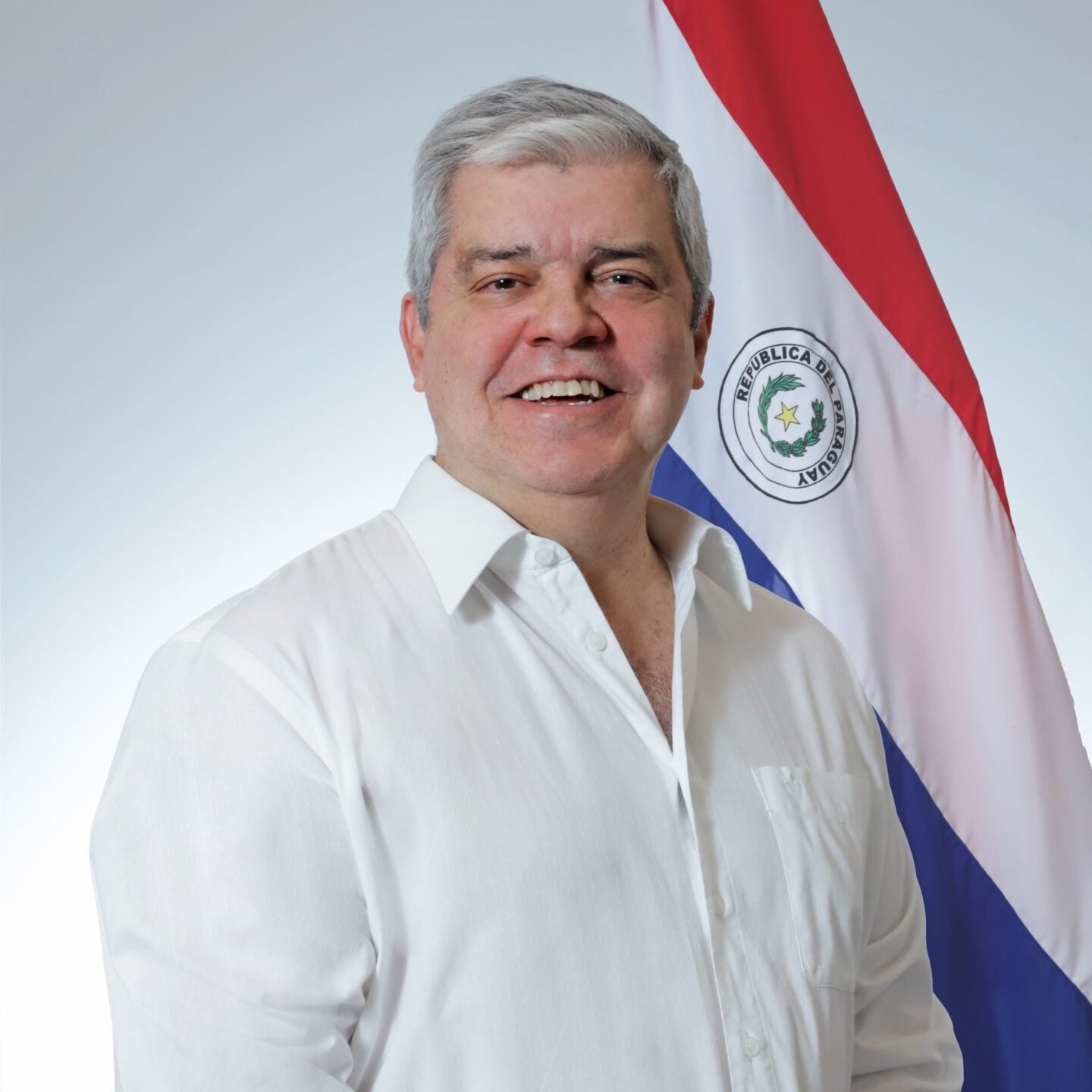
In an exclusive interview with Diálogo, Paraguay’s Minister of the Interior Enrique Riera explains how the country is working to consolidate a security architecture capable of confronting these threats, strengthening its institutions, and expanding cooperation to protect regional stability.
Diálogo: Paraguay is considered one of the safest countries in Latin America, with one of the region’s lowest homicide rates. At the same time, however, it faces increasingly complex threats linked to transnational organized crime, drug trafficking, and smuggling. How do you explain this apparent paradox, and what do you consider the main challenges to preserving the country’s security?
Paraguay’s Minister of the Interior Enrique Riera: Paraguay is a relatively young country in terms of democratic stability. In more than 500 years of history, the past 35 years have been the first marked by sustained political stability and the peaceful transfer of power. That has allowed us to make progress — and experience setbacks — but always in freedom. That said, I must acknowledge that for many years security did not occupy a prominent place on the national agenda. The pandemic further weakened institutional oversight.
Criminal organizations took advantage of those institutional weaknesses, and Paraguay became a transit country for drug trafficking. In the Chaco, the western region, nearly 1,000 clandestine airstrips were operating. Drugs were flown from there to the greater Asunción area, where they were concealed in export containers among furniture, musical instruments, soybeans, rice, or beef.
At the same time, previously uncommon threats began to emerge, including contract killings and the expansion of Brazilian criminal organizations such as the First Capital Command (PCC) and Red Command (CV). These groups extended their influence into border regions and the prison system.
The impact extended far beyond drug trafficking. Today, approximately 90,000 young people under the age of 25 struggle with drug use, and we estimate that nearly 80 percent of crimes are connected to that reality. That is why our strategy focuses both on combating drug trafficking and on reducing drug use and distribution.
Despite these challenges, Paraguay remains one of the safest countries in the region. The difference today is that the State has regained control. We have incorporated radar systems, aircraft, scanners, detection dogs, and new surveillance systems that have strengthened our inspection capabilities. As a result, cocaine that was previously detected in Europe is now being seized inside Paraguay. Drug traffickers no longer find the unrestricted corridor they enjoyed here for many years.
Diálogo: As part of the new security architecture Paraguay has been building in recent years, one of the most visible advances has been the strengthening of the National Police through the recruitment of additional personnel, equipment modernization, and the expansion of surveillance and patrol systems. How have these investments strengthened the State’s ability to confront transnational organized crime, and what key capabilities does Paraguay still need to develop?
Riera: The first thing to understand is that the Police, on their own, are not enough. Security requires strong institutions, coordination across the State, and a police force with genuine operational capabilities. That means better communications, mobility, technology, and professional development.
We have focused our efforts on investing in those capabilities. We implemented a far-reaching police reform through legislation that allocates nearly $100 million in social benefits for police officers and establishes polygraph examinations as a requirement for promotion. The message is clear: Those who act with integrity will have stability and opportunities, while those who break the law will lose those benefits.
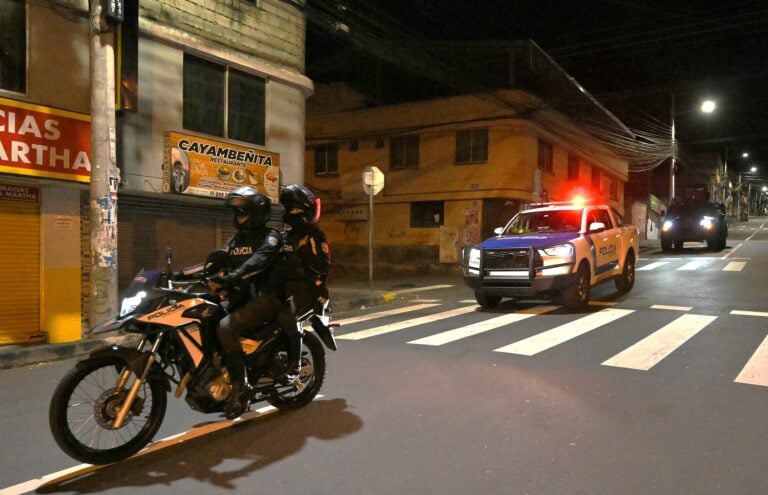
At the same time, we nearly doubled the National Police’s operational capacity, increasing its ranks from approximately 24,000 to nearly 39,000 officers. We also invested in equipment, adding 600 pickup trucks, 1,000 high-powered motorcycles, 2,800 radios, 8,000 bulletproof vests, and new communications and geolocation systems that allow operations to be monitored in real time from command centers.
We have also developed capabilities that are entirely new for the country. We introduced our first electronic ankle monitors and, with support from the Korea International Cooperation Agency (KOICA), modernized the national 9-1-1 emergency system using artificial intelligence to improve response capabilities.
However, significant challenges remain. The Police arrest between 80 and 100 people each day, but only about 25 percent are ultimately prosecuted. This shows that the Public Prosecutor’s Office and the Judiciary must advance at the same pace as the Police, and that social reintegration policies must also be strengthened. To that end, we created the Justice Roundtable, a coordination mechanism among the institutions responsible for security and the administration of justice.
We also understood that the fight against organized crime cannot be limited to police action. Drug use remains one of our main challenges, which is why we launched Plan Sumar, a strategy built around three pillars: prevention, treatment, and rehabilitation for people who use drugs, alongside the continued fight against drug trafficking. The plan brings together the Ministry of the Interior, the National Police, the National Anti-Drug Secretariat, and other institutions under one basic premise: Confronting organized crime requires a coordinated, whole-of-government response.
Diálogo: Various reports have identified Paraguay’s prison system as one of the country’s greatest security challenges. What measures has the State implemented to strengthen prison security and governance, and what level of threat do transnational criminal organizations pose to national and regional security?
Riera: Regaining control of the prisons was essential to restoring the authority of the State. The president tasked me with intervening at Tacumbú National Penitentiary, a prison more than 70 years old that held twice the population for which it had been designed.
When we entered, we found a facility that, in practice, was no longer under State control. The authorities controlled only the first two of seven security zones; the rest were controlled by criminal organizations. The inmates did not escape because they did not need to. They had electricity, water, telephones, televisions, fuel, weapons, and even areas where businesses operated entirely outside the authority of the prison system.
That structure had also contaminated the institutions. Drug-trafficking money had enabled the corruption of officials and weakened the State’s ability to exercise authority inside the prison. Regaining control of Tacumbú meant much more than intervening in a prison; it meant restoring the authority of the State.
The intervention, known as Operation Veneratio, marked a turning point and has since been studied by other countries in the region. We restored governance at the country’s principal correctional facility and began a comprehensive transformation of the prison system.
One of the greatest challenges was the presence of PCC members using fraudulent Paraguayan identity documents. In coordination with Brazil, we carried out biometric identification procedures, cross-checked information with Brazilian authorities, and expelled more than 150 members of the organization. Many had outstanding prison sentences of between 30 and 40 years in Brazil.
Today, I can say that we have regained effective control of the prisons, weakened the influence of transnational criminal organizations, and strengthened the country’s security.
Diálogo: Airspace control has become an increasingly important component of the fight against transnational organized crime. Following the acquisition of advanced radar systems through the United States’ Foreign Military Sales (FMS) program, how will these capabilities strengthen the detection and disruption of drug-trafficking networks that use clandestine flights, and what impact are they expected to have on regional security?
Riera: Paraguay’s relationship with the United States is historic and is now going through one of its strongest periods. We share a strategic vision of regional stability and the fight against organized crime, based on a simple premise: Without security, there can be no investment, development, trade, or growth. That is why we have made security a national priority.
That shared vision and cooperation are now translating into concrete projects, including the incorporation of new radar systems through the FMS program, which will significantly strengthen control of Paraguayan airspace.
These systems complement the improvements we have also made along the waterway and at our land borders. Our goal is to build an integrated security architecture in which information generated by radar systems, river patrols, ground forces, and intelligence systems can be shared in real time. This will allow us to anticipate the movements of organized crime rather than reacting after a crime has already been committed.
That is the paradigm shift. Technology is no longer merely a complement; it has become one of the principal force multipliers for our operational capabilities.
Diálogo: As you mentioned, today’s security challenges extend beyond airspace control to the riverine domain. The Paraguay-Paraná Waterway is a strategic corridor for regional trade, but it is also used by criminal organizations to traffic drugs, weapons, and other illicit goods. What is the current security situation along the waterway, and what role has cooperation with the United States played in strengthening Paraguay’s capacity to control this corridor and combat transnational organized crime?
Riera: Our geographic location has historically made us a strategic hub for regional trade. For many years, Paraguay has served as a transshipment point through which goods enter from one country, cross our territory, and move on to another market. The problem is that when those corridors operate with limited State presence, legal trade is not the only thing moving through them. Drugs, weapons, fuel, minerals, and all kinds of illicit goods also pass through.
The Paraguay-Paraná Waterway, which carries nearly 80 percent of Paraguay’s foreign trade, became one of the main corridors used by organized crime.
That reality was exposed by Operation Dakov in December 2023, which dismantled what was then the largest illegal arms-trafficking network ever detected in Latin America. The weapons entered Paraguay legally through front companies and were then clandestinely transported to Brazil, where they ended up in the hands of the PCC and CV.
In response to this challenge, we decided to strengthen riverine control, and cooperation with the United States has been fundamental to achieving our objectives.
Through the Status of Forces Agreement, we recently received eight interceptor boats, and a modern unified command-and-control center was inaugurated. It allows us to monitor operations in real time through surveillance systems installed aboard the vessels themselves.
As a result, the operational capacity of the Naval Prefecture has been transformed. Today, we can detect, intercept, and coordinate operations in ways that simply were not possible before. The program will also continue with the addition of 10 more boats, along with new training programs and the permanent exchange of information.
River trafficking leaves very few traces and can only be confronted through constant surveillance, intelligence, and close coordination among the Navy, the Police, and other State institutions. Thanks to this work, we have regained control of river corridors, significantly reduced illicit activity, and promoted the formalization of trade. This is reflected in increased movement of legal goods and higher tax revenues.
Diálogo: Paraguay shares extensive borders with countries facing similar challenges related to drug trafficking, smuggling, and other transnational illicit activities. How do you assess current cooperation with regional partners such as Brazil, Argentina, and Bolivia in intelligence sharing, operational coordination, and border security, and how important is this collaboration to the security of Paraguay and the broader region?
Riera: We have a model that has proven extraordinarily successful. The Tripartite Command is a permanent unit based in the Tri-Border Area and made up of police forces from Paraguay, Brazil, and Argentina. There, we share intelligence, coordinate operations, and work together every day. It is probably one of the best examples of regional cooperation we have.
This mechanism has been operating for more than three decades and has made it possible to quickly locate and expel criminals wanted by the justice systems of all three countries. It has also strengthened the response to organized crime without the need for lengthy bureaucratic procedures, except in cases requiring extradition.
Building on that model, we have also established binational commands at various points along the border with Brazil. They are already operating between Salto del Guairá and Guaíra, and between Pedro Juan Caballero and Ponta Porã. We will soon establish another between Carmelo Peralta and Porto Murtinho, a key crossing point along the new Bioceanic Corridor.
That corridor represents an enormous economic opportunity, but also a security challenge. It will connect Brazil with Pacific ports by crossing Paraguay and Argentina, moving thousands of trucks each day. Our goal is to facilitate legal trade without allowing the corridor to become a new route for drug trafficking, weapons trafficking, or human trafficking.
To achieve that, we are developing an integrated control model with one-stop border facilities, facial recognition, license-plate readers, drones, and state-of-the-art scanners.
Regional cooperation, intelligence sharing, and the incorporation of new technologies are essential to confronting criminal organizations that operate without regard for borders.
Diálogo: The growth of organized crime in Latin America is no longer solely a security challenge; it has also become a threat to State institutions, economic development, and democratic stability. How do you assess that risk in Paraguay today, and what do you consider the priority for strengthening institutional resilience against this threat?
Riera: This is a very important question because I am convinced that organized crime now represents the greatest threat to our democracies. We are no longer talking only about violence or drug trafficking. The real objective of these organizations is to infiltrate institutions, capture positions of power, and place the State at the service of their interests.
Paraguay has not been immune to that risk. Five members of Congress have been arrested over alleged links to drug trafficking, in addition to investigations involving the Senate, the Judiciary, and the Public Prosecutor’s Office. That demonstrates that no institution is completely protected from this threat.
The greatest danger arises when organized crime begins financing politics. When an elected official ultimately answers to those who financed a campaign rather than to the citizens who elected that official, democracy begins to be distorted. Government then serves to protect criminal interests rather than the public interest. To me, that is the deepest threat we face.
I would say that Paraguay is defending itself reasonably well today, although some areas remain more vulnerable, particularly at the local level. Municipal authorities and some regional governments often face much greater pressure from criminal organizations, particularly in areas where illicit economies have a stronger presence. We still have a very important battle ahead of us there.
In response, we adopted a zero-impunity policy. With support from the United States, we strengthened anti-money laundering legislation, which enabled Paraguay to be removed from the Financial Action Task Force of Latin America’s (GAFILAT) gray list. We also elevated the Internal Affairs Directorate to the highest level within the National Police to reinforce internal oversight.
The results are beginning to show. More than 400 police officers have been removed from the institution, and more than 1,000 remain subject to disciplinary proceedings. At the same time, the Judiciary, the Public Prosecutor’s Office, and Congress have strengthened their own oversight mechanisms.
Ultimately, the best defense against organized crime remains strong institutions. Our responsibility is to close the spaces where impunity can thrive and ensure that no one is above the law.
Diálogo: In conclusion, how would you define Paraguay’s strategic position, and what role does the country now play in regional security?
Riera: Paraguay is at the heart of South America, and that location, which for many years was seen as a disadvantage, is now one of our main strategic assets. We are a regional connection point, and that gives us special value from the standpoint of security, cooperation, and investment.
That position is supported by the country’s stability. For three decades, we have grown at a rate above the regional average, extreme poverty has fallen to approximately 2.3 percent, inflation remains under control, and we have one of the region’s lowest levels of public debt. This combination of political stability, economic stability, and legal certainty has strengthened Paraguay’s international standing.
With the United States, it is clear that we share a well-defined strategic vision of security. That alignment translates into ongoing cooperation with agencies such as the DEA, FBI, and CIA, as well as training programs and efforts to strengthen our capacity to confront transnational threats.
We are also evaluating the creation of a counterterrorism center in Paraguay, given the strategic importance of the Tri-Border Area between Paraguay, Brazil, and Argentina, a region that for many years was vulnerable to money laundering and terrorist financing.
Paraguay also maintains strong relations with Israel and Taiwan, partnerships that strengthen our international position. In that context, we are working with Taiwan to establish an artificial intelligence center. We also want to capitalize on another of Paraguay’s competitive advantages: the availability of clean energy from Itaipú to attract investment linked to the digital economy and new technologies.
Ultimately, our objective is clear: Paraguay is moving away from being viewed as a transit country or a vulnerable point and is increasingly recognized as a reliable partner for regional security. Today, we understand that no country can confront transnational organized crime alone. Cooperation, intelligence sharing, technology, and stronger institutions are the way forward. That is the vision guiding our work and the contribution Paraguay seeks to make to stability throughout the region.