

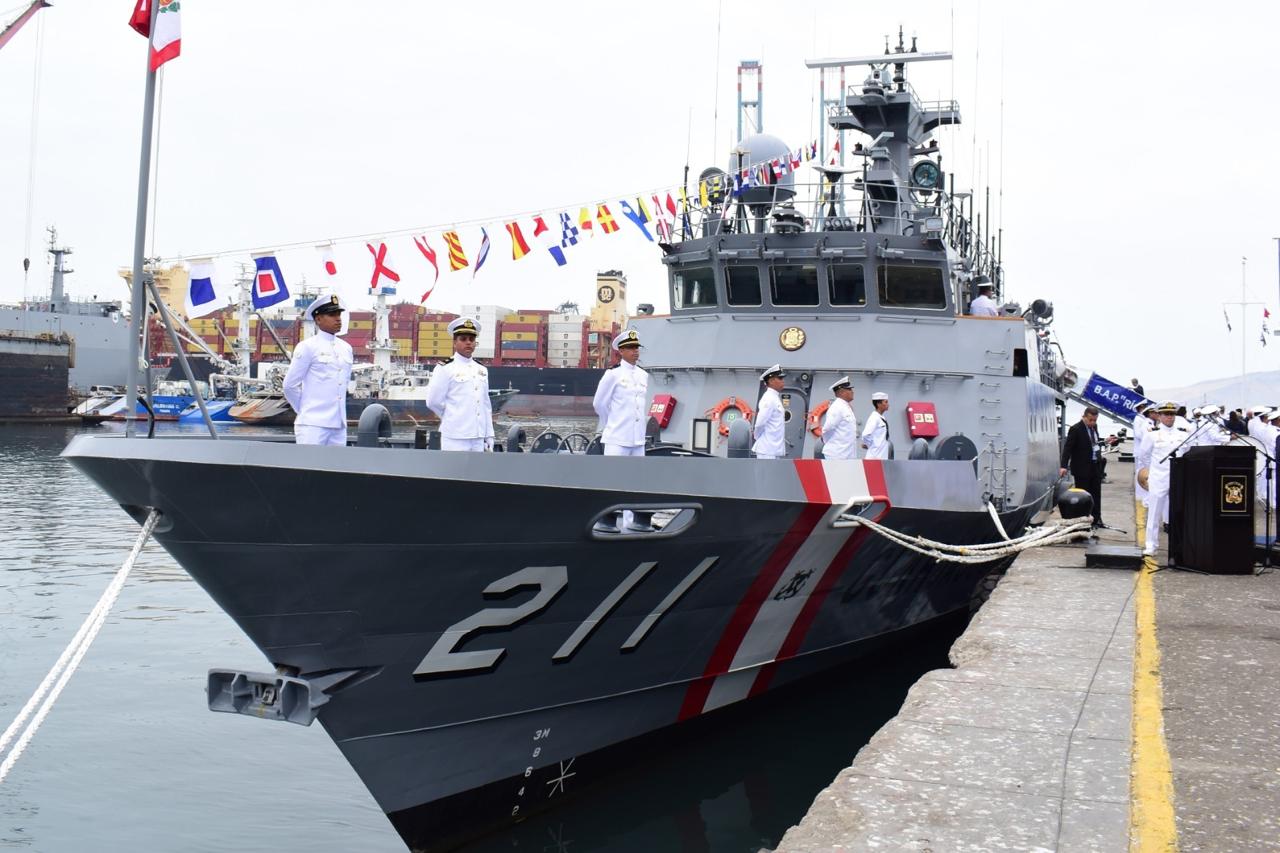
With the official endorsement of the U.S. Department of State in early 2026, the government of Peru is moving forward with a historic $1.5 billion initiative to modernize and relocate the Callao Naval Base. This project, coordinated through the Foreign Military Sales (FMS) program, represents a landmark in bilateral cooperation, designed to empower the Peruvian Navy with a world-class facility while catalyzing regional economic growth.
“This proposed sale will contribute to the foreign policy objectives of the United States by helping to improve the security of an important partner, which is a force for political stability, peace, and economic progress in South America,” the U.S. Defense Security Cooperation Agency (DSCA) said in a statement.
The DSCA said the initiative will improve Peru’s port infrastructure to accommodate current and future naval and logistics operations and requirements. “This sale will also provide a safer, more efficient platform for naval operations by reducing civilian-military interactions at the existing facility. Peru will have no difficulty absorbing these articles and services into its Armed Forces,” the DSCA added.
By following the rigorous FMS process, both nations ensure the highest levels of transparency and adherence to the rule of law, creating a standardized framework for the multi-year project.
“This project is very important because it will provide the Navy with modern infrastructure that is up to date in terms of capacity and technology for Peru’s new fleet,” security expert and former Defense Minister of Peru Jorge Moscoso told Canal N Television, EFE reported.
A bicentennial strategic horizon
As the United States and Peru celebrate this year the bicentennial of their diplomatic relations, the bilateral partnership has entered a transformative era. This milestone is marked by the move of the U.S. administration in January 2026 to officially designate Peru as a Major Non-NATO Ally (MNNA). The status underscores a high level of mutual trust and grants the Peruvian Armed Forces privileged access to advanced U.S. defense technology, research, and development, and specialized training.
The Callao modernization is a cornerstone of this new status, ensuring that while the project leverages state-of-the-art U.S. engineering, the new naval base will remain 100 percent under Peruvian sovereign control. The United States role is strictly supportive, providing technical supervision through up to 20 government officials or contractors who will work alongside their Peruvian counterparts for up to 10 years. “This presence is part of the security cooperation agreements that both countries have maintained for decades,” reported Infobae, emphasizing the depth of the partnership.
A strategic catalyst for the South Pacific
The benefits of the modernization extend far beyond defense. By relocating the base to a specialized facility at the mouth of the Rímac River, Peru will free up 80 hectares of prime maritime real estate to expand the commercial port of Callao. This allows the country to protect its maritime interests while boosting its global trade competitiveness.
Peruvian lawyer César A. Ipenza told Diálogo that the separation of military and commercial activities is a strategic breakthrough. “Relocating the military facilities will facilitate the expansion of the commercial port of Callao, allowing this logistics hub to increase its cargo capacity and operational efficiency,” Ipenza said. This is bolstered by ongoing U.S. technical assistance that ensures Peru’s logistics hubs maintain the rule of law and prevent exploitation by transnational criminal networks.
High-tech cooperation from sea to space
The partnership is expanding across all domains. In early 2026, the Peruvian National Police successfully integrated a new fleet of UH-60 Black Hawk helicopters provided through U.S. cooperation to replace the aging platforms and double operational capacity in difficult terrain. Furthermore, following the signing of the Artemis Accords in May 2024, NASA and Peru’s Space Agency (CONIDA) are advancing the Project Cielo sounding rocket campaign. While the launches are planned for 2028 from the Punta Lobos range, the technical workshops and joint engineering preparation are taking place this year, marking Peru’s ascent as a regional leader in space science.
The mutual commitment to security is further reflected in joint operations such as the CORAH project (Special Project for Control and Reduction of Coca Cultivation), which in 2025 eradicated over 36,000 hectares of illicit coca crops — a record achievement for the alliance.
Leading the region
The strength of this long-standing partnership will be on full display later this year as Peru serves as the official hosts of UNITAS LXVII (67), a U.S. Southern Command- (SOUTHCOM) sponsored multinational exercise. UNITAS is the world’s longest-running annual maritime exercise and its return to Peruvian waters in 2026 coincides perfectly with the nation’s bicentennial celebrations.
By leading this prestigious exercise, the Peruvian Navy reinforces its position as a regional security anchor. The modernization of Callao will ensure that Peru’s primary naval hub will match the high level of sophisticated interoperability demonstrated during these maneuvers. As the bicentennial year progresses, the deep-rooted bond between Lima and Washington continues to serve as a vital engine for stability and progress across the South Pacific.