

The economic expansion of the Chinese Communist Party in Latin America has been the subject of growing criticism and mistrust. Governments and experts in the region are questioning the suitability and real benefits of projects promoted by Beijing and its state-owned companies. This process is taking place amid evaluations of initiatives that raise concerns about their economic, social, and political impact.
Asymmetrical pattern
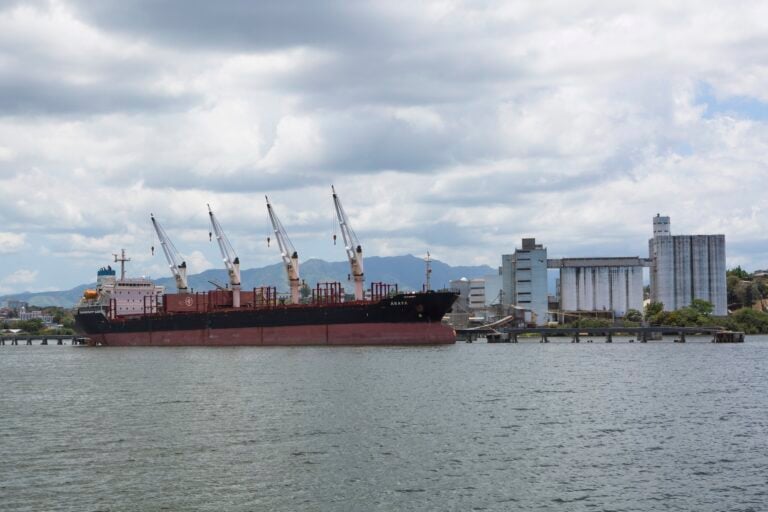
“The economic relationship between China and Latin America is based on an unequal pattern,” María Claudia Lacouture, president of the Colombian American Chamber of Commerce, told Diálogo. “There is a growing economic dependence [in Latin America], based on an asymmetrical trade pattern: exporting raw materials from our region and importing manufactured goods from China.”
“Infrastructure financing is subject, in several cases, to clauses that limit local contracting and condition the execution of works to Chinese companies,” she added. “These types of agreements not only deepen economic dependence but also restrict the sovereignty of countries by prioritizing the interests of the Chinese regime over local benefits.”
Change in strategy
“China’s strategy in the region has evolved over time,” analyst Douglas Farah, a national security expert, and transnational crime advisor with Argentine think tank Fundación Taeda, told Diálogo. “The Chinese regime has adopted a more discreet approach in its relations with Latin American countries.”
“Currently, China’s influence in the economies of the countries where it does business is more surreptitious, lower profile than a few years ago, in order to attract less attention and better protect its reputation,” said Farah.
Controversial projects
The presence of Chinese companies in strategic projects has generated tensions in several countries in the region. Below are some notable cases:
Chile: Astronomical project in Cerro Ventarrones
In Chile, the government froze in April 2025 a joint project between the North Catholic University and the National Astronomical Observatory of China to install an observatory in Cerro Ventarrones, Antofagasta Region.
Concerns were raised about this project, which began with a memorandum of understanding signed in 2016. The facilities were flagged as potentially having dual use, both scientific and military, and the capacity to serve as a center for gathering space intelligence.
Argentina: Neuquén Espacio Lejano Station
In Argentina, the Neuquén Espacio Lejano Station, inaugurated in 2017, is once again under scrutiny. Local news media indicated that China is reportedly planning a second phase of construction at the base, leading to increased concerns about espionage activities.
Although bilateral agreements prohibit military activities, experts such as Farah point out that certain areas of the base have been declared “diplomatic territory,” restricting access to the Argentine government. This raises concerns about national sovereignty.
Brazil: Working conditions at the BYD plant
In Brazil, a recent case involving Chinese automotive giant BYD highlighted the questionable labor practices of Chinese companies in the region. In December 2024, the Brazilian Labor Prosecutor’s Office rescued 163 Chinese workers in slave-like conditions at a new factory under construction in Camaçari, Bahia.
The employees lived in unsanitary conditions, sleeping in cramped bunk beds without mattresses, with no running water in the showers or toilets, no refrigeration for their food, and their passports confiscated.
Although construction continues and the factory is expected to open in June 2025, doubts about the labor practices of Chinese companies are growing.
Colombia: Trade imbalance and investment projects
In Colombia, cooperation agreements with China have resulted in more than 40 investment projects in the last three years. However, according to Lacouture, many of these are delayed and offer unclear benefits for the country.
“In commercial terms, the relationship is deeply unequal: in 2024, Colombia exported just $2.3 billion to China, while importing Chinese products worth $15.9 billion, generating a deficit of more than $13.5 billion,” reported Colombian magazine Semana. “Furthermore, these exports are concentrated in three products (crude oil, thermal coal, and ferronickel), which account for 71 percent of the total. In the non-mining and energy sector, only 30 products exceed $1 million in sales, which shows a trade relationship that is not very diversified and lacks significant access to higher value-added goods.”
“The relationship with China has not been reciprocal nor has it generated proportional benefits for Colombia,” Lacouture added.
Despite all this, Colombia moved forward with the Belt and Road Initiative.
China’s influence
China’s influence in Latin America is not limited to the economic sphere. Labor practices, restrictive clauses in contracts, and the environmental impact of Chinese projects are the subject of recurring criticism.
According to Farah, “international pressure has forced China and its companies to behave a little better within global labor standards, but they go as far as they are allowed to go if no parameters are imposed on them: slavery, destruction of the environment, corruption — everything happens, without a doubt.”
The example of Brazil, where Chinese workers were rescued from inhumane conditions, highlights the need for governments in the region to strengthen regulations to protect labor rights and ensure transparency in projects.
China-sponsored projects in Latin America have raised suspicions and criticism due to their lack of reciprocity, impact on national sovereignty, and questionable labor practices.
Recent cases in the hemisphere reflect the need for greater scrutiny and regulation. Although Chinese investment can be beneficial in certain circumstances, countries in the region must establish clear parameters to ensure that relationships are balanced and sustainable in the long term.