

The recruitment of minors by armed gangs in Haiti has evolved into a key mechanism for sustaining territorial control and operational capacity. A February report by the United Nations (U.N.) indicates that this practice not only reinforces gangs’ presence in contested areas but also complicates security operations and weakens already fragile state authority.
Javier Oliva Posadas, a researcher at the National Autonomous University of Mexico’s School of Political and Social Sciences, said the trend reflects a broader structural crisis.
“This dynamic is linked to a security, humanitarian, and governance crisis; a failed state where the recruitment of minors is a response to the dwindling number of adults available or willing to join these structures,” Oliva told Diálogo.
According to Oliva, while adult enlistment has declined in some areas, the use of minors has expanded, particularly among populations facing economic hardship and displacement. This shift reflects an adaptive model in which gangs rely on younger populations to sustain their operational structures under conditions of prolonged instability.
Operational roles and gang logic
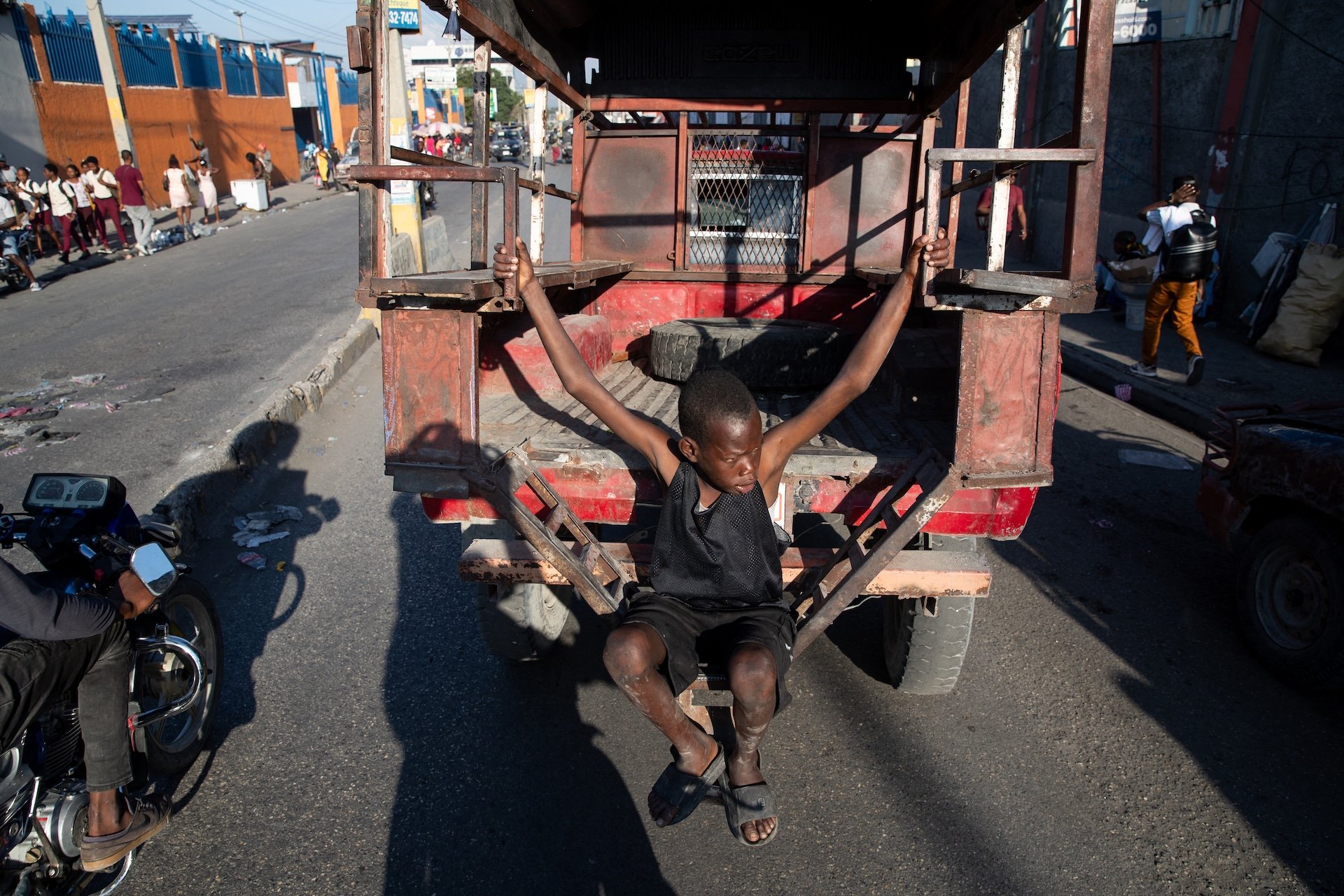
Children and adolescents are often initially assigned low-visibility roles, such as surveillance, message delivery, or logistical support. Over time, many are drawn into more direct criminal activities, including extortion, kidnappings, and acts of violence.
This model, according to Oliva, also serves a practical purpose for criminal organizations. “The recruitment of minors is far more advantageous from an economic standpoint and in terms of human losses, allowing criminal activities to be sustained at lower costs and with less exposure for adult members.”
This progression reflects a structured recruitment pipeline that enables gangs to generate manpower, maintain a persistent presence in contested areas, and reinforce control over local populations. Armed groups in Haiti maintain influence over large parts of Port-au-Prince and key access routes, limiting state mobility and restricting civilian movement. In these environments, the use of minors enhances operational flexibility and supports decentralized control across urban terrain.
High turnover, sustained operations
The use of minors also reflects the expendable role gangs assign them within their operational structures. “The involvement of minors implies high turnover,” Oliva said. “These children have a very short operational lifespan, as they are assigned to high-risk tasks that expose them directly to violent clashes with rival groups.”
In this way, gangs use minors not only to fill operational needs but also to absorb risk that might otherwise fall on adult members. This helps criminal organizations sustain their activities, even in areas marked by constant confrontation and internal instability.
Criminal economies and sustained recruitment
Gang activity in Haiti is closely tied to illicit economies, including extortion, kidnapping, fuel theft, and control of transport corridors. These activities depend on a continuous supply of personnel to enforce compliance, collect payments, and monitor movement.
The Global Initiative Against Transnational Organized Crime (GI-TOC) has documented how criminal groups exploit strategic routes and infrastructure to generate revenue. Within this framework, recruitment, including of minors, is embedded in the operational model rather than a secondary effect of violence.
At the same time, structural conditions such as displacement, limited access to education, and economic instability continue to expand the pool of vulnerable recruits, reinforcing gangs’ ability to sustain operations over time.
Regional parallels and recruitment patterns
The use of minors by criminal and armed groups is not limited to Haiti. Across Latin America, similar patterns have emerged in contexts marked by security challenges and entrenched illicit economies.
In Mexico, civil society organizations such as Tejiendo Redes Infancia estimate that criminal groups may recruit between 35,000 and 45,000 children and adolescents annually, although there are no official figures documenting the full scale of the phenomenon. Other estimates indicate that between 145,000 and 250,000 minors are at risk of recruitment.
In Colombia, reporting by international organizations points to a significant increase in the recruitment and use of minors by armed groups — 300 percent over the past five years — reflecting persistent challenges.
In Haiti, these patterns are similar. According to Oliva, the use of minors for tasks such as contract killings and surveillance shows clear parallels with Mexico and Colombia. However, the expert emphasized that tactics vary depending on the local context.
“There are similarities but also nuances. In terms of operational capacity, criminal organizations in Mexico have greater firepower, which makes a significant difference in the scale of their activities,” Oliva said.
Across these cases, recruitment is not incidental but forms part of broader operational systems that depend on territorial control, population management, and sustained access to vulnerable communities.
Implications for security operations
The growing role of minors in gang structures presents complex challenges for security forces operating in urban environments. The integration of children into criminal networks blurs the distinction between combatants and civilians, complicating operational planning and rules of engagement.
At the same time, the practice contributes to gang resilience by expanding the recruitment base, lowering operational costs, and enabling greater adaptability in contested areas.
While security operations remain central to countering gang activity, addressing recruitment dynamics will be key to sustaining long-term progress. Efforts by partner nations and international forces, including support to Haiti’s security institutions, must continue to disrupt gang operations while limiting their ability to regenerate through vulnerable populations.