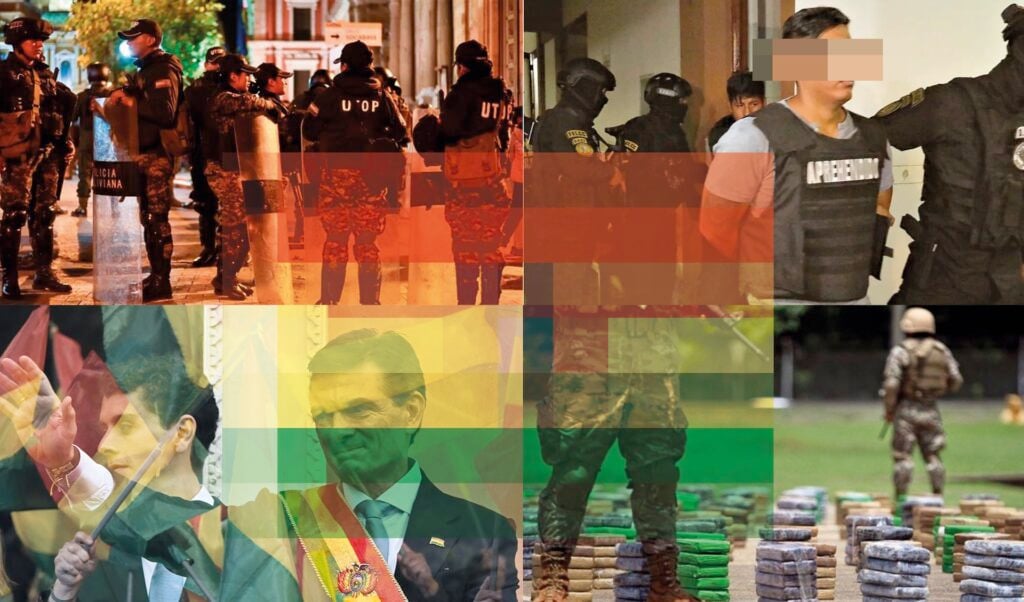

Bolivia has recently reaffirmed its deep commitment to tackling transnational criminal organizations (TCOs) and drug trafficking, recognizing that international cooperation is essential to eradicating these problems.
Minister of Government Roberto Ríos underscored the priority of combating criminal gangs, stating, “The fight against organized crime must be carried out in strict compliance with national and international laws,” state-run Bolivian Information Agency reported in late 2025. He stressed that this task will be based on cooperation, coordination, responsibility, and respect for life and human rights.
The government’s plan includes accelerating the eradication of coca leaf crops (the key ingredient in cocaine production) and dismantling the TCOs that operate the drug trafficking chain. To this end, the executive branch is coordinating more closely with regional neighbors and key international partners such as the United States.
Re-engagement for intelligence sharing
One of the most significant operational announcements is the imminent return of the DEA to Bolivia.
Deputy Minister of Social Defense and Controlled Substances Ernesto Justiniano was unambiguous, stating that the first step will be to reestablish the exchange of information. “The DEA will return very soon, because there is a political commitment, and that is what is most important.” He added that international assistance is a necessity. “There are international cartels that we know are operating in Bolivia, and we cannot tackle drug trafficking with local forces alone. We must integrate and we need cooperation,” Justiniano said.
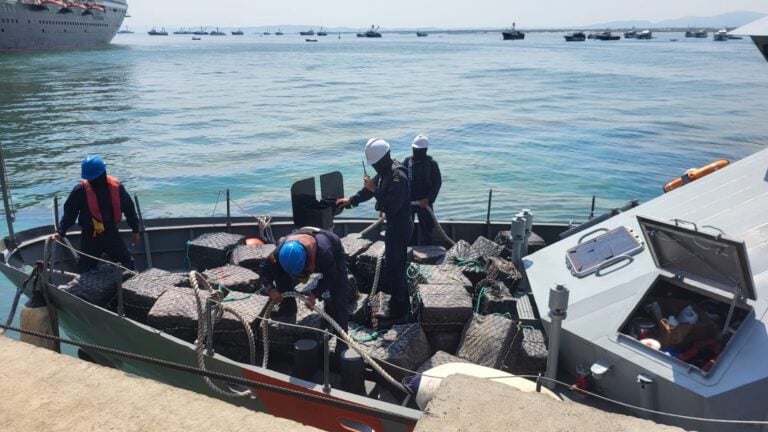
Beyond the rise of local gangs, the main operational threat to Bolivia’s security comes from international groups leveraging the country’s position as one of the world’s largest cocaine producers. The re-establishment of intelligence sharing is crucial to countering powerful actors like the Mexican Sinaloa and Jalisco New Generation cartels (CJNG), which coordinate the multi-ton shipments of cocaine leaving the region.
Furthermore, TCOs in Bolivia are increasingly diversifying their portfolio, with illegal gold mining and smuggling becoming a primary source of revenue. This activity not only causes catastrophic environmental damage but is used to launder billions of dollars in drug proceeds.
Combating this complex web of narcotics, gold smuggling, and identity fraud is the goal of the current push for renewed international alliances.
Systemic border reinforcement with Brazil
The administration’s renewed focus has already resulted in new border control measures, especially with Brazil. Bolivia has reinforced surveillance in the regions of Pando, Beni, and Santa Cruz. This is a response to ongoing criminal activity and the potential for members of TCOs to enter the country following recent police operations in Brazil.
Deputy Minister of Internal Affairs and Police Johnny Aguilera explained in Bolivian daily Opinión that the control plan includes a two-phase operation and the creation of a dedicated border intelligence region to cross-reference data on potential criminals. Aguilera also detailed ongoing collaboration with Brazil to detect and act against foreign citizens who enter and falsified documentation and obtain Bolivian identity cards. “They arrive fleeing their countries, change their identities, and pose as prosperous businesspeople, but they are fronting for criminal networks seeking to operate in Bolivia,” Aguilera emphasized.
Chile and Bolivia: Joint operations against TCOs
Bolivia’s focus has been echoed in Chile, a neighboring country committed to deepening bilateral cooperation. Chilean Foreign Minister Alberto van Klaveren highlighted the importance of strengthening cooperation to combat organized crime on the shared border, safeguarding rights and facilitating legitimate transit.
The growing threat from TCOs mandates a shared security roadmap. Analysts note that it is essential to establish agreements on security cooperation, combating smuggling, human trafficking, the return and redirection of irregular migrants, drug trafficking, and border control. Currently, Bolivian authorities engage in joint operations and intelligence exchange with their Chilean counterparts to investigate TCOs, underscoring a commitment to combined, cross-border action.
The challenge of cross-border criminal gangs
The strengthening of regional cooperation is a direct response to the escalating presence of dangerous, cross-border criminal gangs, such as the Tren de Aragua (TdA). This organization has expanded rapidly across South and Central America, and its presence in Bolivia represents a major challenge to internal security.
A former prison gang, TdA is now a sophisticated terrorist organization, with cells established in several countries, including Bolivia, which use the migrant crisis as cover for its operations. Analysts and reports suggest the group operates with the explicit or tacit protection of the Nicolás Maduro regime, making its growth an even greater geopolitical concern.
TdA’s activities in the region demonstrate an alarming diversification of crime, making it a critical focus for Bolivian authorities. The gang leverages the shared border with Chile to operate extensive human smuggling and sex trafficking networks, particularly targeting vulnerable migrant women and girls, with Bolivian territory serving as a crucial transit point for these illicit cross-border movements.
Additionally, TdA quickly gains control by employing protection racketeering schemes, extorting local businesses and informal commerce in areas where it establishes a presence. TdA members are also known to engage in falsifying identity documents, which allows them to move freely, pose as legitimate businesspeople, and secure themselves from law enforcement — a tactic Bolivian authorities have already acknowledged targeting.
The threat is further magnified by TdA’s ability to form powerful alliances with other major TCOs in the wider region, including Brazil’s First Capital Command (PCC). This collaboration creates a unified front that complicates drug-trafficking and money-laundering interdiction efforts along Bolivia’s eastern borders. The rapid expansion of TdA is a primary driver for the urgent push for closer intelligence sharing, particularly with neighboring nations and the United States, as its franchise model is proving highly resilient and difficult to dismantle using local forces alone.
Bolivia is at a decisive moment in its fight against organized crime. By strengthening international alliances and regional cooperation, the country is better equipped to confront the complex and transnational threats that challenge the security of all of South America.