

China’s Belt and Road Initiative (BRI), launched in 2013 to boost its global development, has made progress in Latin America. Twelve years later, however, initial enthusiasm has given way to growing scrutiny of the projects’ financial conditions, transparency, and socio-environmental impacts.
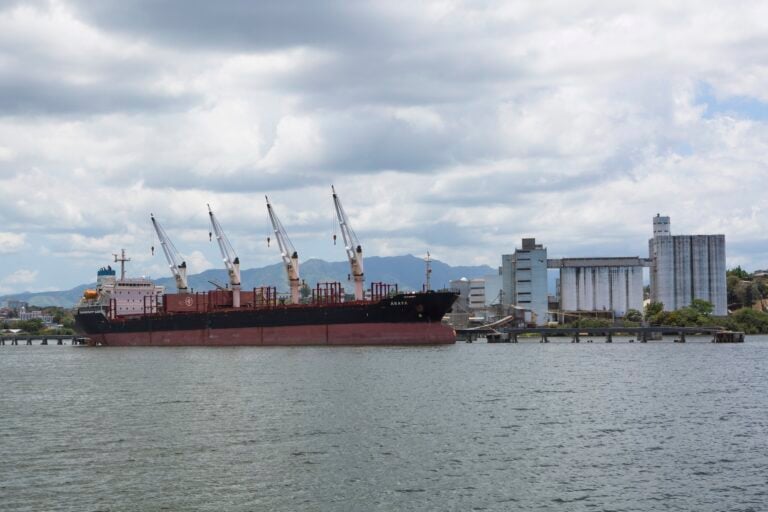
At least 150 countries worldwide have joined the BRI, which has channeled investments into ports, railways, roads, and energy infrastructure, mostly operated by state-owned companies such as COSCO Shipping and China Merchants Port. In Latin America, China, the Council on Foreign Relations (CFR) notes, has also expanded its cultural, diplomatic, and military presence.
Beijing’s goal, experts say, is to expand its influence and build infrastructure in countries with strategic resources. Since 2005, state-owned China Development Bank and Exim Bank of China have lent more than $120 billion to countries of the region, often in exchange for strategic resources, CFR indicated in a report. At the Community of Latin American and Caribbean States (CELAC) Forum in Beijing, Xi Jinping pledged $9.2 billion in credit toward investments in the region.
Chinese companies are known to apply low environmental and labor standards, while their growing control of ports and power grids poses security risks. Their cultural and educational outreach, while reinforcing their image as an alternative partner, has strengthened authoritarian governments.
“The initial enthusiasm for the BRI has given way to a more cautious phase, in which countries are reviewing financial conditions, transparency of agreements, and socio-environmental impacts,” said Pamela Aróstica, director of the China and Latin America Network (REDCAEM) think tank. “This reflects a growing questioning of the relationship with Beijing.”
At least 20 countries in the Americas have signed agreements under the BRI, with Colombia the latest to sign up in May. However, Chinese financing often includes opaque terms that generate debt burdens capable of influencing national policies and limiting local autonomy. Several projects associated with the BRI also lack profitability and many do not respond to the development priorities of the recipient countries or to the international agenda.
From ally to distancing
The BRI has raised concerns among some governments, leading to significant shifts. In February, Panama notified Beijing that it would not renew its BRI agreement, becoming the first Latin American country to formally withdraw. The Panamanian government questioned the benefits, noting that the agreement had not produced tangible results.
This withdrawal is part of a broader re-evaluation. Panama is reviewing the concession for the Cristóbal and Balboa ports at the entrance of the Panama Canal, operated by Hong Kong’s CK Hutchison. It also decided to exclude Chinese firms from the planned railway line between Panama City and David.
Further illustrating this shift, in June, Panama announced the reactivation of the Inter-Agency Microwave Network project to modernize the communications of its security forces. The project, with support from the United States, will install new towers in different provinces and replace existing telecommunications equipment at 13 locations, including towers from Huawei.
“Relations between China and Latin America continue to be marked by a strong asymmetry, with turning points such as Panama’s decision to withdraw from the BRI,” says Aróstica. “China has taken the pulse of ties in the region, largely defining their direction.”
Caution as a strategy
Unlike other countries that formally joined the BRI, Brazil and Mexico have adopted a cautious stance. According to Aróstica, both nations “seek to preserve their autonomy, diversify ties, and avoid excessive dependence, which reduces the need for Chinese financing offered by the initiative.” This is in part because “Mexico is prioritizing its relationship with its main trading partner: the United States,” Aróstica added.
At least three projects with China’s participation have been canceled in Mexico: the Mexico-Querétaro High-Speed Train, due to lack of competition in the bidding process, overpricing, and alleged corruption; the Dragon Mart shopping center, due to environmental damage and legal violations; and the Chicoasén II Hydroelectric Power Plant, due to social and labor conflicts.
Brazil, a key recipient of Chinese investment, has yet to formally join the BRI. According to analysts, Brazil remains skeptical of the initiative’s benefits.
Chinese investments in Brazil, such as Ferrogrão — a 933-kilometer railway that would connect Mato Grosso with the port of Miritituba in Pará — are raising alarms due to their impact on indigenous territories, protected areas, and Amazonian ecosystems, as well as the strengthening of Chinese influence in strategic sectors, Infobae reported.
From expectation to review
Ecuador was one of the first countries in the region to join the BRI, viewing it as an opportunity to modernize its infrastructure and diversify financing. However, several projects over time showed cost overruns, technical failures, and unfavorable financial conditions.
The Coca Codo Sinclair hydroelectric plant, built by Chinese company Sinohydro, the largest in the country, has faced technical failures and generator cracks since its construction, causing blackouts and protests.
According to several news reports, the Ecuadorian government has obligations totaling $2.4 billion to three Chinese state-owned banks, raising concerns about fiscal sustainability and dependence on external financing.
These factors have led Ecuador to rethink its cooperation with China. While it continues to seek financing for infrastructure, it is doing so with greater caution and a push for more transparency.
“The Coca Codo Sinclair case is a lesson for the region. It is a complex cocktail: Construction flaws, episodes of corruption, and such high debt that Ecuador has been forced to request new loans to break out of this vicious cycle,” Aróstica said. “These are factors that Latin American governments must consider when evaluating similar projects.”
She also noted that Ecuador’s total debt of more than $19 billion to China “may condition its internal energy policies. It would be naive to think that there would be no consequences if that debt is not paid.”
“Latin America must view the BRI with realism, without naivety. The benefits will only be possible if there are transparent contracts, partnerships are diversified, and dependence on a single partner such as China is avoided. It is also essential to strengthen the state’s capacity to evaluate and supervise Chinese projects,” Aróstica concluded.