

Costa Rica faces an unprecedented intensification in the fight against organized crime and drug trafficking, pressured by the advance of transnational criminal organizations (TCOs) that use its Caribbean and Pacific coasts as critical logistics routes for international drug trafficking.
In early November 2025, Costa Rica’s Judicial Police (OIJ) launched the largest anti-drug operation in the country’s history against the so-called South Caribbean Cartel, a network that shipped cocaine to Europe and the United States.
This heightened pace of counternarcotics action has been reinforced by international partnerships: Just weeks later, Costa Rican authorities announced the seizure of 4.4 metric tons of cocaine in a joint operation in the Pacific with the U.S. Coast Guard, the DEA, and the Drug Control Police (PCD). President Rodrigo Chaves publicly welcomed this joint work, noting the long-standing agreement for joint patrols against narcotrafficking.
In October, authorities also dismantled a drug trafficking structure made up of Colombians and Costa Ricans, from which 7 tons of drugs were seized over three years. OIJ Director Randall Zúñiga stated that the traffickers, mainly Colombian nationals, used various methods to transport drugs from Turbo, Colombia, to Costa Rica, where they were stored and later exported to North America and Europe, German broadcaster DW reported.
A country turned into a logistics hub
“The Central American country is facing a surge in operations by Colombian and Mexican cartels, which have managed to use Costa Rica as a logistics and transshipment hub for drugs bound for various destinations in Europe and the United States,” Carolina Sampó, coordinator of the Center for Studies on Transnational Organized Crime in Argentina, told Diálogo.
The scale of the operations reflects the seriousness of the problem: The OIJ mobilized 1,200 agents in 64 simultaneous raids against the South Caribbean Cartel, covering regions such as Alajuela, Limón, Cartago, Puntarenas, and San José.
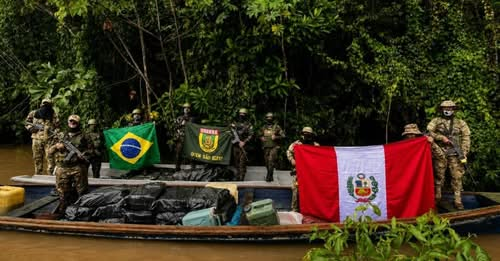
According to investigations, this TCO maintained a sophisticated structure with cutting-edge technology, weapons, land and maritime logistics, safe houses, drones, and other resources essential to its criminal activity. International collaboration was key, with support from police forces in Colombia, Spain, the United States, France, Panama, and the United Kingdom.
Criminal alliances and the regional threat
“Drug trafficking has become the primary security challenge for Costa Rica, a country located in the center of the corridor stemming from South America, the main cocaine production area,” Sampó said. The expert points out that press and intelligence reports identify alliances between Venezuela’s Cartel of the Suns (CdS) and Colombian gangs, formed to fortify maritime routes to European ports. There, European criminal organizations, such as the N’drangheta and Albanian networks in the Balkans, are responsible for distribution.
Costa Rica’s Minister of Public Security Mario Zamora Cordero asserted in early September 2025 that the Nicolás Maduro Venezuelan regime is a “narco-government” and highlighted the influence of the CdS in the region. Zamora Cordero also reaffirmed the role of the United States as a key ally in the fight against drugs, recalling that Costa Rica shares with the rest of Central America the reality of being a “transit route between producer and consumer countries.”
Rise in violence and criminal sophistication
Costa Rica, traditionally seen as an oasis of security, is now experiencing record levels of violence, InSight Crime indicated. Local organizations have become more sophisticated and violent, seeking to control the business and integrate into transnational networks. This phenomenon, InSight Crime said, increases the risk of corruption and instability.
“From 2015 to 2019, the Los Moreco cartel, a criminal group involved in drug trafficking that spread to several Central American countries, operated in Costa Rica,” Sampó said. The group, which has weakened following leadership arrests, is no longer considered a major criminal powerhouse. However, Sampó added, “it cannot be ruled out that there are still residual members who are connected to different criminal actors in the region involved in the drug trafficking business.”
International cooperation and new strategies
Reinforcing this international effort to combat the sophisticated TCO activity, the U.S. government recently delivered two fixed scanners and two Puma drones to the Costa Rican Ministry of Public Security to strengthen surveillance at the ports of Caldera and Puntarenas and Moin, in Limón.
“Transnational crime does not respect borders or set limits on its objectives, which is why the complexity and scope of these networks require constant surveillance and decisive action by the authorities responsible for combating drug trafficking,” Sampó said.
International cooperation goes beyond material assistance. The European Union organized specialized training for Costa Rican special unit officials, with the aim of strengthening port security and response capacity to drug trafficking. This initiative is part of the Memorandum of Understanding signed in early 2025, which integrates Costa Rica into the European Union-funded Seaport Cooperation Project (SEACOP).
Costa Rica’s fight against drug trafficking and organized crime is now a battle that transcends national borders. The country, which has become a strategic point on drug routes, faces a challenge that requires both decisive local responses and sustained international cooperation. The gravity of the situation and the sophistication of criminal networks pose a critical challenge to regional security and democratic stability.
“It is necessary to continue and strengthen information exchanges between states in order to develop strategies and tools to combat organized crime, such as intensifying operations to seize drugs and money laundering assets,” Sampó concluded. “This is a key way to weaken drug trafficking structures.”