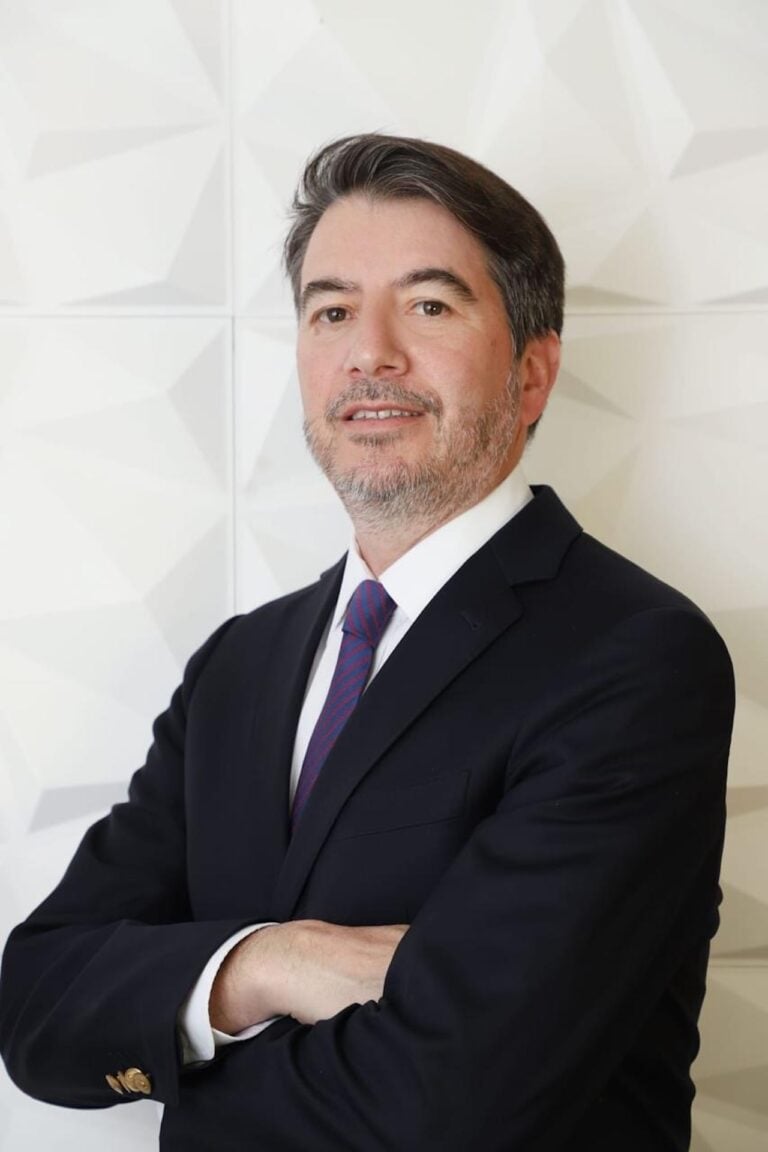
Ecuador’s Minister of Defense Gian Carlo Loffredo Rendón has been at the forefront of the country’s efforts to combat organized crime and narco-terrorism during one of the most challenging security periods in its recent history. Since taking office in November 2023, Minister Loffredo has focused on strengthening the capabilities of the Ecuadorian Armed Forces and expanding cooperation with international partners to counter transnational criminal organizations.
As part of President Daniel Noboa’s security strategy, Minister Loffredo has promoted increased military deployments to support internal security operations while advancing investments in new defense capabilities and intelligence cooperation to disrupt illicit trafficking networks.
Diálogo spoke with Minister Loffredo during the first Americas Counter-Cartel Conference held March 5 at the headquarters of U.S. Southern Command (SOUTHCOM) in Miami, just days after Ecuador and the United States launched joint operations against narco-terrorist organizations in Ecuador. During the conversation, the minister discussed the evolution of Ecuador’s security strategy, cooperation with international partners, and the importance of regional collaboration to address threats such as drug trafficking, illegal mining, and illegal fishing.
Diálogo: Minister, in early 2026 you announced a new comprehensive security initiative. How does this initiative strengthen the Armed Forces’ ability to combat narco-terrorism?
Ecuador’s Minister of Defense Gian Carlo Loffredo Rendón: Let me begin by noting that Ecuador is experiencing a non-international armed conflict, declared by the president, which allows the Armed Forces to play a role in internal territorial security. Together with the police, we have formed what is known as the Security Block, and one of the strategies implemented was total control operations in the most problematic and conflict-affected territories.
Ecuador is a transit country for drugs coming from Colombia, and the routes these shipments take to reach the ports — located in the coastal provinces — are where we see the highest levels of violence. That is where we have deployed a significant amount of Armed Forces resources.
Part of the strategy we have used is calling up reserve personnel to increase manpower while ensuring that the Armed Forces’ core missions are not neglected: border control, protection of critical infrastructure, and other responsibilities, in addition to support from other state institutions. This allows us to address these challenges in a more organized manner.
Diálogo: President Daniel Noboa announced a $180 million investment in helicopters, radars, and multipurpose logistics vessels. How will these investments transform the Armed Forces’ ability to maintain a constant presence on land and at sea?
Minister Loffredo: President Noboa has demonstrated through concrete actions his support for the Armed Forces and the Police, as well as his commitment to combating narco-terrorism. In that sense, strengthening the capabilities of our forces is extremely important.
We have a clear vision for security, and among our main priorities are strengthening border control, monitoring major transportation routes, securing ports, and, of course, protecting our territorial waters.
These capabilities are primarily aimed at improving control of the northern border. It is a very vast and complex area due to the terrain, and the human factor alone is no longer sufficient; technology is required. Additionally, in this conflict the mobility and logistics of troops are essential, which is why these investments are focused in those areas.
Diálogo: Ecuador recently inaugurated the Intelligence Fusion Center in Guayaquil. How have new intelligence technologies and international cooperation improved the Armed Forces’ ability to detect, track, and intercept illicit trafficking networks?
Minister Loffredo: This is an information fusion center where we work together with countries from the European Union, which increases our ability to track the logistics chain through which drugs are leaving the country.
We can begin identifying exporters, transporters, the cargo arriving at ports, and the tracking of shipments once they leave the country. Through this process we also receive information from Europe, which helps us build a more complete picture of who these organizations are and how they operate. That is how this information fusion center supports our efforts.
Diálogo: The addition of the LG-40 Isla Santa Rosa represents an important enhancement to Ecuador’s naval capabilities. How does this platform, donated by the United States, improve the Ecuadorian Navy’s ability to secure its maritime corridors, including the vital waters surrounding the Galápagos Islands?
Minister Loffredo: This is an example of international cooperation with one of our strongest allies, the United States. This coast guard vessel is undoubtedly a valuable acquisition and a donation that strengthens our maritime capabilities.
It is particularly important because we have identified maritime drug trafficking corridors — where they operate, the routes they use, and where vessels refuel before continuing their journey.
In Ecuador’s case, our maritime territory is four times larger than our land territory, which means we must monitor an extremely vast area. Any additional capability that strengthens our ability to control these territorial waters is crucial.
The United States supports us with maritime surveillance aircraft, but coast guard vessels provide the operational response needed for interdiction.
Diálogo: Minister, you just mentioned this: Ecuador considers the United States one of its strongest partners in the region, and the United States sees Ecuador the same way. How have these partnerships strengthened the Armed Forces’ operational capabilities to counter narco-terrorism and transnational threats?
Minister Loffredo: We have several agreements with the United States, including the SOFA [Status of Forces Agreement] and the Shiprider agreement, [which allows joint maritime operations to combat drug trafficking], among others. These security and defense relationships have been developing for some time.
At this conference we are now seeing something we had been expecting, because President Noboa demonstrated from day one his commitment to combating narco-terrorism. We now have this ally acting with greater presence and working jointly with us to confront this problem.
This alliance is extremely important. We are already conducting coordinated operations and working together, and in the coming days we will likely see significant news and results from this cooperation.
We are therefore very grateful to the current U.S. administration — to President Trump and Secretary of War Hegseth — for this demonstration of commitment to addressing a problem that affects the entire hemisphere and threatens the family unit, which is the foundation of society.
Diálogo: Ecuador has achieved significant interdiction results in recent months. How do intelligence sharing and international cooperation contribute to these operational successes?
Minister Loffredo: This cooperation is essential because sometimes we do not have the capacity to track every speedboat or semi-submersible vessel. That is when international cooperation becomes critical, forming a chain of information.
If one vessel escapes us, we know that through U.S. Southern Command we can communicate with another country farther north that may be able to intercept it.
We work very closely with the United States and with U.S. Southern Command, which also coordinates with other countries in the region. With some partners we maintain bilateral relationships that allow us to exchange information directly, but U.S. Southern Command plays a vital role as an active and leading actor in this information chain that makes interdictions possible.
Diálogo: What message would you like to share with Ecuador’s international partners regarding the country’s commitment to regional security, and how can continued cooperation help ensure stability in the Eastern Pacific?
Minister Loffredo: This message is for everyone. Countries that believe violence cannot reach their territories are mistaken. If this problem is not confronted decisively now, it will likely reach countries that did not expect it.
It happened to us. At one point we were considered an island of peace in South America, and now we face a serious challenge.
The message is clear: We must confront this threat as a community, with determination, and call these groups what they truly are. These are terrorist organizations that seek to instill fear in the population and possess enormous financial resources and military capabilities comparable to those of an army. That is why they must be confronted accordingly.
Diálogo: Beyond drug trafficking, Ecuador also faces threats such as illegal mining and predatory fishing by the Chinese fishing fleet. How is Ecuador strengthening maritime security and international alliances to protect its marine resources and its blue economy?
Minister Loffredo: In the case of illegal fishing, we conduct an exercise called GALAPEX, with allied countries, and the invitation remains open for any nation that wishes to participate.
It is something we must control, and we receive international support to do so through satellite imagery and other resources.
Regarding illegal mining, the same groups are involved. This is a mafia. If one activity becomes difficult, they move to another that is easier, which is why narco-terrorism is connected to other crimes.
Illegal mining has become increasingly prevalent, but it is also linked to human trafficking, forced labor, contract killings, and extortion. These criminal networks operate as complex illicit businesses designed to generate profits. They are the same actors and confronting them means addressing many of these interconnected threats.
These criminal groups have evolved, and governments must evolve as well in the way we confront them.
For a long time, they have operated in a gray area: Do we treat them as common criminals or as armed enemies? Do we apply human rights law or international humanitarian law?
This is a debate that must take place at the global level, because if we wait too long to address it, it may be too late.