

Driven by its ambition to achieve greater control over key raw materials used in high-tech industries for its own gain and exert geopolitical influence, China has been accelerating its expansion in the critical minerals sector worldwide.
The strategy for monopoly over minerals essential for warfare technologies and military modernization has led Beijing to increase its investment and influence in Latin America, a move experts say poses global and national security concerns, as China could use critical minerals as bargaining chip in conflicts or disrupt supply chains to hinder technological advancements.
Critical minerals, such as lithium, copper, cobalt, nickel, niobium, and rare earths, are concentrated in a few regions for which South America has a prominent role. Beyond the lithium triangle, other countries in the region such as Brazil and Peru offer great opportunities for the hunt for critical minerals.

According to the independent research center Instituto Igarapé, based in Rio de Janeiro, Brazil has 94 percent of the world’s niobium reserves, 22 percent of graphite, 16 percent of nickel, and 17 percent of rare earths, the third largest deposit on the planet. It is worth noting that Niobium’s strategic role in advanced defense is paramount. Niobium superalloys are used in an array of advanced weaponry, from aircraft components to hypersonic missiles.
According to data from Peru’s Ministry of Energy and Mines, with 110 million tons of reserves, this Andean country is the third largest producer of copper in the world, essential for electromobility, renewable energy, and electrical infrastructure. Significant lithium deposits have also been discovered in Puno, in the south of the country, which are essential for batteries. In addition, Peru is recognized as the second largest producer of zinc in the world, surpassed only by China.
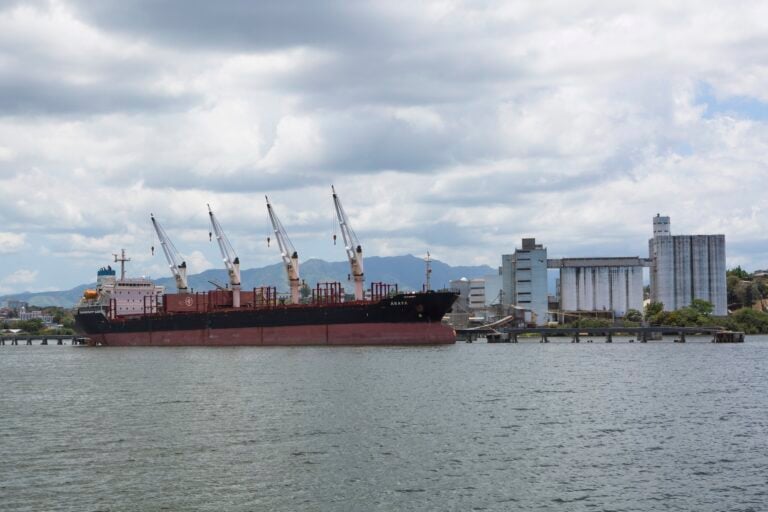
In the last six months, China’s investments in the critical minerals sector in Brazil and Peru have stepped up. Beijing invested some $800 million in Brazil through a series of operations that have raised the alarm about the risk of monopoly. In November 2024, state-owned China Nonferrous Metal Mining (CNMC) bought Peru’s Minsur S.A.’s Brazilian subsidiary Mineração Taboca, which operates the Pitinga mine, for $340 million. The mine, located in Presidente Figueiredo, in the heart of the Amazon, 100 kilometers from Manaus, contains huge reserves of tin, from which niobium, tantalum, and hafnium are also obtained.
“The purchase of Taboca reflects China’s growing presence in Latin America, which has become China’s playground. Brazil runs the risk of becoming a mere chessboard in a technological war, losing control of strategic sectors,” independent analyst Cezar Roedel told Brazilian daily Gazeta do Povo.
Last February, the British multinational AngloAmerican announced an agreement to sell the Barro Alto and Niquelândia ferronickel mines and processing plants in the west-central state of Goiás to a subsidiary of Chinese company MMG, for some $500 million. In total, these facilities produced 39,400 tons of nickel in 2024. The agreement also includes two future projects for the production of high-quality nickel: the Jacaré deposits in Pará state and Morro Sem Boné in Mato Grosso state, with a potential of some 300 million and 65 million tons, respectively. In addition, in March, Chinese company Baiyin Nonferrous Group Co. (BNMC) bought Mineração Vale Verde (MVV) and its copper plant in Alagoas state, in northeastern Brazil.
Chinese car manufacturer BYD also confirmed that it has acquired the exploration rights to two lithium reserves, essential for electric car batteries, in the Jequitinhonha Valley in the state of Minas Gerais. This region is home to the country’s main known lithium reserves and is already being exploited by Brazilian companies Sigma Lithium and Companhia Brasileira de Lítio.

“All these operations clearly show that China in Latin America is more interested in extracting critical minerals than in creating supply chains,” Daly Santana-Rodda, research assistant at Florida International University Jack D. Gordon Institute for Public Policy, told Diálogo. For the expert, author of the report, China’s Investments in LAC Critical Minerals Help its Military Modernization, “this strategy is detrimental to the region because it increases the dependence of Latin American countries, such as Brazil, on Chinese investment and operational capacity.”
Peruvian expansion
China is also accelerating its influence in Peru. In January 2025, copper production in the Andean country increased by 6.9 percent compared to the same month in 2024, reaching 216,650 tons. This increase is mainly attributed to the rise in production at the Las Bambas and Quellaveco mines, on the eastern slopes of the Andes mountain range. Las Bambas increased its production by 81.8 percent, driven by the exploitation of the Chalcobamba quarry.
One of the largest copper deposits worldwide, Las Bambas copper mine was acquired in 2014 by China’s Minmetals Group.
According to Santana-Rodda, “the presence of significant Chinese investment in Peru indicates China’s interest in monopolizing the copper deposits in Latin America and the Caribbean, with $6.3 billion earmarked for the Las Bambas mine alone between 2015 and 2024.” Between 2009 and 2015, Beijing invested a total of USD 15 billion in the Latin American country’s mining sector. The largest investment was made in Las Bambas and coincided with the launch of the Belt and Road Initiative (BRI), according to data from the Peruvian Ministry of Energy and Mines.
China’s exploitation of critical minerals, in addition to depriving Peru from controlling strategic materials for its national security, has caused serious environmental impacts due to the intensive use of water resources and the transportation of minerals by truck. In November 2024, Peru’s National Service of Environmental Certification for Sustainable Investments (Senace) approved the fourth modification of the Detailed Environmental Impact Study of Las Bambas to increase processing capacity. A more than $6 billion investment is projected to extend the mine’s lifespan until 2039. The approval of this modification has generated concerns in local communities and organizations. The Federation for the Defense of the Interests and Development of the Province of Cotabambas asked Senace to reconsider its decision. In addition, negative effects on the environment have been highlighted, such as the loss of some 12.36 hectares of bofedales, a type of wetland found in the Andes that store large amounts of CO2, the notable decrease in the flow of the Ferrobamba and Challhuahuacho rivers, and the worsening of water quality in the region.

Military interest
China’s expansion in the critical minerals sector serves its strategy of hegemony in the global energy transition, but also the modernization of the People’s Liberation Army (PLA). “China is interested in critical minerals because of their dual use. On the one hand, they are the basic components of most of the objects we own, and which dominate the market commercially, such as electric vehicles. On the other hand, these same minerals can have military applications,” says Santana-Rodda.
In 2022, China accounted for 95.5 percent of Peru’s total iron exports. Since 2011, a Chinese consortium made up of Anshan Iron & Steel Group, Baosteel, Shougang Group Co. and Taiyuan Iron & Steel Group has owned 15 percent of Companhia Brasileira de Metalurgia e Mineração (CBMM) in Brazil. CBMM controls 75 percent of the country’s iron ore reserves, located in the states of Goiás and Minas Gerais. In Goiás and in São Paulo, China Molybdenum Co (CMC) also acquired niobium and phosphorus mines in 2016 that represent 10 percent of the world’s mineral production.
According to Santana-Rodda, “niobium and other metals produced such as iron, cobalt, and copper are used in the production of tactical military weapons, vehicles, armor, and infrastructure.”
China’s dominance in critical minerals, the expert concludes, represents a threat on a global scale, impacting Latin America and beyond.