
The impact of criminal groups and populism in countries such as Bolivia, Nicaragua, and Venezuela is reaching alarming levels, exacerbated by the influence of authoritarian regimes such as China, Russia, and Iran, threatening stability and security in the hemisphere, said Carlos Sánchez Berzaín, director of the Inter-American Democracy Institute, in an opinion piece for Argentine news site Infobae.
Latin America faces a series of critical challenges including drug trafficking, forced migrations, citizen insecurity, terrorism, social and economic crises, lack of sustainable development, political prisoners and exiles, internal confrontations, anti-Semitism, as well threats to freedom of the press, and the growing influence of China, Russia, and Iran, he said.
According to Sánchez Berzaín, these problems, which originated with the socialist dictatorships of the 21st century or Castrochavism, are linked to regimes and a transnational criminal organization that control Cuba, Venezuela, Bolivia, and Nicaragua, and are at the root of the security crisis in the hemisphere.
“These countries use their international representation to legitimize crimes, such as justifying drug trafficking as an anti-imperialist struggle, undermining counternarcotics efforts, and advocating the legalization of hard drugs,” Infobae reported. “They also distort terrorists’ image by portraying them as victims, present murderous guerrillas as legitimate combatants, and justify forced migrations with narratives of poverty.”
According to Sánchez Berzaín, these criminal groups extend beyond Cuba, Venezuela, Bolivia, and Nicaragua and infiltrate countries with established democracies. They support like-minded candidates, invest in illicit resources to weaken democratic leadership, and manipulate electoral rules to bend them in their favor.
“The financing does not come from the coffers of Havana, Caracas, Managua, or La Paz, since these countries are bankrupt,” Jorge Serrano, a member of the team of advisors to Peru’s Congressional Intelligence Commission, told Diálogo on June 12. “Instead, the money comes from illicit sources, such as drug trafficking and other related crimes.”
“This flow of illegal money also enriches the ringleaders of these non-democratic countries, who act as operators for extra-regional nations and as platforms for China, Russia, and Iran to operate in Latin America,” he said. “Iran, a promoter of international terrorism, has firmly established itself in Cuba and Venezuela.”
Presence and threat
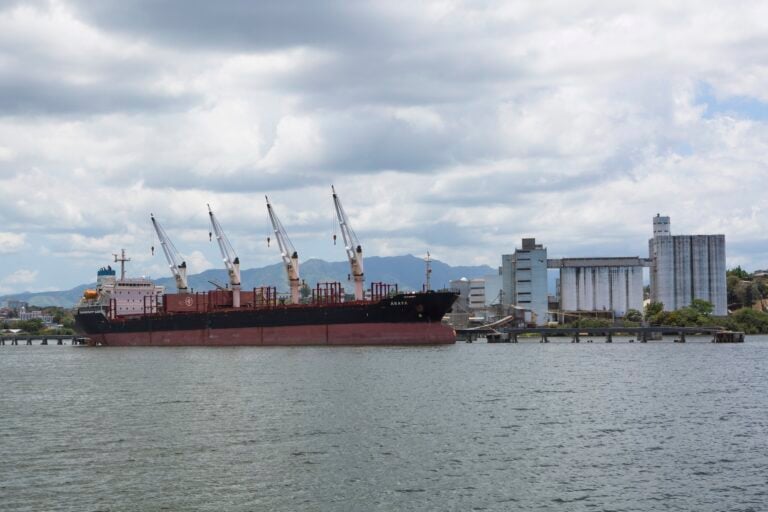
China has expanded its influence in Latin America through investments, infrastructure projects, and academic cooperation, the William J. Perry Center for Hemispheric Defense Studies indicated in a report. These activities also facilitate involvement in crimes such as fentanyl production, money laundering, and smuggling, as well as illegal fishing and mining.
Russia, under the guise of friendship, strengthens its presence in the region in the energy, military, technological, and space sectors, the report added. This is facilitated by disinformation campaigns in the context of the conflict with Ukraine. It is also associated with hostile actions against dissidents, cyberattacks on governments and international organizations, interference in electoral processes, and espionage.
Iran continues to expand its influence in Latin America, especially in countries with anti-U.S. ideologies, the report said. Since the era of Hugo Chávez in Venezuela, Iran has strengthened its presence in the energy and military sectors and has allowed Hezbollah and other extremist groups to develop ties with drug trafficking and transnational criminal organizations, getting involved in money laundering and terrorism.
“We are facing an international criminal network implanted in the region, which is based in Venezuela, Nicaragua, and Bolivia, controlled by organized crime and linked to Cuban intelligence, which in turn responds to Russia and China’s intelligence services,” said Serrano. “This is situation that becomes complex and worrisome.”
“In the long term, China represents the greatest threat due to its economic power and its influence in strategic sectors such as digital and space, but Russia and Iran show disposition to aggressive behaviors, such as the sale of armament to Venezuela in the short term,” Argentine foreign affairs news site DEF reported.
Maneuvers
Latin American dictatorships support China in its attempt to annex Taiwan, demanding that the alleged “historical rights” of the Asian country be respected. China’s President Xi Jinping has been carrying out military maneuvers in response to the inauguration in May of Taiwan’s new President Lai Chin-te, accused of separatism and provocation, Mexican daily El Economista reported.
In mid-June, four Russian naval vessels arrived in Cuba for military drills. The vessels consisted of the frigate Gorshkov, the nuclear submarine Kazan, the fleet tanker Pashin, and the salvage tug Nikolai Chiker.
“It is clear that [Vladimir] Putin seeks to demonstrate the power of his naval detachment, to challenge U.S. leadership in the region,” Serrano said. “In addition, he threatens to provide nuclear weapons to terrorist groups to attack the West, in case Russian troops in Ukraine are attacked with NATO or U.S. weapons.”
“In this web of criminal countries causing destabilization, the most vulnerable populations are the first to be affected,” Serrano said. “In an environment of ungovernability and under constant pressure from these regimes, it’s difficult to develop sustainable policies, confront the crime wave, and achieve effective government objectives, health, and economic policies.”