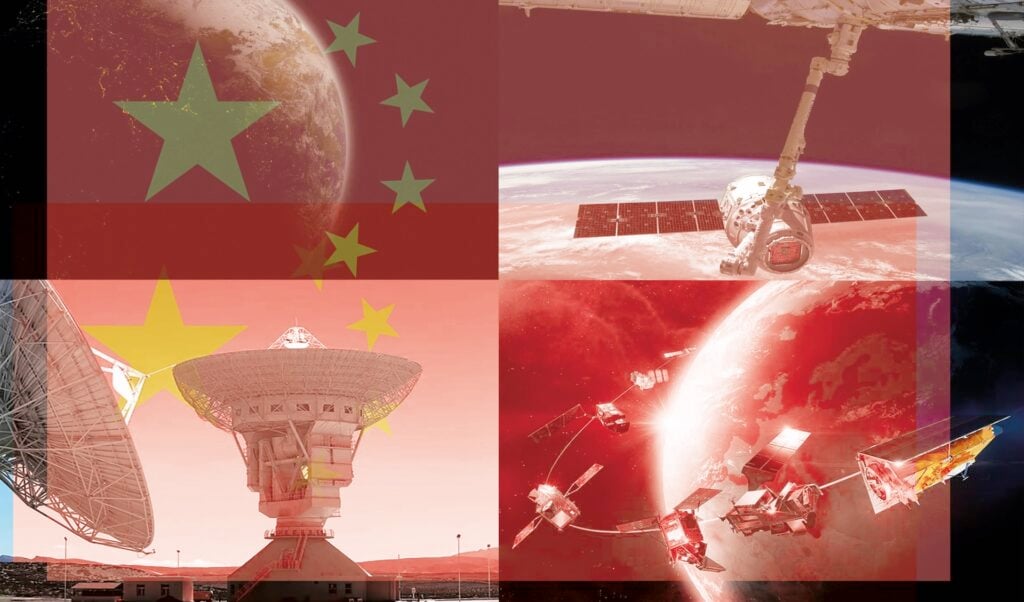

China’s foreign policy toward the Global South increasingly uses space cooperation as a strategic tool to expand technological influence and geopolitical presence. Through bilateral agreements, Beijing offers satellite design, construction, launch, and operational services, along with technical training for regional countries.
the Center for Strategic and International Studies (CSIS) notes that many of China’s space capabilities are dual-use, meaning they can serve both civilian and military purposes. Technologies such as Earth observation systems and satellite communication networks can support agriculture, disaster response, and infrastructure planning, but they are also critical tools for intelligence gathering and national security. In addition, some of the organizations participating in overseas space projects maintain institutional links to the People’s Liberation Army and China’s military space apparatus, underscoring the strategic implications of what are often presented as civilian initiatives.
Evan Ellis, research professor of Latin American studies at the U.S. Army War College Strategic Studies Institute, told Diálogo that “China’s space diplomacy in the Western Hemisphere is part of its global architecture of access, denial, and persistence, even if it is presented under civilian schemes.” Ellis added that China’s approach combines economic, technological, and military objectives, using civilian cooperation as a mechanism to build long-term dependencies in Latin America.
Ground infrastructure and data access: Growing concerns
One of the most controversial aspects of China’s expanding space presence in Latin America is the establishment of ground stations. Ellis warned that these facilities could provide China with access to strategic resources in the event of conflict. As an example, he cited the Espacio Lejano Station in Neuquén, Argentina, a telemetry, tracking, and control facility operated by China Satellite Launch and Tracking Control General, an organization linked to China’s military apparatus. The bilateral agreement grants China use of the facility for 50 years.
Beyond Neuquén, China operates multiple ground stations across the region, including in Argentina, Bolivia, Brazil, and Venezuela. According to a report by the Prague-based geopolitical analysis project Synopsis, this network of infrastructure expands Beijing’s ability to communicate with and control satellites from the Western Hemisphere, reinforcing its operational presence far beyond Asia.
Another notable initiative is SpaceSail, a low Earth orbit satellite constellation developed by Shanghai Spacecom Satellite Technology. Although the satellites are launched from Chinese spaceports and orbit globally, Brazil’s telecommunications regulator has authorized SpaceSail to provide broadband services over Brazilian territory in coordination with the state-owned company Telebras. The constellation is licensed to operate up to 324 satellites in Brazil through 2031, with service rollout expected in phases over the coming years.
While the project includes civilian components, Ellis stressed that it could also expose sensitive data to Chinese security and cybersecurity legislation, potentially facilitating access to strategic information.
Joint programs and technological dependence
Brazil remains one of China’s most important regional partners in space cooperation, particularly through the CBERS (China-Brazil Earth Resources Satellite) program, which develops joint Earth observation satellites. CBERS-6, announced in 2025, is designed to enable monitoring of the Amazon in all weather conditions through advanced radar imaging. Although the program is binational and has provided for shared use of the data, the launch services and several critical components depend on China, reinforcing a degree of technological dependence. The satellite’s launch is scheduled for 2028, according to the Brazilian media outlet TeleSíntese.
Ellis noted that while such cooperation may appear benign, Beijing’s objectives fundamentally differ from Western space initiatives, such as NASA’s Artemis program, which operate under transparent governance frameworks and clearly defined civil mandates. In contrast, Chinese projects often obscure their strategic intent, blending commercial, military, and technological ambitions.
China’s BeiDou satellite navigation system offers another example of Beijing’s space strategy in Latin America. Through cooperation agreements across the region, China has expanded the adoption of its positioning, navigation, and timing services. Although BeiDou is promoted primarily for civilian applications, including agriculture and transportation logistics, analysts have emphasized its strong military potential. According to Infobae, the absence of robust regulatory frameworks in parts of the region allows such technologies to operate with limited oversight, potentially creating technological dependence and raising concerns about sovereignty over strategic data.
Expanding footprint across the region
China’s space engagement in Latin America extends well beyond Brazil and Argentina. Over the past decade, Beijing has signed cooperation agreements with multiple governments to develop satellite capabilities, finance infrastructure, provide launch services, and train local personnel.
In Bolivia, China financed, built, and launched the Túpac Katari telecommunications satellite. Officially designed to expand civilian connectivity, particularly in rural areas, the project was funded largely through Chinese loans and executed by Chinese state-owned enterprises.
Venezuela also partnered with China to deploy the Venesat-1 communications satellite and later the VRSS-1 remote sensing satellite. Both were manufactured in China and launched aboard Chinese rockets, with Venezuelan engineers trained in Chinese facilities.
In Chile, a proposed astronomical observation facility at Cerro Ventarrones in the Antofagasta region — a project involving China’s National Astronomical Observatories (NAOC) and the Catholic University of the North — was put on hold by the Chilean government after concerns were raised by Chilean scientists and regional experts. Although presented as a scientific research initiative, critics questioned the governance structure of the agreement and the degree of Chilean oversight. Specialists noted that advanced astronomical and space observation infrastructure — while civilian in purpose — can also contribute to satellite tracking and space situational awareness capabilities with potential strategic relevance. The suspension of the project highlighted growing regional sensitivity to issues of data control and long-term strategic access.
What distinguishes China’s model is the integration of financing, manufacturing, launch services, ground infrastructure, training, and long-term maintenance under Chinese technical standards. This vertically integrated approach creates long-term technological ecosystems tied to Chinese platforms.
Because many of the technologies involved — telecommunications, Earth observation, navigation, and data processing — have both civilian and military applications, these partnerships carry strategic implications that extend beyond their stated commercial or developmental objectives. The result is a network of space relationships that blends development assistance with capabilities that could be leveraged for security or geopolitical purposes.
New arena of geopolitical competition
China’s expanding space presence in Latin America reflects not only technological advancement but also a broader effort to extend its geopolitical influence in the region. Through ground infrastructure, satellite constellations, and joint development programs, Beijing is building a network of partnerships that blends civilian and military capabilities and could create long-term strategic dependencies across the hemisphere.
As space becomes an increasingly contested domain, the expansion of Chinese-controlled infrastructure and data systems in Latin America could give Beijing greater strategic reach in the Western Hemisphere while deepening the region’s technological dependence.